Do Cows in Heat Really Produce Less Milk? Milk Records Say Maybe Not
"If a cow is in heat, her milk will drop."
Everyone says it. I've seen it myself.
Yesterday, Carly experienced it... or did she?
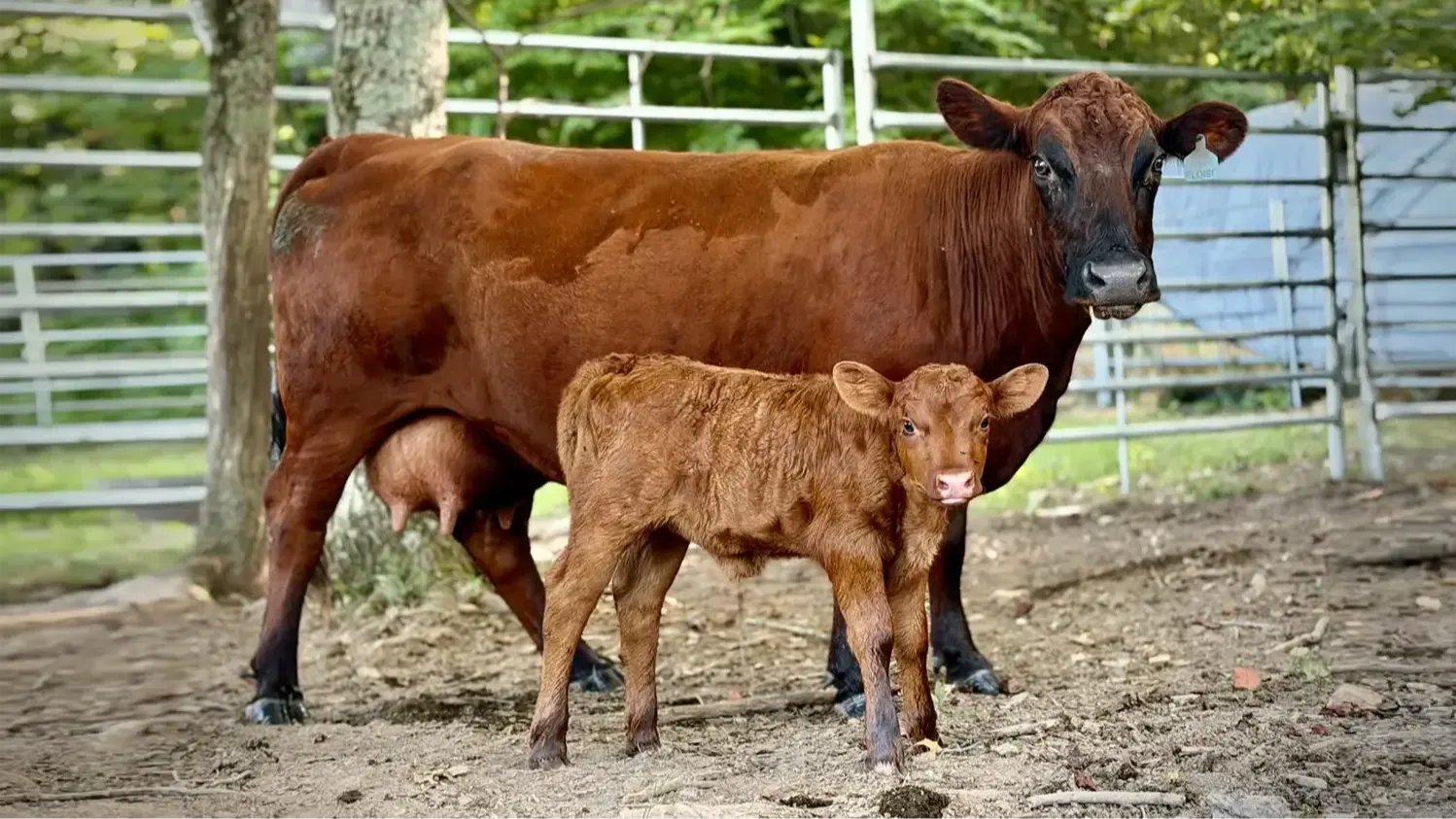
Carly was in standing heat. Not "maybe" heat, not "showing signs of heat," not "coming in." She was in full-blown standing heat. The kind where getting her focused long enough to walk into the stanchion feels like a scene out of a rodeo. It took thirty minutes of patient coaxing, but I finally managed to get her restrained in the stanchion.
I did all the normal udder prep, complete with a leg rope for my safety because—hormones—and got her hooked up to the claw. Carly is my biggest producer, routinely putting 16–18 pounds of milk in the can at every milking. But with her in standing heat, I knew the tally would likely be dismal.
For a full minute there was zero milk flow.
Then... a trickle.
I tried all the usual tricks: warm compresses, udder massage, even simulated "bumping" like a nursing calf. The flow stayed at a trickle. I milk by weight, so there was no guessing what was happening. This is why I keep live Dexter lactation records instead of relying on memory alone.
Yesterday evening's milk tally?
5 pounds.
Five miserable little pounds.
::sigh::
For a cow of Carly's capacity, it looked like a dramatic heat-related milk drop.
Cows in heat produce less milk.
Everyone knows it.
There's the evidence.
Case closed, right?
Not so fast.
Milking during standing heat is only half the story. You have to consider the next milking too.
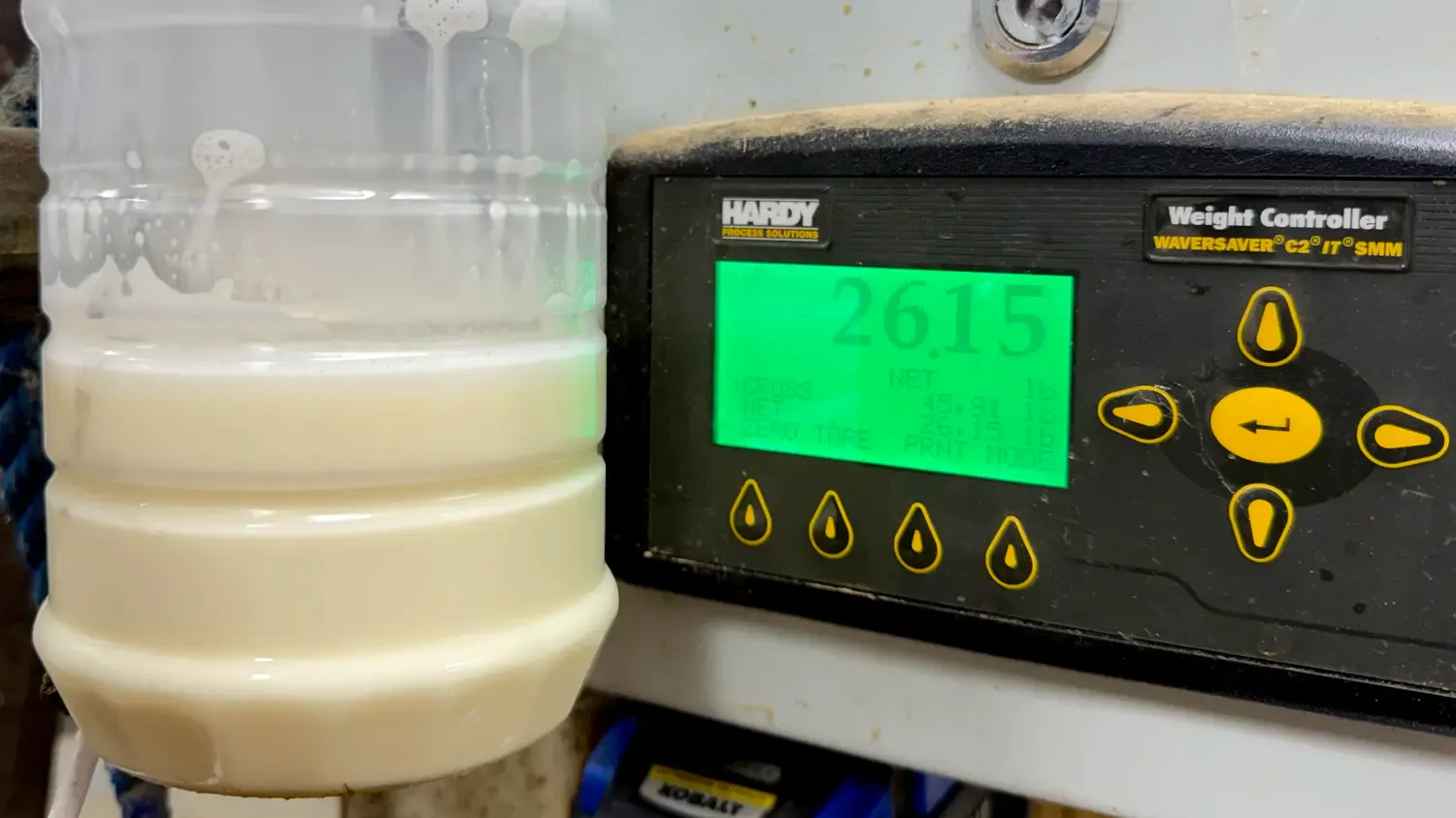
This morning, the scale stopped at 26.15 pounds. Then I stripped out an additional pound for a grand total of:
27.15 POUNDS!
(That's 3.16 gallons for those that don't do milk in pounds.)
So what actually happened?
The gospel truth contains a grain of reality. Many cows do appear to have a temporary production dip around heat. Hormonal changes can affect appetite, water intake, behavior, and milk letdown. But what often gets repeated as absolute truth is this:
"A cow in estrus produces less milk."
That's not necessarily what happened.
In my experience milking Dexter cattle, it often appears that they simply don't let down their milk normally during standing heat. Then, twelve hours later, they hand it over all at once. The milk isn't gone. It's just temporarily stuck behind a wall of hormones.
That's an important distinction.
Production and milk letdown are not the same thing. A cow can produce milk perfectly normally and still refuse to release it efficiently. Looking only at the low milking during heat tells one story. Looking at the following milking tells a very different one.
That distinction also matters when people ask how much milk a Dexter cow gives. One milking, one bad day, one heat cycle, or one dramatic number never tells the whole story.
When you keep actual records instead of relying entirely on livestock folklore, you start noticing that some "facts" are really observations that became rules after being repeated often enough. In this instance, "standing heat reduces milk supply" appears to be, at best, a half-truth.
This observation may also explain why "peak milk" can be misleading. If a cow retains milk during one milking and releases it during the next, a single day's production record may overstate or understate her actual milk production. Yesterday, Carly looked like a 5-pound cow. This morning, she looked like a 27-pound cow. She was neither. The truth was somewhere in between.
In fact, adding Carly's normal production this evening will likely create an artificially high "peak milk" number for this lactation. On paper, it may appear that she suddenly reached a new production record. In reality, the milk was probably produced over multiple milkings and simply released unevenly because of her heat cycle.
Once again, the data suggests the issue wasn't milk production at all. It was milk letdown.
Sometimes a Dexter cow will stand in heat one evening, give five pounds of milk, and then casually dump 27.15 pounds into the bucket the next morning just to remind you who's really in charge.