Is It Normal for a Calf to Pant in Hot Weather?
Pippi was born later than I'd have liked and when she was only 36 hours old, Tennessee summer hit hard.The heat index was over 110°F, and newborn calves do not regulate body temperature as well as older calves. In those first few days, heat can become dangerous quickly.
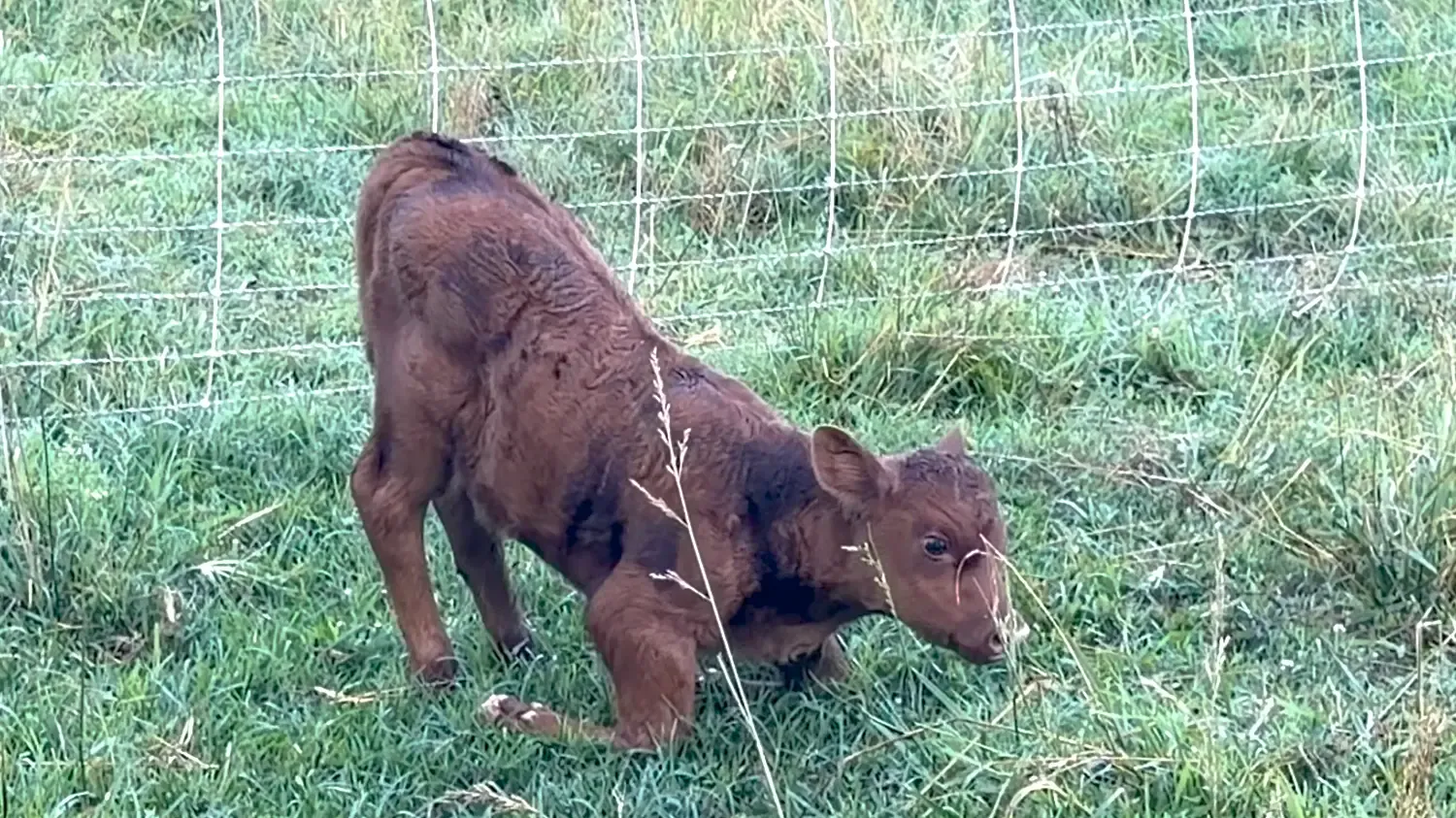
I saw Pippi rolled out flat on the barn camera and ran outside.
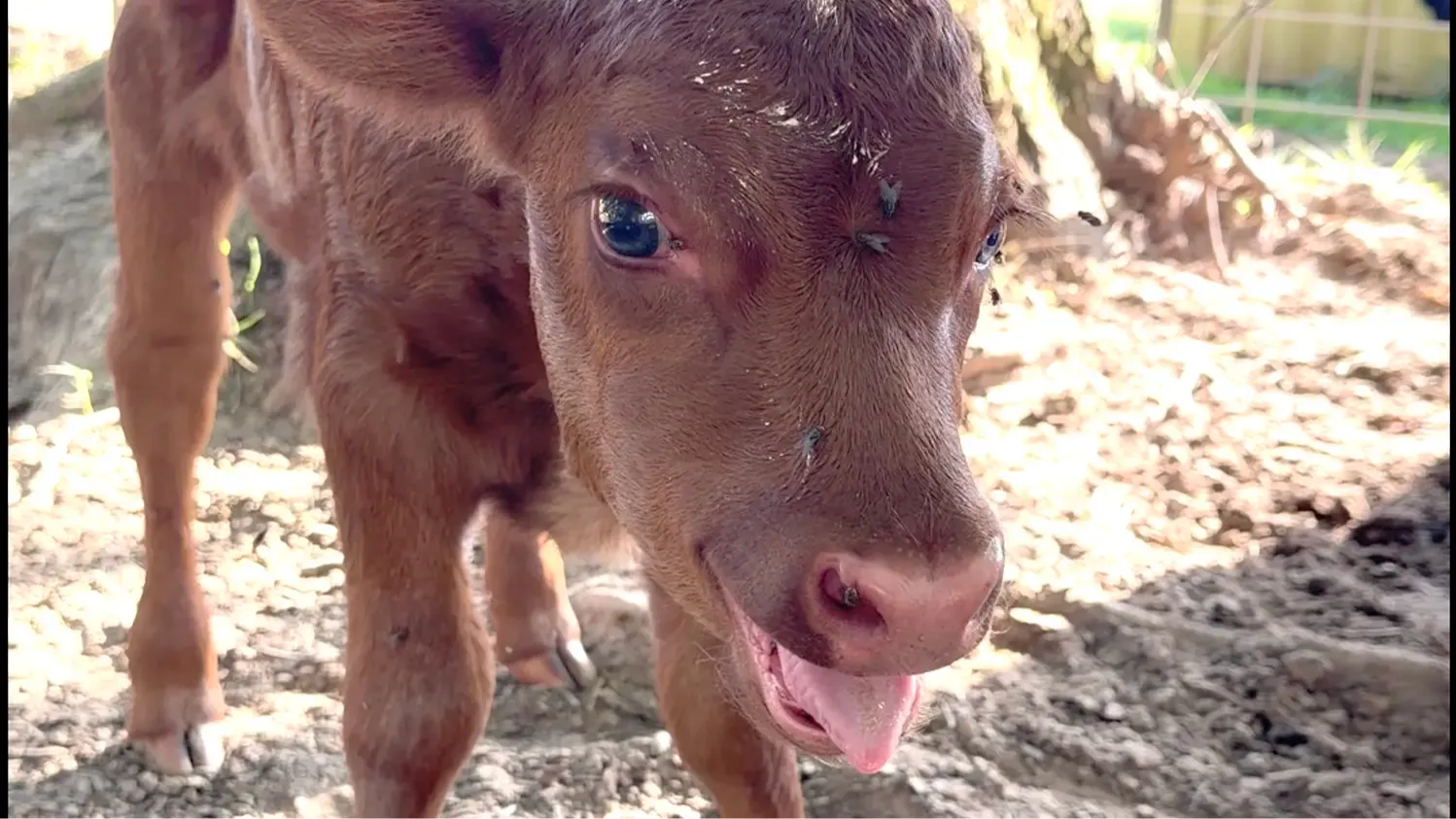
She was hot, stretched out, and open-mouth breathing. Later, a short clip of her panting with the “It’s Too Hot” song made people laugh on Facebook — and I laughed too — but in the moment, I was watching her very carefully.
What I Did for Pippi
I misted her down, got her cooled carefully, and kept her in the barn under a fan from noon until the sun was low in the sky.
The goal was simple: shade, airflow, lower stress, close monitoring, and making sure she kept nursing.
With newborn calves, I do not just look at one sign. I look at the whole calf.
Signs I Was Watching
A hot calf may breathe faster or rest more during extreme heat, but these are the things that make me pay close attention:
- open-mouth breathing
- extreme weakness
- dull eyes
- droopy ears
- not nursing
- dehydration
- scours
- inability or unwillingness to get up
- lying flat and not responding normally
Pippi was hot, but she was still bright, still nursing, and responded well once I cooled her and got her into better conditions.
What I Want to See After Cooling
After a calf gets hot, I want to see signs that she is recovering:
- alert eyes
- interest in mama
- nursing
- normal movement
- resting comfortably
- improvement once shaded/cooled
- playfulness later when the heat breaks
By evening, Pippi was back outside with Eloise once the sun was low. And in the days afterward, she made it very clear she was feeling good — nursing, playing, head-butting, and tearing around the pasture with calf zoomies.
What Research Says About Heat Stress in Calves
Young calves can struggle in sustained summer heat just as adult cattle do. University of Minnesota Extension notes that temperatures above about 85°F can increase breathing rate, sweating, and body temperature in calves. Penn State Extension also identifies dehydration, reduced feed intake, and poorer overall health as important heat-stress concerns in young calves.
The same research supports the basic management steps I used with Pippi: shade, increased airflow, access to water, and close monitoring. Studies summarized by Penn State found that shade and better ventilation can lower calf respiration rates and reduce the heat load inside calf housing.
That research does not make one panting calf a diagnosis. It does reinforce why I took Pippi’s open-mouth breathing seriously and why I watched her response to cooling rather than dismissing the behavior as “just summer.”
The Lesson
The internet saw a funny little calf who looked like she was saying, “It’s too hot.” Honestly? She was right. But behind that funny reel was a real farm situation: a 36-hour-old calf, a heat index over 110°F, and a farmer watching closely because newborn calves need help when the weather turns dangerous.
Pippi’s dramatic little face made people smile.
Her recovery made me grateful.