Sunny-Side-Up Calf: When Two Feet and a Nose Is Not Textbook
Viewer discretion advised: this video includes calf delivery footage.
It was 5:45 this past Sunday morning.
But of course it was.
Eloise was down in the pasture, pushing hard. This was her 16th calf, so by all reasonable expectations, this birth should have been straightforward.
It was not.
After about 30 minutes of hard pushing with no real progress, I gloved up to check presentation. Because Eloise is such a sweet old gal with exceptional Dexter temperament, I was able to do this right there in the middle of the pasture.
A normal front-end presentation is what I usually call the “Superman” position: two front feet coming first, with the calf’s nose resting between the front legs. That is what I expected to feel. Instead, the first thing I touched was teeth.
Teeth at about 7 o’clock.
Hooves at about 2 o’clock.
Wait. What?
That couldn’t be right.
I checked again.
Yep. 😳
This baby was coming sunny-side up. The more technical term is a dorso-pubic position, meaning the calf’s back was facing the cow’s underside instead of being aligned toward the cow’s spine. In plain farm language: she was in the Superman position, but facing the sky instead of the ground.
The Moment We Realized This Was Not Normal
I ran for chains and called my husband to come help. He gloved up and confirmed what I had felt: sunny-side-up presentation. At that point, logic kicked in. We might need to turn this baby.
I called a good friend with decades of Dexter experience.
No answer.
I called the vet, left a message, and expected a call right back.
Nothing.
I called my friend again.
Still nothing.
So I did what every desperate farmer does in a bad moment: I tried Google.
Let me tell you, Google is terrible in an emergency.
Sometimes assisting at a birth means making the best decision you can with muddy boots, shaking hands, and a cow who has already decided this calf is being evicted now.
Eloise Served the Eviction Notice
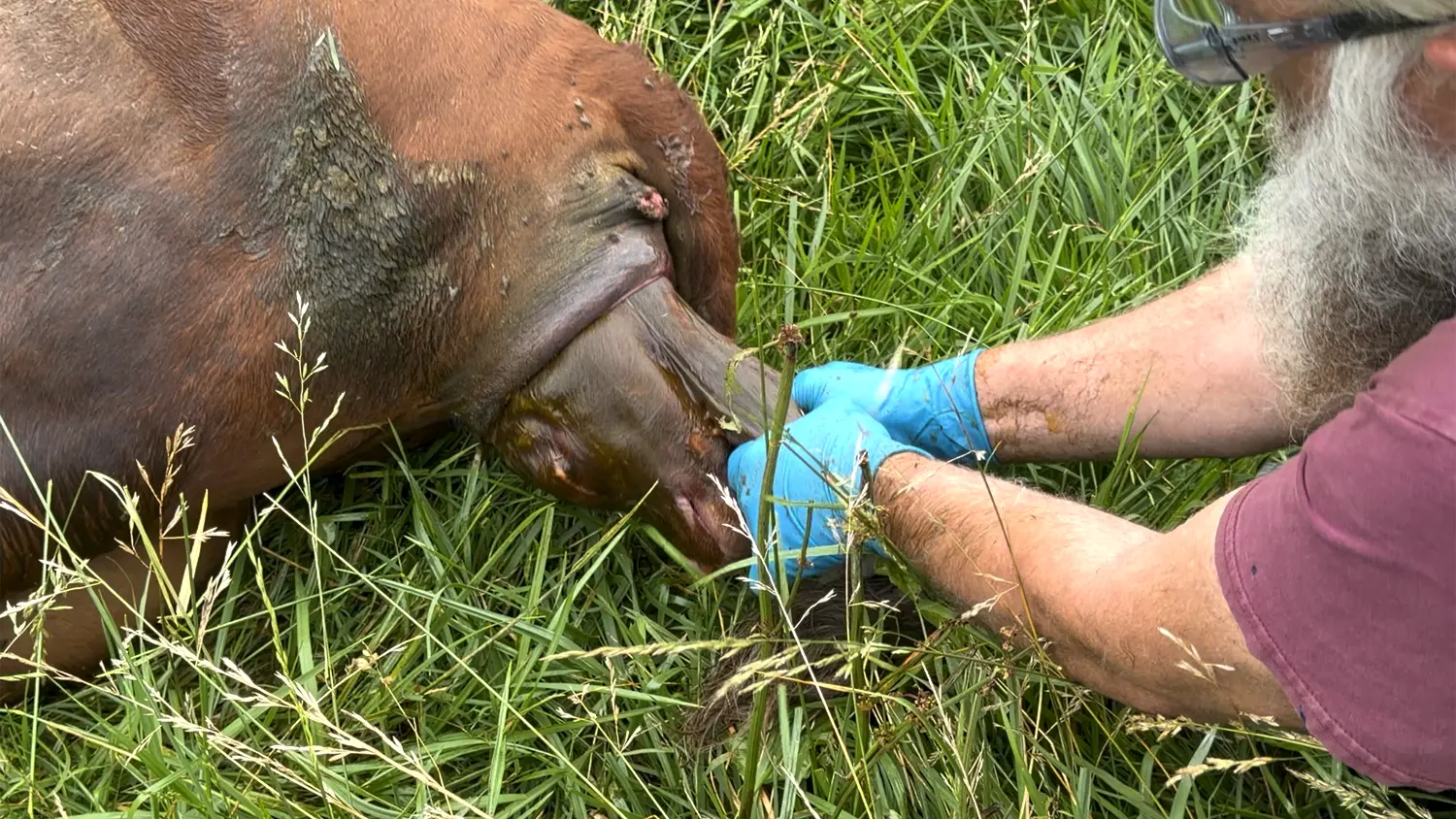
While we were trying to figure out the safest next step, Eloise made the decision for us. This 17 1/2-year-old superstar cow pushed hard again, and suddenly the calf’s nose and feet began protruding from the vulva. At that point, we no longer had the option of waiting.
We had to pull.
Thankfully, my husband had the presence of mind not to pull downward the way you often would during a normal assisted delivery. With the calf upside down, pulling down could have put dangerous pressure on the calf’s spine. He later said something just told him to pull straight instead.
Once the calf was about halfway out, I had to stop videoing and help with the chains so we could get her delivered quickly and keep her from suffocating.
It was not ideal.
Nowhere near textbook.
But by God’s mercy, both mama and baby were 100% fine.
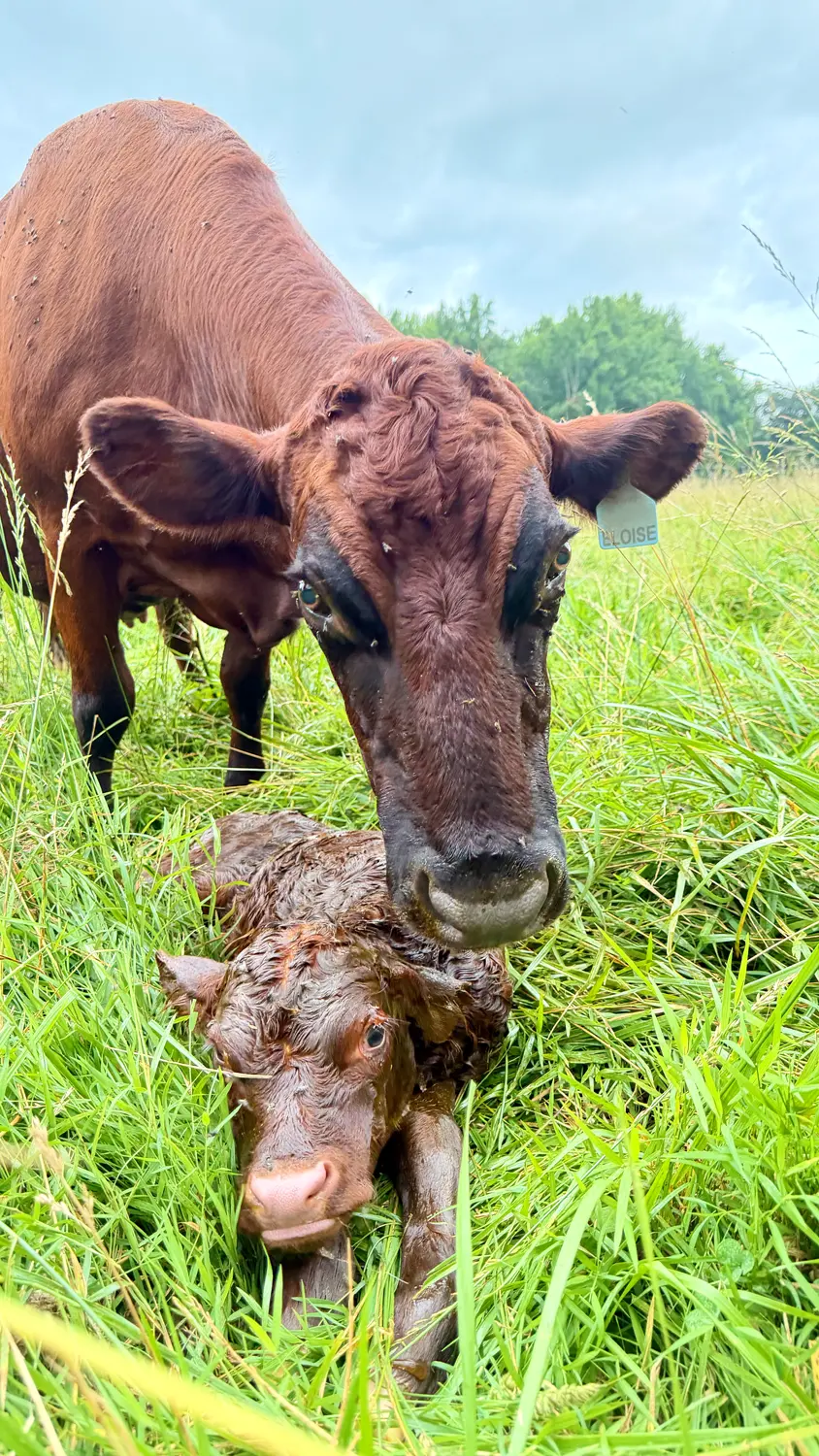
What We Learned After the Fact
If there is still room and time, a sunny-side-up calf usually needs to be corrected before pulling. In other words, the goal would be to reposition or rotate the calf into a safer delivery position before traction is applied.
Conceptually, repositioning usually means:
- Push the calf back first.
Push the calf back out of the pelvic canal and into the uterus enough to create room. You cannot rotate much once the calf is wedged in the pelvis. - Use the legs and head carefully as guides, not brute leverage.
The front legs may help you understand and influence rotation, but you do not want to torque hard on the joints, neck, jaw, or spine. - Rotate the calf upright.
The goal is to roll the calf so its spine is toward the cow’s spine — the normal “right-side-up” position — before pulling. - Then deliver in the normal arc.
Once corrected, traction can follow the normal downward arc through the pelvis.
In Eloise’s case, by the time we understood what we were dealing with, the calf’s nose and feet were already protruding, and Eloise was actively delivering. We no longer had a clean opportunity to reposition the calf. That is why this birth could have been much more dangerous in a younger cow or heifer.
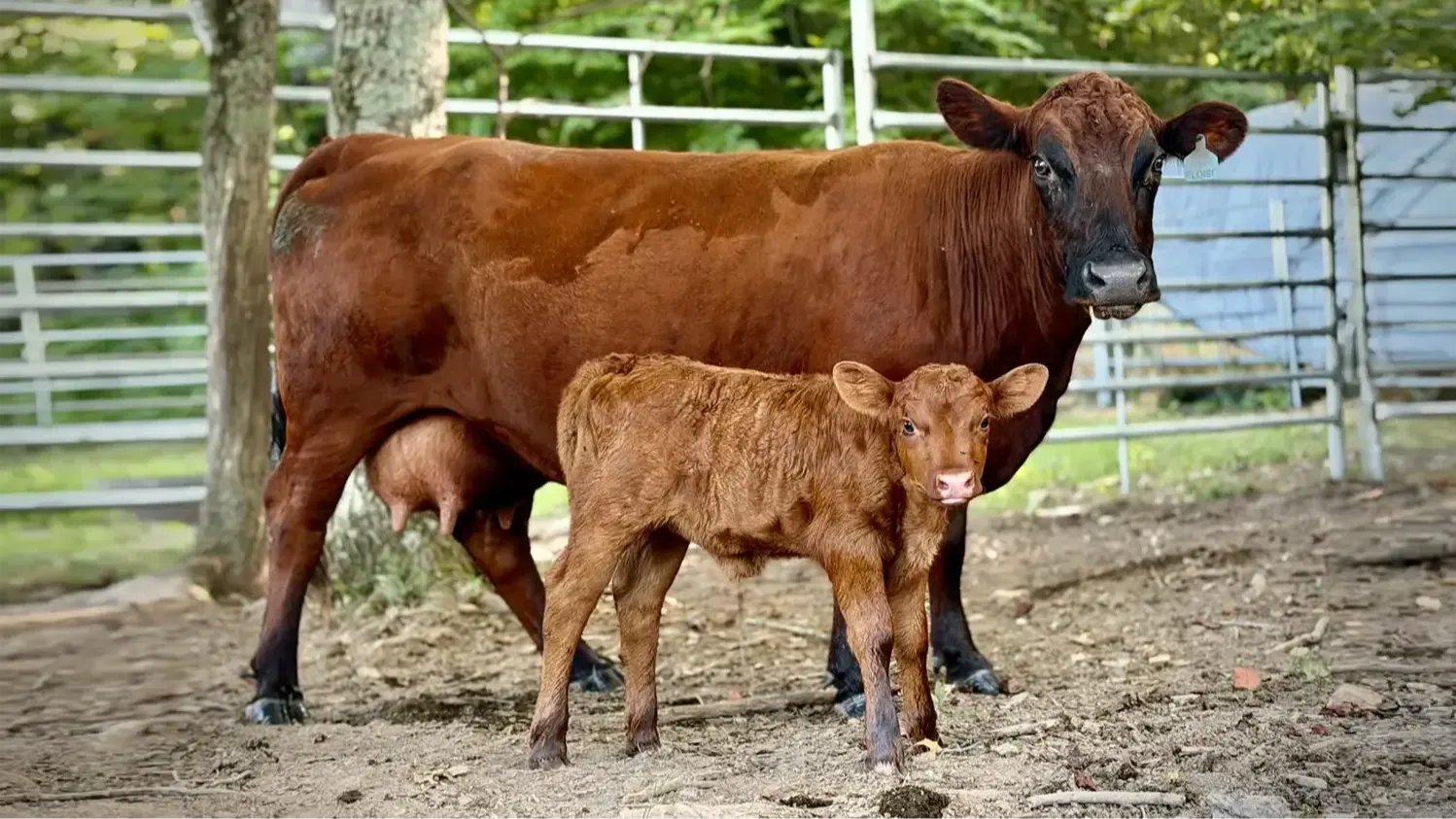
In our case, Eloise’s age and experience likely made all the difference. She had delivered 15 calves before this one. Because she had enough room in her pelvis, she was able to deliver a sunny-side-up calf without apparent injury to herself or the baby.
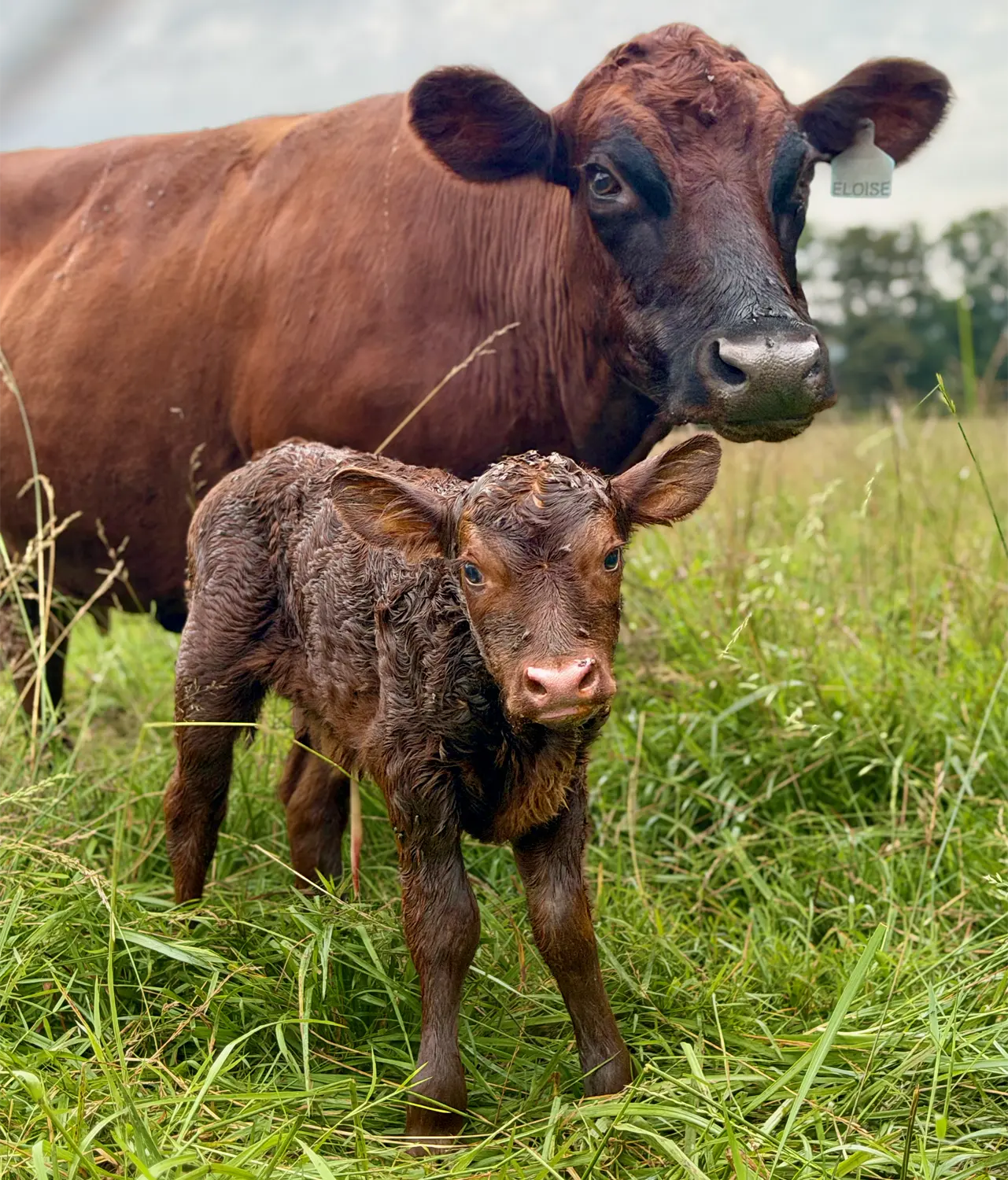
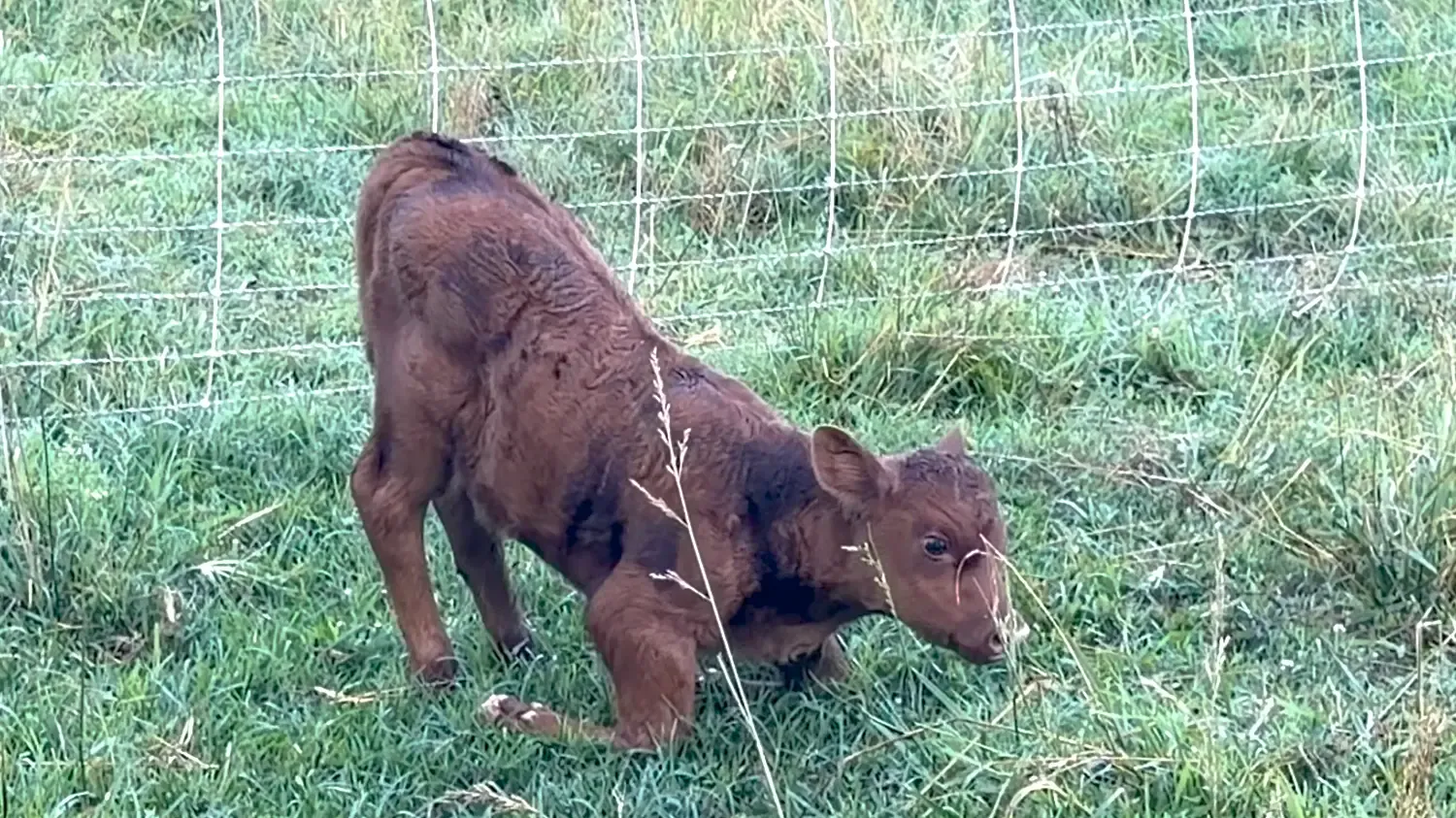
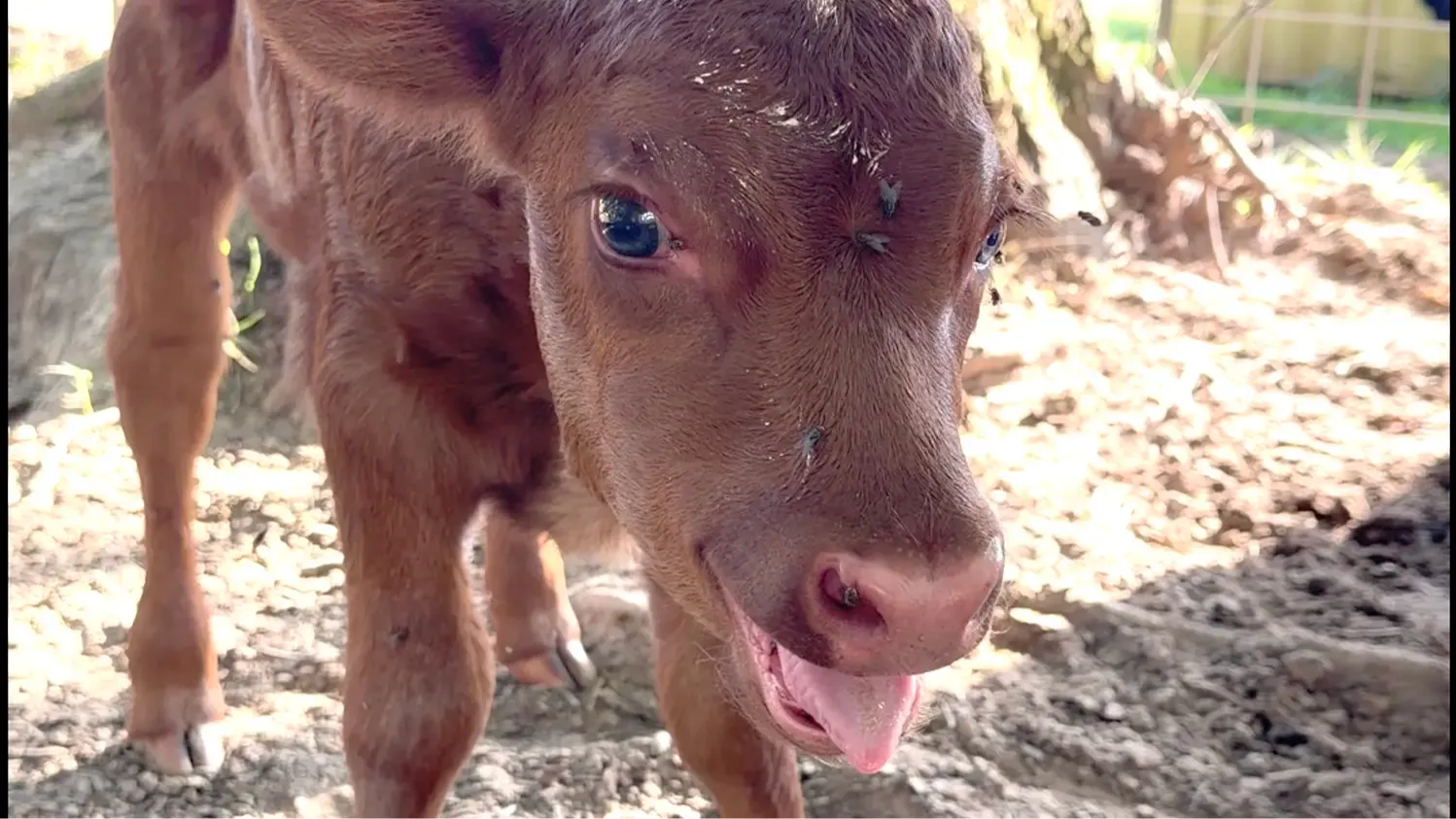
Pippi was up quickly after delivery, which is exactly what I hope to see in a strong Dexter calf raised on pasture.
Why This Case Matters
This is one of those calving situations that looks almost normal at first glance.
There were two feet.
There was a nose.
The calf was coming forward.
However, the orientation was wrong. That detail matters.
Normal presentation is not just about which parts are coming first. It is also about how the calf is positioned inside the cow. That is the part I will never forget from this birth.
My Takeaways
- Check presentation when progress stalls.
- Call for help early.
- Do not assume “two feet and a nose” means everything is fine.
- If something feels wrong, stop and think before pulling.
And remember that sometimes, even when you do everything right, the cow may not give you the luxury of a perfect plan. Eloise did not. She said that baby was coming now, and she meant it. 🤣
Thankfully, both cow and calf came through beautifully. But this birth was a powerful reminder: real farm life does not always follow the textbook.
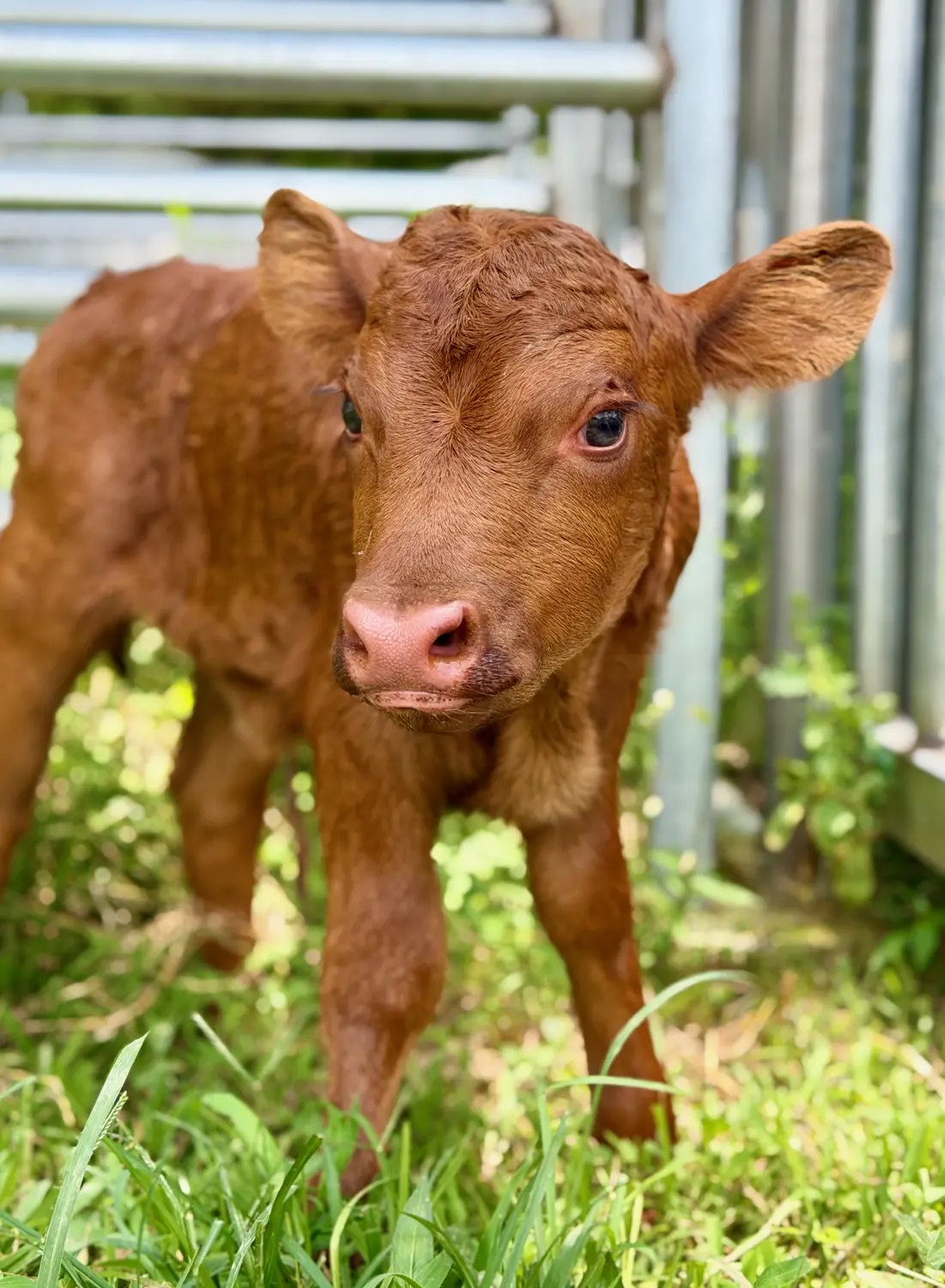
By later that day, this bright red little heifer was up, alert, and already showing plenty of personality. That is how she earned the name Pippi, after Pippi Longstocking. With that red hair, that determined expression, and the dramatic entrance to match, it seemed only fitting.