How I Transition Bottle Calves to a Nurse Cow
I prefer a nurse cow when I have the right cow. The bottle is usually the bridge that gets us there.
by Michelle Parsley, M.Photog., M.Artist, Cr.
I Prefer a Nurse Cow — When I Have the Right Cow
If I have a suitable cow, I would rather raise a bottle calf on a nurse cow than keep feeding bottles all the way to weaning.
That does not mean I can usually skip the bottle stage. Most of the calves that eventually wind up on a nurse cow here start on a bottle first. The bottle gets milk into the calf while I figure out whether I have the right cow available and whether both cow and calf are willing to cooperate. Then I begin the transition.
Sometimes it works beautifully. Sometimes it does not work at all.
Having a cow with plenty of milk does not automatically give you a nurse cow, and putting a hungry calf beside an udder does not automatically give you a calf that knows how to use it.
Why I Prefer a Nurse Cow
Bottle feeding works, and sometimes it is exactly what a calf needs. But when I have the right cow, I would much rather let a cow do cow work.
A successful nurse-cow arrangement lets the calf go to the udder instead of waiting for me to show up with a bottle. It also puts the calf into a more natural daily rhythm with cattle instead of making every meal dependent on a person carrying milk.
That does not mean the farmer gets to stop paying attention.
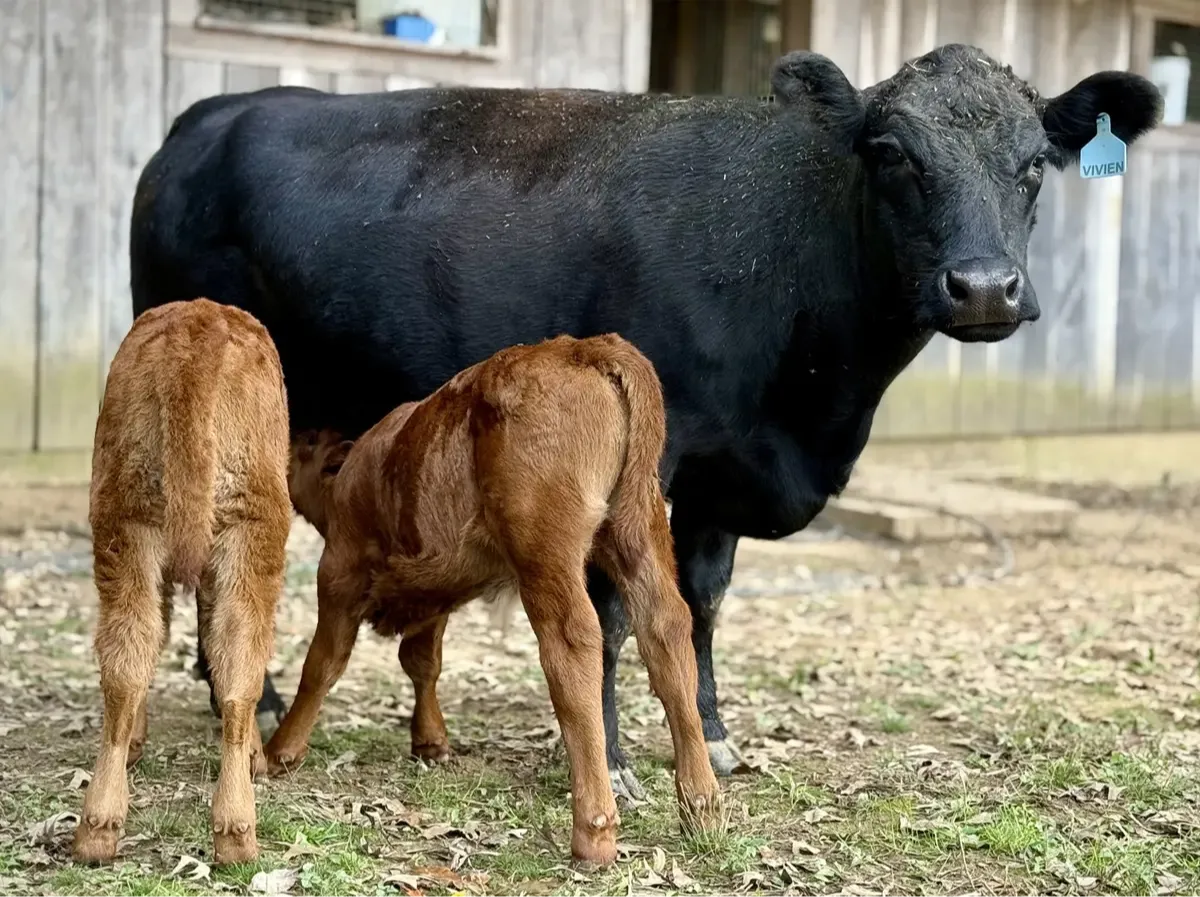
In some ways, observation becomes more important because I no longer know exactly how much milk went into that calf. With a bottle, I know what disappeared from the bottle. With a nurse cow, I have to read the calf, the cow, and the whole situation.
The Bottle Is Usually the Bridge
When a calf needs milk, my first priority is getting milk into the calf — not making the future nurse-cow arrangement work on day one.
So I generally start the calf on a bottle. Once the calf is drinking reliably and I have a cow I think may work, I start teaching the calf to look somewhere besides me for supper.
The calves in the video are London and Del — the same two calves you will see later nursing Melody. They started on bottles first. The nurse cow was the destination; the bottle was the bridge that got them there safely.
I do not make a calf go hungry to force the issue. The goal is to teach the calf to nurse a cow while still protecting the calf's nutrition during the learning period.
This is not a process that can be rushed.
It took over three weeks to transition London and Del onto "mama Melody" full time. Patience, providing milk buckets, and a great cow is the winning combo.
Not Every Milk Cow Is a Nurse Cow
Milk supply matters, but willingness matters too.
A cow may have plenty of milk and still have absolutely no interest in allowing a calf that is not hers anywhere near her udder. Another cow may tolerate extra calves surprisingly well.
I select nurse cows for temperament as much as production. I need a cow I can work around safely, one that will tolerate the transition process, and one whose udder is accessible enough for the calves I am asking her to raise.
I also try to keep foster calves reasonably close in age and size. A bigger, more aggressive calf can get to the udder first and stay there longer, while the smaller calf quietly loses the competition.
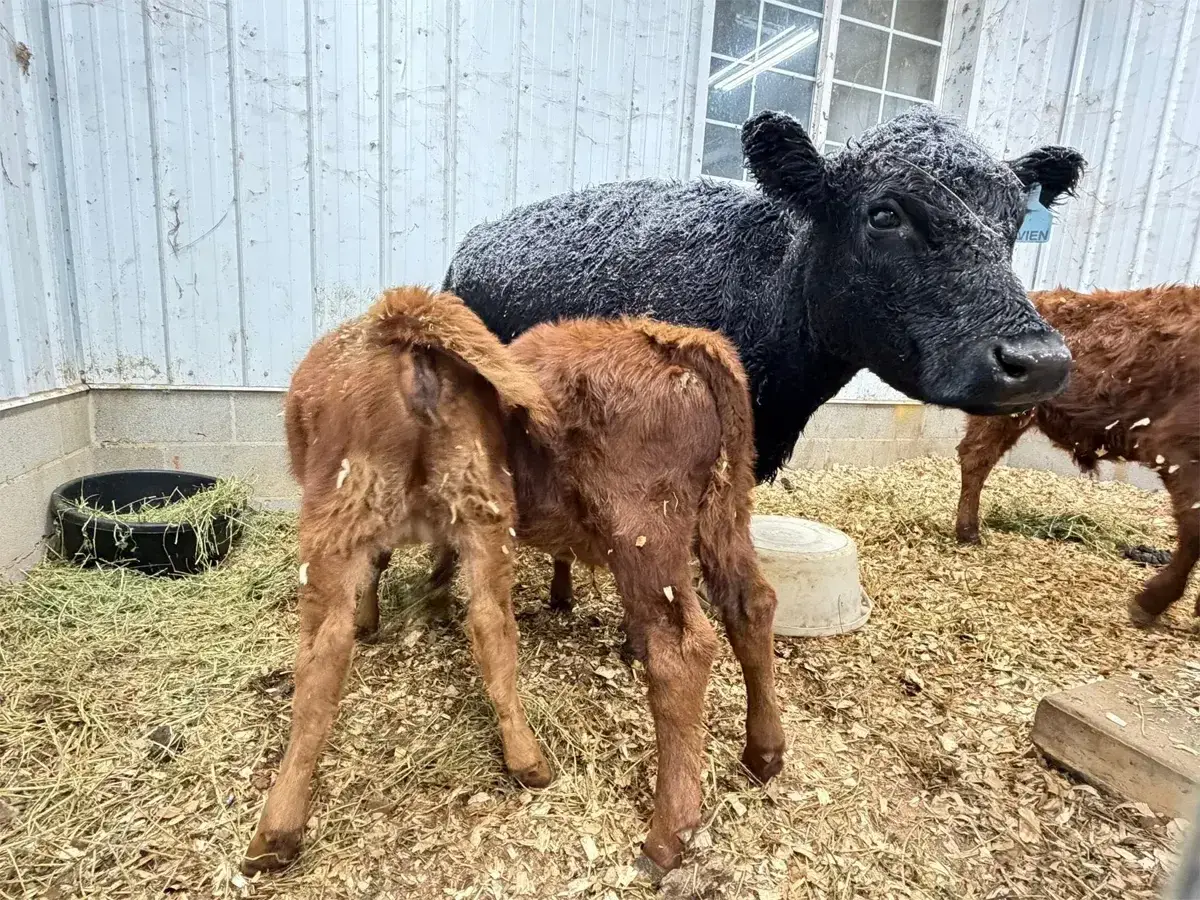
Part of why this arrangement with Melody worked so well was that all three calves were born within five days of one another. Harmony, London, and Del were at roughly the same stage, so I was not asking a tiny newborn to compete with a calf several weeks older for access to the same udder.

How Many Calves Can One Dexter Raise?
I do not expect the same thing from every cow or every lactation.
As a general rule in my herd, I cap a first-lactation Dexter at two calves. Second lactation usually brings some additional production — often around another half gallon a day here — but that generally is not enough extra milk for me to feel comfortable adding a third calf.
By the third lactation and beyond, a good-producing Dexter may have enough capacity to raise three calves. In my herd, third-lactation cows average more than 3 gallons of milk per day at peak — generally a little over a gallon per day more than they gave in first lactation.
That matters because I estimate a nursing calf needs a little over a gallon of milk a day. On paper, a good third-lactation cow producing more than 3 gallons a day has enough milk to support three calves.
But lactation number does not override actual production. Sue is a good example. She is a low-producing cow, and even in her third lactation she peaked at only about 20 pounds of milk per day — roughly 2.3 gallons. I would never graft two extra calves onto her just because she is a third-lactation cow.
I watch the cow's actual production and condition and, just as importantly, whether each calf is getting enough. A lower-producing Dexter may never be a three-calf cow, while a strong producer may handle three very well.
Use a Fresh Cow
I would not try to graft a newborn onto a cow that has been in milk for six months and has already weaned her own calf. By then, her milk supply has dwindled too much. For this to work well, I want a fresh cow whose udder is still in a stage where added demand can build production.
Give Her Milk Supply Time to Catch Up
Once the extra calf or calves start hooking up routinely, there can be a few days when the cow does not quite have enough milk for everyone yet. That alone does not mean the arrangement is failing. If the calves are bright, active, and not showing signs of struggle, I give the cow time.
Stimulation of the udder is key to building milk supply. Those calves nursing more often are telling her body to make more milk. I do not intervene just because supply looks a little tight for a few days. I intervene when the calves tell me they are struggling.
For comparison, when I bottle feed, I provide about 1.5 gallons per calf per day. I would rather be generous on the bottle than make a calf prove how little milk it can survive on.
Do Not Expect a Nurse Cow to Raise Two or Three Calves on Grass Alone
Milk production has to be fed.
I do not expect a cow raising two or three calves to maintain that level of production and hold her own condition on pasture alone. My nurse cows are fed a milker's ration twice a day in addition to their forage.
Here, that ration includes both alfalfa and what we call “crushin” — a crushed mix of corn, barley, hay, and molasses.
The point is not simply to push more milk. A cow feeding multiple calves has a substantial nutritional demand. I want enough energy and protein going into her to support milk production without pulling her down in the process.
A cow may have the genetic and lactational capacity to raise three calves, but if she is underfed, that capacity does not mean much. I watch both the calves and the cow. If the calves are thriving but the cow is losing too much condition, the arrangement is not working well enough.
The First Job: Get the Calf on the Udder
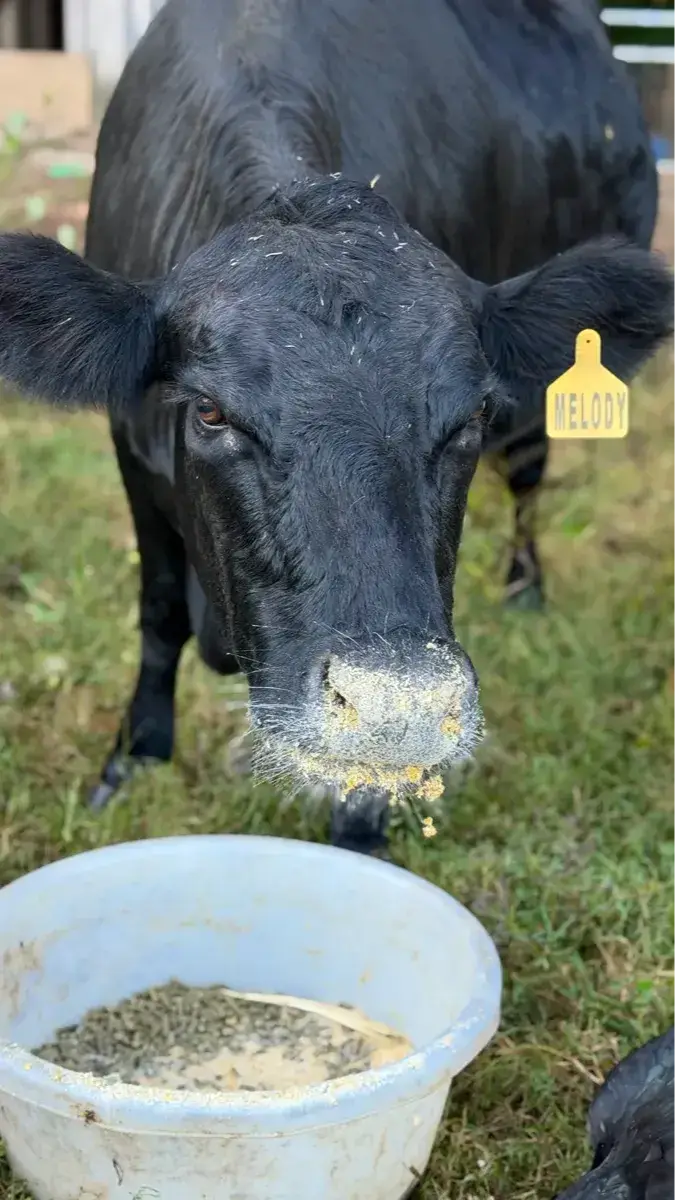
At first, I may restrain the cow and keep her occupied with feed while I help the calf find the udder.
That first assisted nursing is not the finish line. It is simply the beginning.
A calf that will nurse only while I put him in position still depends on me. My real goal is for that calf to walk up to the cow, find the udder, latch on, and keep nursing without my help.
There are really two separate things happening during this stage:
- The cow has to learn to tolerate or accept the calf.
- The calf has to learn that the udder is where the milk is now.
Those two things do not always happen at the same speed.
It Is Not Smooth at First
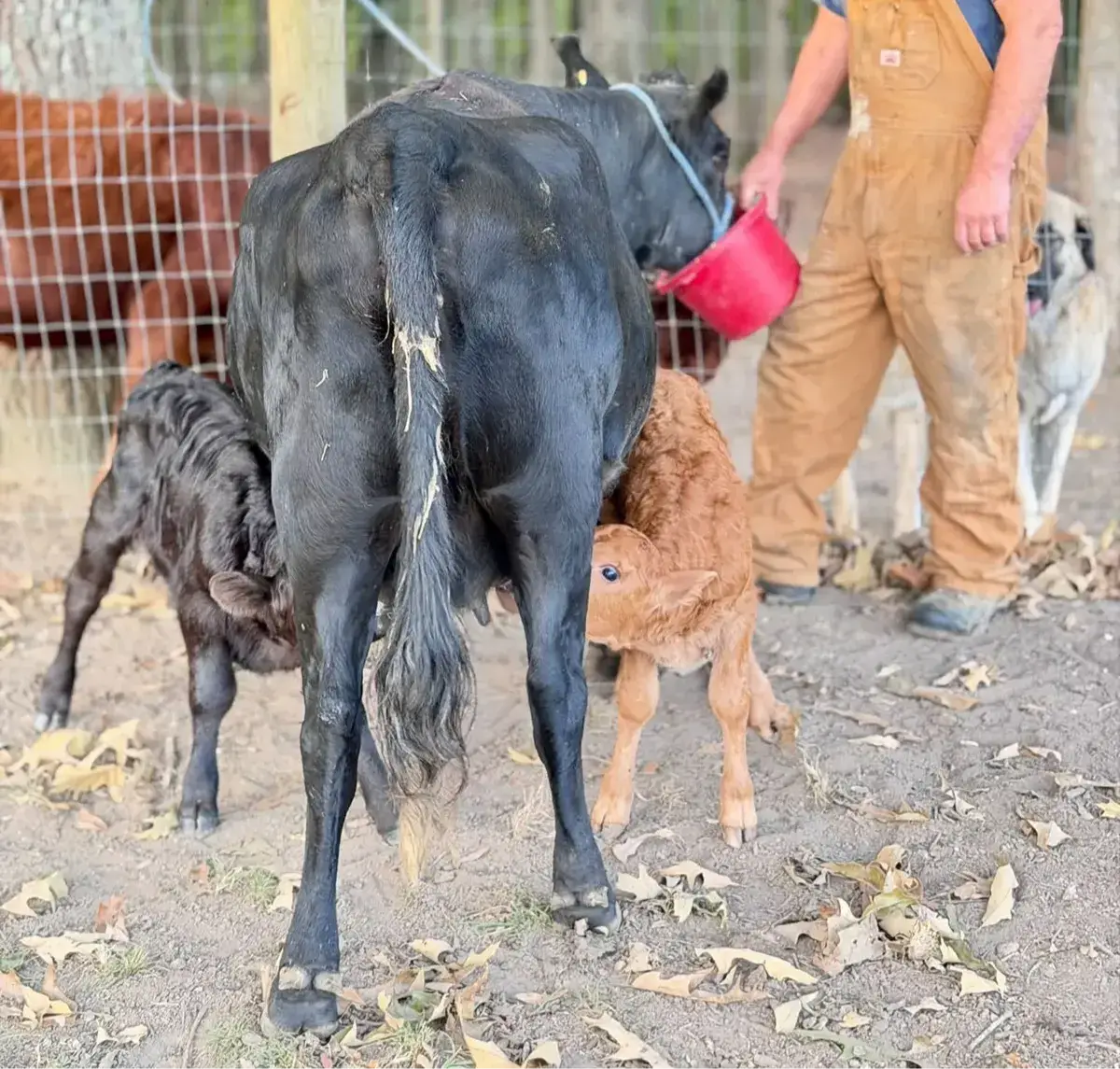
Even a cow that ultimately accepts foster calves may kick, step away, swing her head, or otherwise make it clear that she is not thrilled with the arrangement at first.
That does not automatically mean she is a bad nurse cow. I am watching the difference between a cow that is objecting and a cow that is genuinely unsafe.
Melody did plenty of protesting while London and Del were learning the ropes — and she has fed foster calves before! She would kick at them and make them work for access to the udder. Over time, the resistance faded as the calves became more persistent and Melody became more accustomed to them.
This video is a much more realistic picture of the early transition than the final footage of all three calves nursing peacefully together.
Don't get discouraged — it is not always smooth at first.
Willingly Nursing Is the Milestone I Want
The moment I am waiting for is not merely a calf with his mouth on a teat. It is a cow standing willingly for a calf that is not hers and a calf choosing to go there without me arranging the whole thing.
That was what made Melody's nurse-cow project worth documenting. Melody had her own calf, Harmony, while I was transitioning London and Del from bottle feeding to nursing her.
Seeing Melody willingly stand for a foster calf was a big step. It still was not proof that the calf had gotten enough milk.
“I Saw Him Nurse” Is Not the Same as “He Got Enough”
This is where the nurse-cow project becomes less about training and more about observation.
I can watch a calf latch onto a teat and still not know whether he stayed there long enough, whether milk was flowing well from that quarter, or whether he actually filled his belly.
So I look for clues.
What does the calf look like afterward?
I look at belly fill and whether the calf looks comfortably full or still hollow through the flank.
What does the calf do next?
A calf that immediately starts hunting the udder again may be telling me he did not get what he wanted the first time.
How is the calf acting?
I want a bright, active calf. A calf that becomes dull, weak, or unusually quiet gets my attention quickly.
Is there milk evidence?
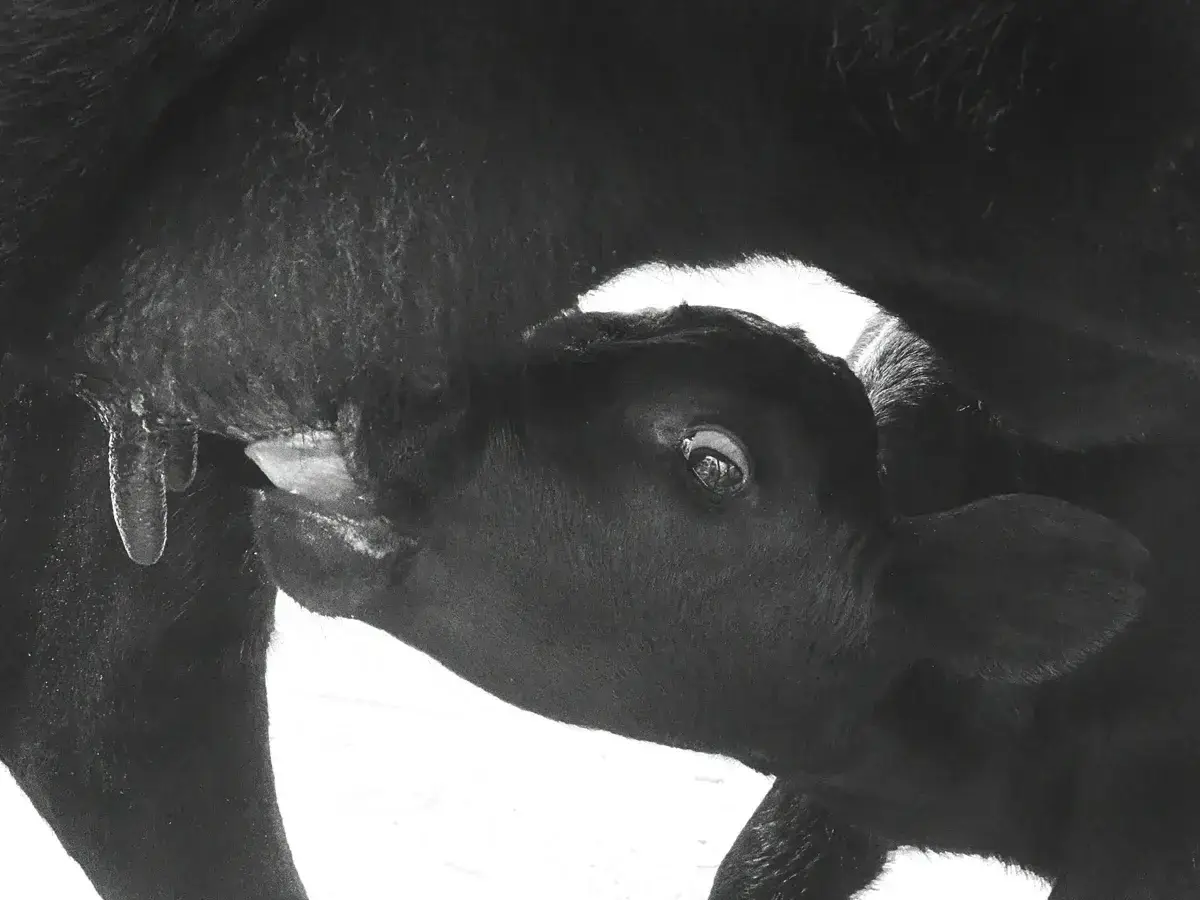
Sometimes the nose gives the game away. A wet, milky nose is a pretty good clue that a calf has recently been nursing. I still use it as one clue among several — not proof that the calf got a full meal.
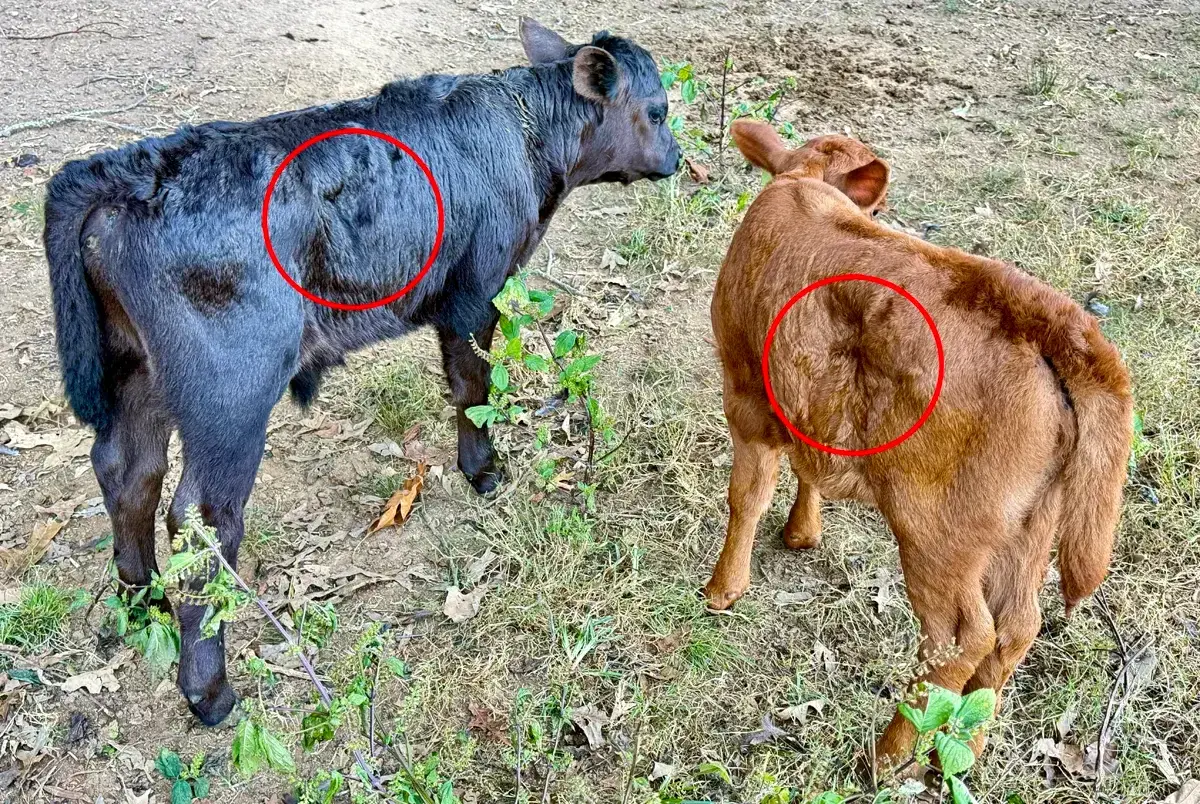
Before nursing: both calves are visibly hollow in the area above the flank often casually called the “hunger hollow.” That’s the area behind the last rib and in front of the hip that can look noticeably sunken when a calf hasn’t filled up. That is one of the clues I use when deciding whether they have had enough milk.
Watch How the Calf Works the Udder
The calf's nursing pattern can give me another clue about how much milk is available.
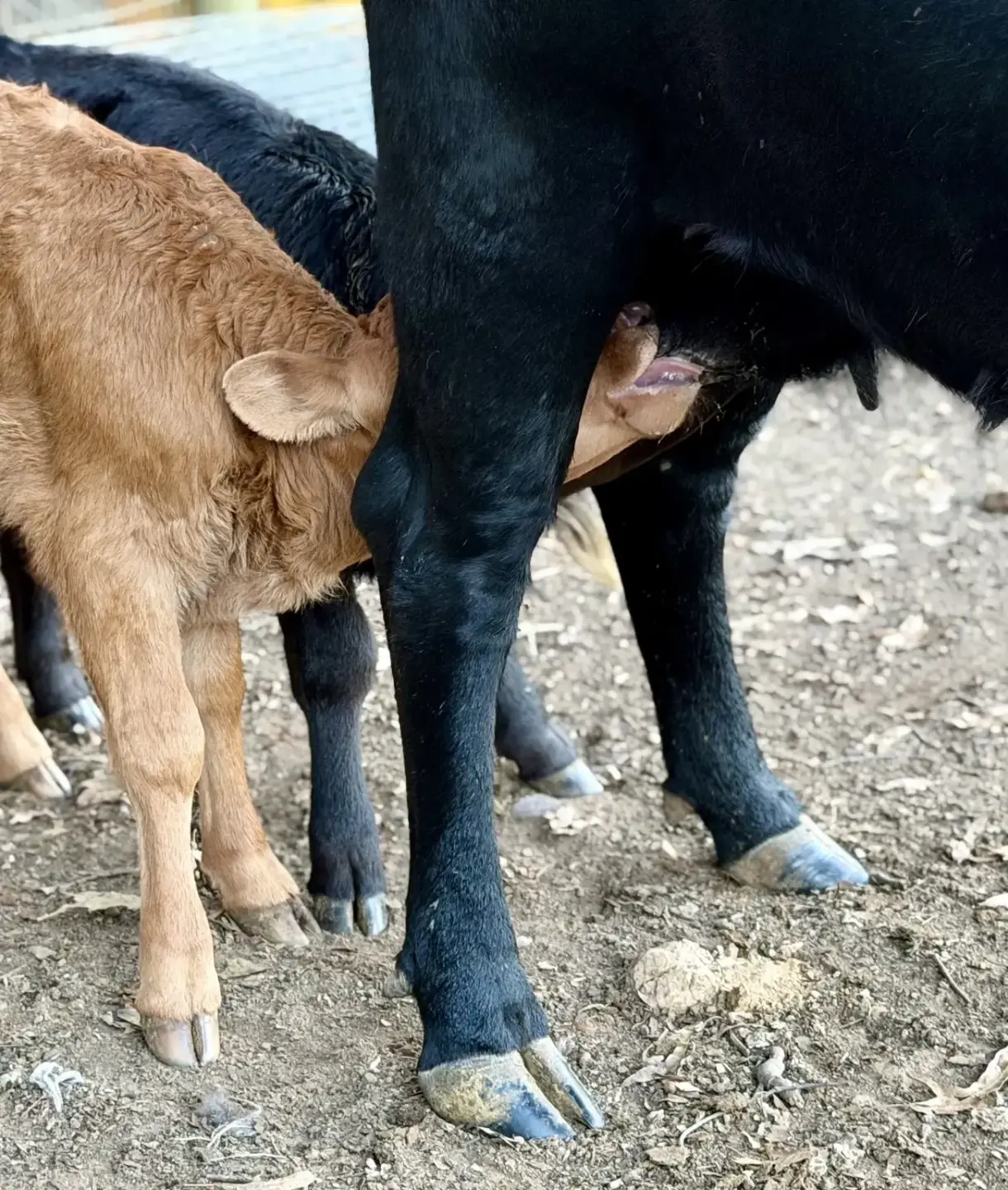
When an udder is getting worked down and milk flow is poor, I often see a hungry calf move quickly from teat to teat, checking one after another for better flow. That restless switching tells me to pay attention.
When the udder is full and milk is flowing well, the calf is more likely to settle onto one teat and stay there. I also watch for the little milk bubbles or foam around the mouth — another good clue that milk is actually moving.
Neither behavior tells me exactly how much milk went into the calf. I use it with the other clues: belly fill, whether the calf still looks hollow, behavior after nursing, milk on the nose, and whether the calf immediately goes back looking for more.
Bottle Refusal Is Encouraging. It Is Not Proof.
When a bottle calf begins refusing the familiar bottle after spending time with a nurse cow, that is encouraging. It tells me the calf is probably getting milk somewhere else and would rather get it from her than from me.
But I do not treat bottle refusal by itself as proof that everyone is getting enough.
That distinction mattered with Melody because she was feeding her own calf, Harmony, plus London and Del. I needed to know not just that someone was nursing, but that each calf was holding his or her own.
Different Calves Learn at Different Speeds
London figured Melody out before Del did.
London became persistent about getting to the udder and reached the point where I no longer needed to convince him that Melody was the better option.
Del understood where the milk was, but he was less persistent. I could watch him attempt to nurse and be easily pushed away by Melody with a swing of her head or a half-hearted kick (see video below).
Same cow. Same general setup. Two very different calves.
That is an important reminder: if a nurse-cow arrangement is struggling, the cow is not automatically the problem. Sometimes the calf is the slower half of the equation.
How I Decide When I Can Back Away
I am looking for a pattern, not one successful nursing session.
Before I consider the transition dependable, I want repeated evidence that the calf is:
- going to the cow without being placed there;
- being allowed to nurse;
- persisting long enough to get a worthwhile meal;
- looking and acting satisfied afterward;
- maintaining good condition and normal energy;
- and showing me the same pattern again at the next opportunity.
Only then do I get comfortable reducing bottle support.
What Would Make Me Intervene?
I have been fortunate. I know my cows pretty well, and they generally do what I predict they are going to do. I have never had a nurse-cow transition get far enough off track that I had to pull a calf back and start over.
Calves are alive... until they're not. There can be a fairly fine line between “I need to keep an eye on this one” and a calf that is genuinely in trouble.
I would step in if I started seeing a pattern like:
- a calf staying noticeably hollow even after I know it has nursed;
- frantic switching from teat to teat, as though it cannot find enough milk;
- returning to the udder over and over and still acting unsatisfied;
- or becoming unusually sleepy, dull, weak, or less interested in what is going on around it.
Those are the kinds of before-the-crash clues that get my attention. None of them tells me exactly how much milk went into the calf, so I look at the whole pattern rather than one isolated sign.
If I decide a calf needs supplemental milk, I do not let the calf's preference settle the question. Once a calf has been nursing a cow, getting it to take a bottle again can turn into a wrestling match. It is okay to insist. Refusing the bottle may simply mean the calf now prefers the cow — not that it has had enough milk.
I would rather get milk into a calf a little earlier than wait until it crashes just to prove the nurse-cow arrangement is working.
Sometimes It Does Not Work
I prefer a nurse cow. I do not insist on one.
If the cow will not safely allow the calf to nurse, if the calf simply will not make the transition, or if I cannot convince myself that the calf is getting enough milk, I would go back to feeding the calf.
The method is supposed to serve the calf — not the other way around.
There is no prize for forcing a nurse-cow arrangement that is not working.
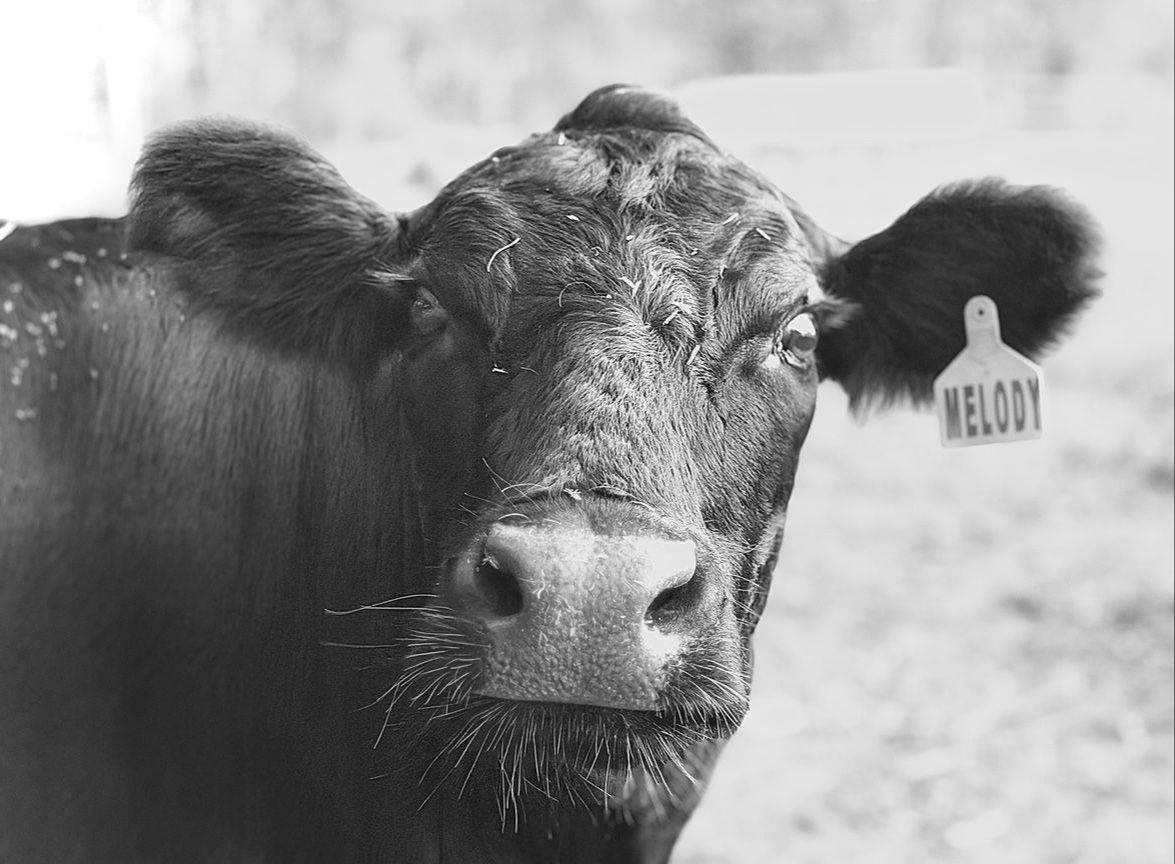
Thankfully, Melody is an excellent nurse cow.
Did It Work?
Yes. The transition reached the point I was looking for: Harmony, London, and Del were all going to Melody to nurse without me having to arrange the whole thing.
That final result did not come from one successful nursing session. I watched the pattern build over three weeks — who went to the udder, who came away looking satisfied, who went back for more, and whether each calf continued to hold his or her own.
The final video below is the payoff: all three calves nursing Melody together.
That is when I am comfortable calling a nurse-cow transition a success.
Take the Checklist to the Barn
You do not need to remember every clue while you are standing in the pasture wondering whether everybody got enough milk. I put the things I actually watch into a simple one-page checklist you can print and keep handy while you transition calves to a nurse cow.
It includes the signs that tell me the arrangement is working, the before-the-crash clues that make me pay closer attention, when I would step in, and the reminder that a fresh cow may need a few days of udder stimulation to build enough milk for the extra mouths.
Download the Nurse Cow Transition Checklist