Biosecurity for Small Raw Milk Herds
Step 1 in the Raw Milk Roadmap • by Michelle Parsley, M.Photog., M.Artist, Cr.
Biosecurity Is Not Fear. It's Foresight.
Milk safety does not begin in the milk room — it begins at the perimeter fence.
For small raw milk herds, biosecurity is the foundation of milk safety. When milk is consumed raw, herd health and human health are directly connected. That connection is biological, not political. What circulates within a herd has the potential to affect the families consuming the milk.
Clean equipment matters.
Rapid cooling matters.
But you cannot sanitize your way out of unmanaged exposure.
Biosecurity is the practice of protecting the herd health status you have worked to establish.
Disease testing establishes status.
Herd biosecurity protects it.
For small herds, biosecurity does not need to be complicated — but it must be intentional. Long-term ownership magnifies the value of prevention. When you own the same Dexter cow for 10, 15, or even 20 years, you are not rotating inventory. You are stewarding a living asset.
Preventive herd management is practical, not dramatic.
🚧 Biosecurity: The Other Half of Stewardship 🚧
Testing establishes status | Biosecurity preserves that status
A herd can test clean and lose that status quickly if exposure risk is unmanaged. Disease testing without boundary control is incomplete. For raw milk producers and family milk cow owners alike, testing and biosecurity function together as one system.
What “Closed Herd” Actually Means
The phrase closed herd is often used casually. In herd biosecurity planning, it has a specific definition.
A herd is truly closed when:
-
No new cattle are introduced
-
No animals leave and later return
-
No shared fence lines exist with neighboring cattle
-
No nose-to-nose contact occurs across property lines
-
No communal grazing, boarding, or exhibition exposure occurs
When all of these conditions are met, the risk of disease introduction becomes extremely low after initial testing confirms clean status. In a genuinely closed and geographically isolated herd, repeat disease testing intervals may often be extended. You should consult with a veterinarian familiar with regional disease prevalence.
However, “mostly closed” is not closed.
A shared fence line changes exposure risk.
A purchased heifer changes exposure risk.
A borrowed bull changes exposure risk.
A livestock show changes exposure risk.
Closed means no new biological inputs.
For small raw milk herds, clarity matters more than labels. It is more accurate to describe a herd as “managed exposure” than to assume it is closed when it is not.
Herd health status is not maintained by intention alone.
It is maintained by boundaries.
Full disease testing protocols and recommended screening panels are covered on the dedicated Herd Disease Testing page.
🧪 Cattle Disease Testing & Herd Health Monitoring 🧪Shared Fences Change the Equation
If your cattle share a fence line with neighboring cattle — even occasionally — your herd is no longer fully isolated.
Nose-to-nose contact across a fence constitutes direct exposure. Certain cattle diseases can transmit through close contact, respiratory droplets, or contaminated secretions. Others may spread indirectly through shared soil, water runoff, equipment, or wildlife movement between properties.
It does not require broken fencing.
It does not require negligence.
It only requires proximity.
Shared boundaries shift a herd from closed to exposed but managed.
In this situation:
-
Annual disease testing is prudent
-
Newly purchased animals should be quarantined and tested prior to integration
-
Fence integrity and buffer management become part of the herd biosecurity plan
This is not an accusation against neighboring farms. It is recognition that you do not control their herd testing schedule, purchasing decisions, or disease exposure history.
Shared fences equal shared risk.
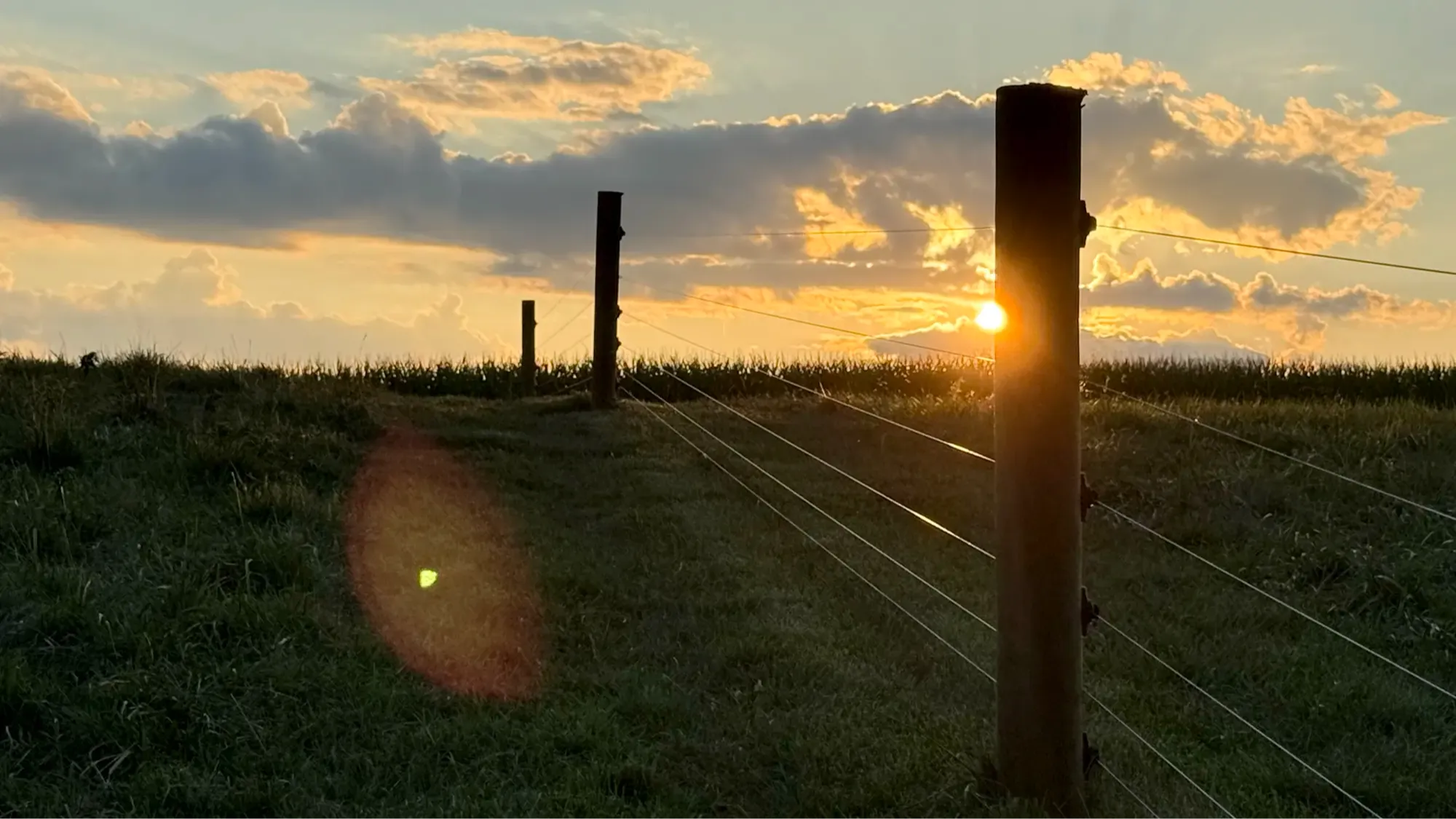
Physical Barriers Matter
On our farm, we share one boundary fence with neighboring cattle. Rather than assume that a single fence was sufficient, we installed a second interior fence approximately ten feet inside the original boundary.
This buffer zone — what we call “no cows land” — prevents direct contact.
Our cattle cannot make nose-to-nose contact with animals of unknown health status.
Distance prevents contact.
Contact prevents transmission.
Physical separation is often more reliable than confidence in fencing alone. That buffer transforms a shared boundary into a managed boundary and significantly reduces exposure risk. Even so, we typically graze steers in that pasture and avoid placing milk cows there altogether.
Layered safeguards strengthen herd biosecurity.
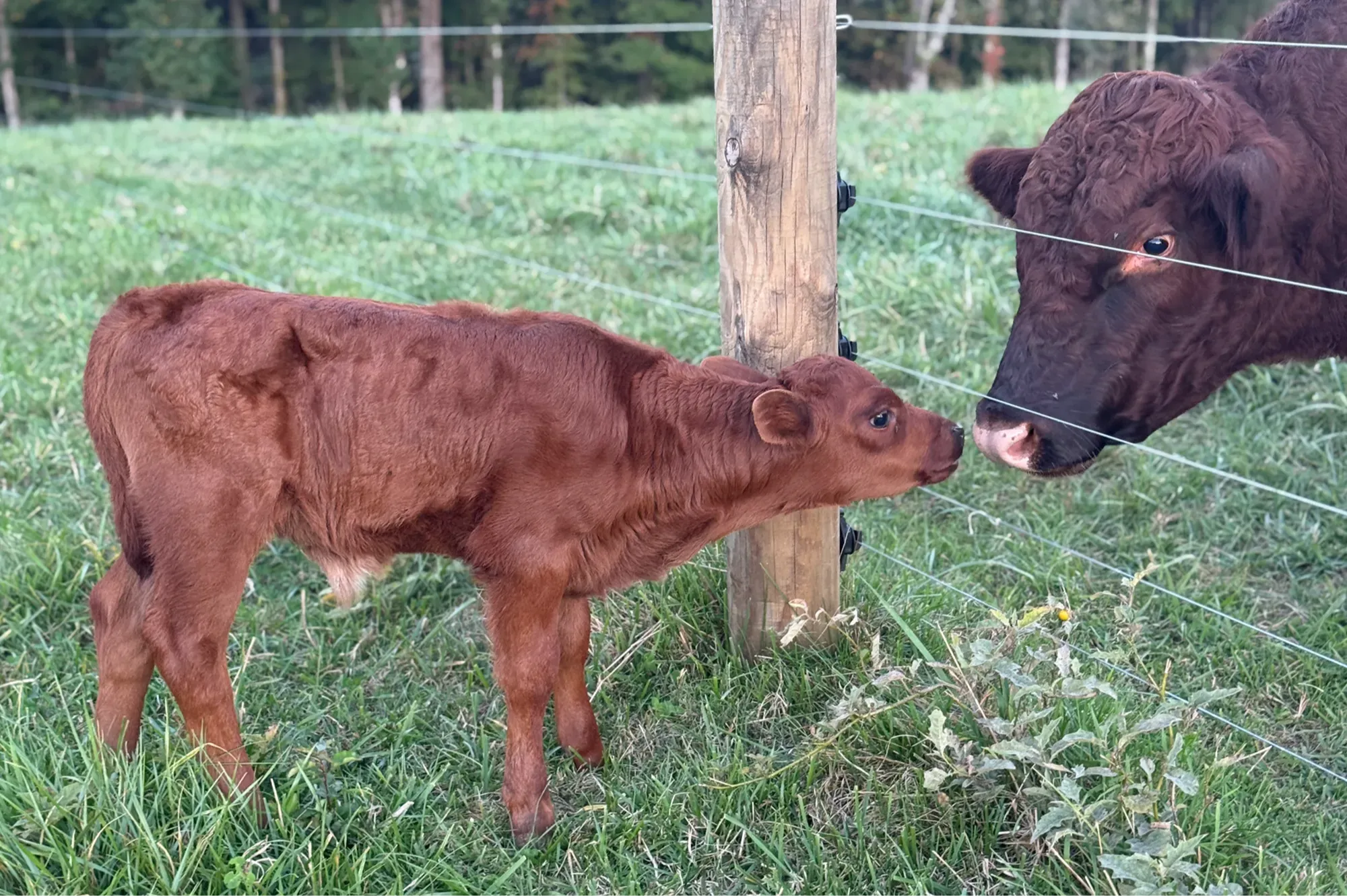
Introducing New Animals
Most disease enters a herd through newly purchased cattle.
It is rarely dramatic. It is usually quiet — a healthy-looking heifer, a borrowed bull, or a well-meaning addition from a trusted breeder. The risk is not about distrust. It is about biological exposure.
Every new animal carries a distinct herd history.
For that reason, new cattle introductions should never move directly into the main herd.
A Practical Quarantine Framework for Small Herds
Quarantine protocols for small raw milk herds do not need to be elaborate — but they must be consistent.
At minimum:
-
Test prior to purchase whenever possible
-
House new animals separately for approximately 30 days
-
Avoid shared fence lines during quarantine
-
Use separate water sources if feasible
-
Handle quarantined animals after chores with the main herd
-
Confirm all disease test results before integration
If additional disease screening is indicated based on regional prevalence or source herd history, complete that before exposure. Quarantine is not an accusation against the seller. It is protection for the herd you have already built.
For long-term milk cows, prevention is far less costly than correction.
Regional disease risk, testing intervals, and biosecurity planning are best navigated alongside a trusted veterinarian. See the Veterinary Partnership guide.
⚕️ Working with a Large Animal Veterinarian⚕️Why This Matters for Raw Milk Families
When milk is consumed raw, there is less margin for unmanaged variables.
Pasteurization reduces biological risk after the fact. Raw milk safety relies more heavily on upstream herd management — including disease testing, sanitation, rapid cooling, and boundary control.
Good milking hygiene matters.
Rapid cooling matters.
But exposure prevention matters first.
Certain cattle diseases have documented correlation with human illness. That does not require panic. It requires responsible herd management if milk is consumed without pasteurization.
Disease testing reduces unknowns.
Biosecurity prevents re-introduction.
Together, they form the foundation of raw milk safety.
You can control sanitation.
You can control cooling.
You can control exposure risk.
For families who choose raw milk, biosecurity and disease testing are not about fear — they are about order, safety, and stewardship.
At Any Scale
Whether you milk one cow for your household or manage a small herdshare program, the principles of herd biosecurity remain the same:
-
Establish disease status through testing
-
Maintain a truly closed herd whenever possible
-
Test before introducing new cattle
-
Conduct annual testing if fences are shared
-
Work with a veterinarian familiar with regional disease risk
Scale changes convenience.
It does not change responsibility.
Responsibility is the heart of stewardship.
Stewardship is the foundation of everything that follows.
Frequently Asked Questions About Biosecurity for Small Raw Milk Herds
What does “closed herd” mean in cattle management?
Do small raw milk herds need annual disease testing?
Can diseases spread across fences?
How long should new cattle be quarantined?
Why is biosecurity especially important for raw milk producers?
Is biosecurity about distrust?
Continue Building Step 1
This step includes four foundational components:
- How to Choose the Right Dexter Milk Cow
- Disease Testing & Herd Health Monitoring
- ✅ Biosecurity for Small Raw Milk Herds
- Working with a Large Animal Veterinarian
Explore each before moving to Step 2.