How to Choose the Right Dexter Milk Cow
Genetics, Structure, and Temperament That Set You Up for Success
Step 1 in the Raw Milk Roadmap • by Michelle Parsley, M.Photog., M.Artist, Cr.
Choosing the right Dexter milk cow is the single most important decision you will make as a small dairy or family milk cow owner.
Milk safety, milk volume, and milking ease all begin with selection.
- You cannot sanitize your way out of unmanaged disease.
- You cannot train your way out of poor udder structure.
- You cannot create milk production that was never bred into a cow.
If your goal is a dependable family milk cow, selection matters more than breed name.
The free Dexter Family Milk Cow Buyer Checklist below walks you through exactly what to ask and what to evaluate before purchasing a dairy cow. This page explains why each category matters.
Multi-Generation Milking Genetics
Milk production is inherited.
Dexter cattle are historically a dual-purpose breed, valued for both milk and beef. Over time, many modern Dexter herds have emphasized beef traits over milk production.
To put it bluntly: Not all Dexters are selected for dairy performance.
A Dexter cow can biologically produce milk, however, that does not mean she comes from a line bred for consistent lactation, strong udder attachments, or long-term milk production.
When choosing a Dexter milk cow, ask for data:
-
Peak gallons per day
-
Once-a-day or twice-a-day milking
-
Length of lactation
-
Recorded milk production from dam and granddam
-
Whether daughters in the line are actively milked
Consistent milk production comes from families that have been used as dairy cows for generations. If the breeder actively milks cows, you will see records. If they do not, you will hear general statements. Milk volume and longevity are the result of intentional selection.
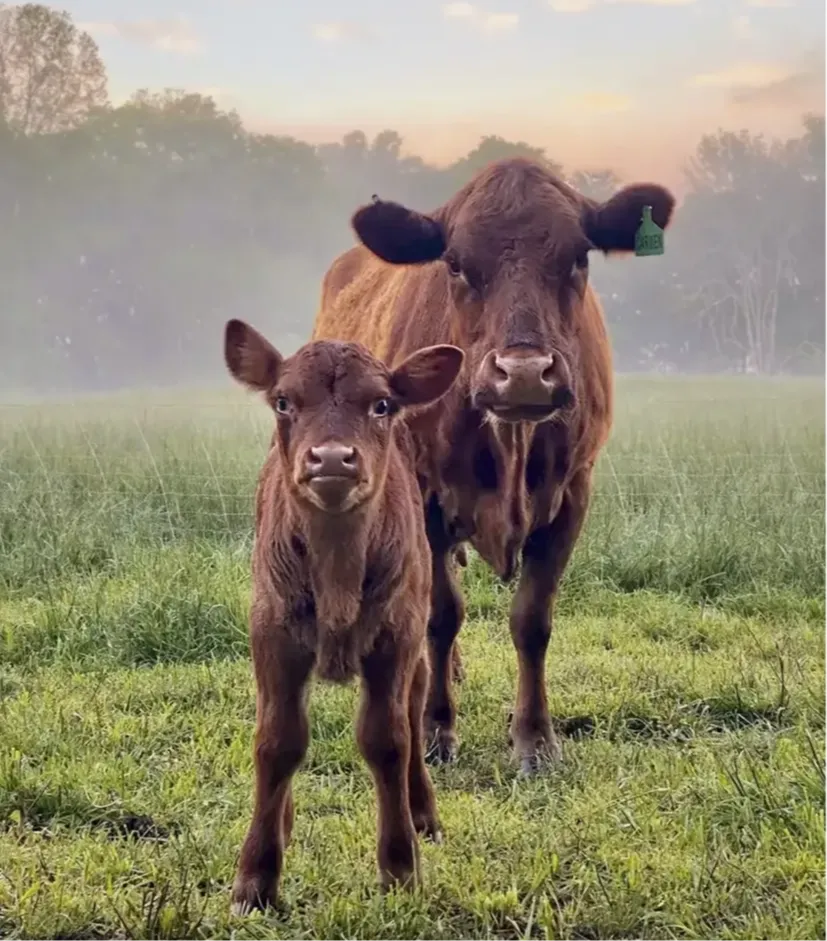
Want to See Real Dexter Milk Records?
When evaluating a Dexter family milk cow, ask for actual milk records instead of relying on general claims. I publish milk production data from my working Dexter herd so buyers can compare peak production, lactation length, and family milk cow potential.
Udder Structure & Teat Placement
Structure determines durability.
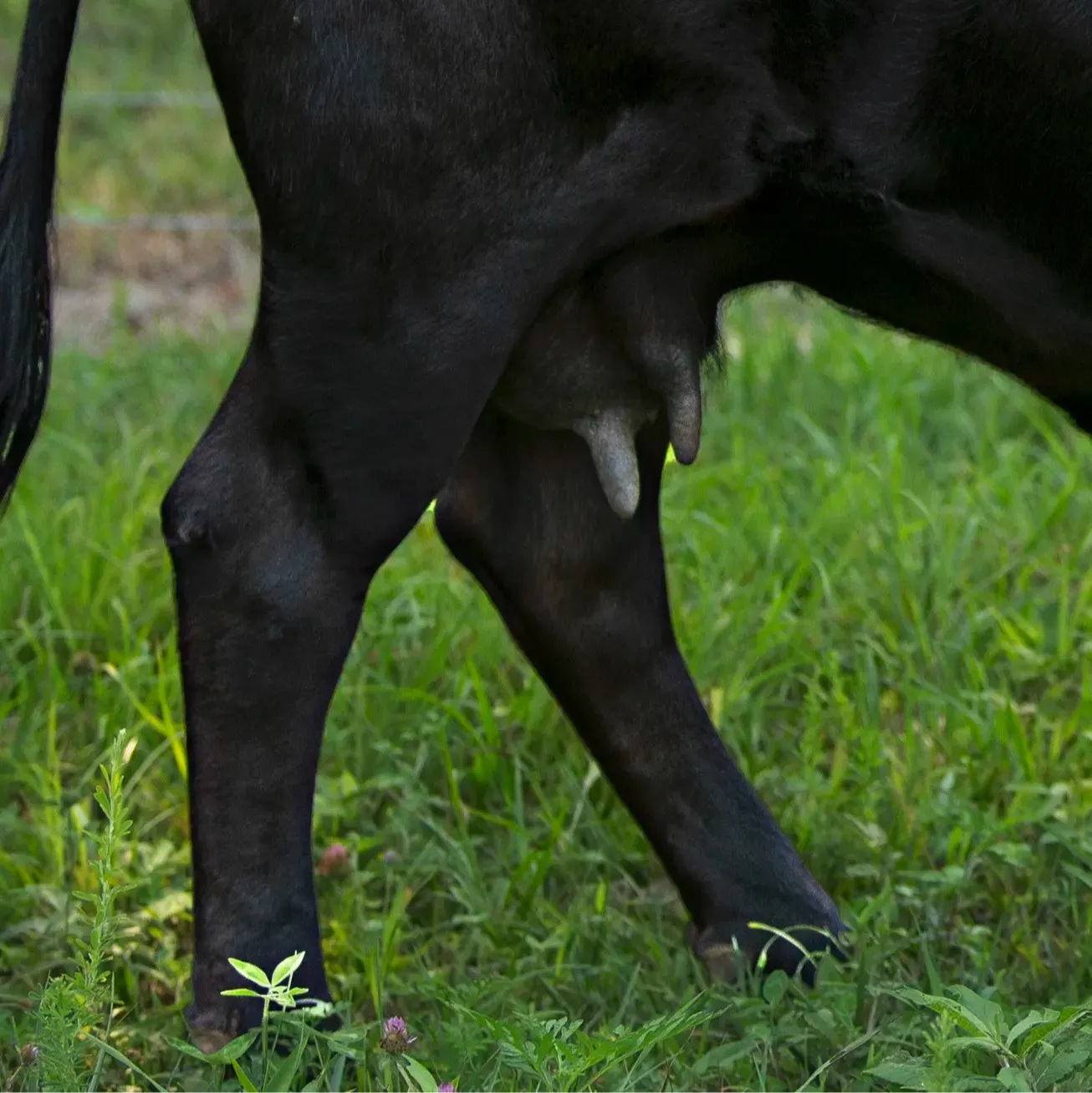
Strong milk genetics must be supported by functional udder structure.
When evaluating a Dexter dairy cow, request clear udder photos:
-
Right side
-
Left side
-
Rear attachment
-
Photos of dam and granddam in milk if possible
Poor structure shortens milking life.
📸 At left, an example of poor udder structure.
Look for:
-
High, wide rear udder attachment
-
Strong fore udder attachment
-
Even quarter development
-
Clearly defined medial suspensory ligament
-
Teat size appropriate for hand milking or machine milking
Strong structure supports multiple lactations and long-term sustainability in a small dairy setting.
📸 At right, an example of excellent udder structure.
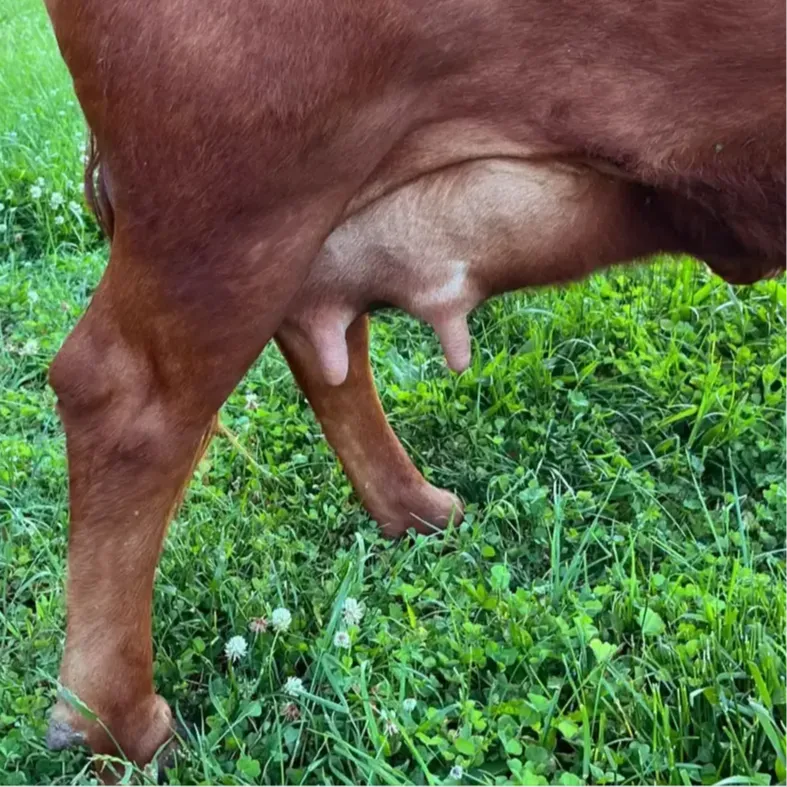
Udder quality is not cosmetic. It predicts longevity.
Temperament in the Milking Stanchion
Milk comes from calm cows.
Daily milking requires routine and consistency. A high-producing Dexter cow that cannot stand quietly will turn a delightful daily rhythm into long-term stress. Conversely, a calm, well-behaved cow in the stanchion makes milking something you look forward to.
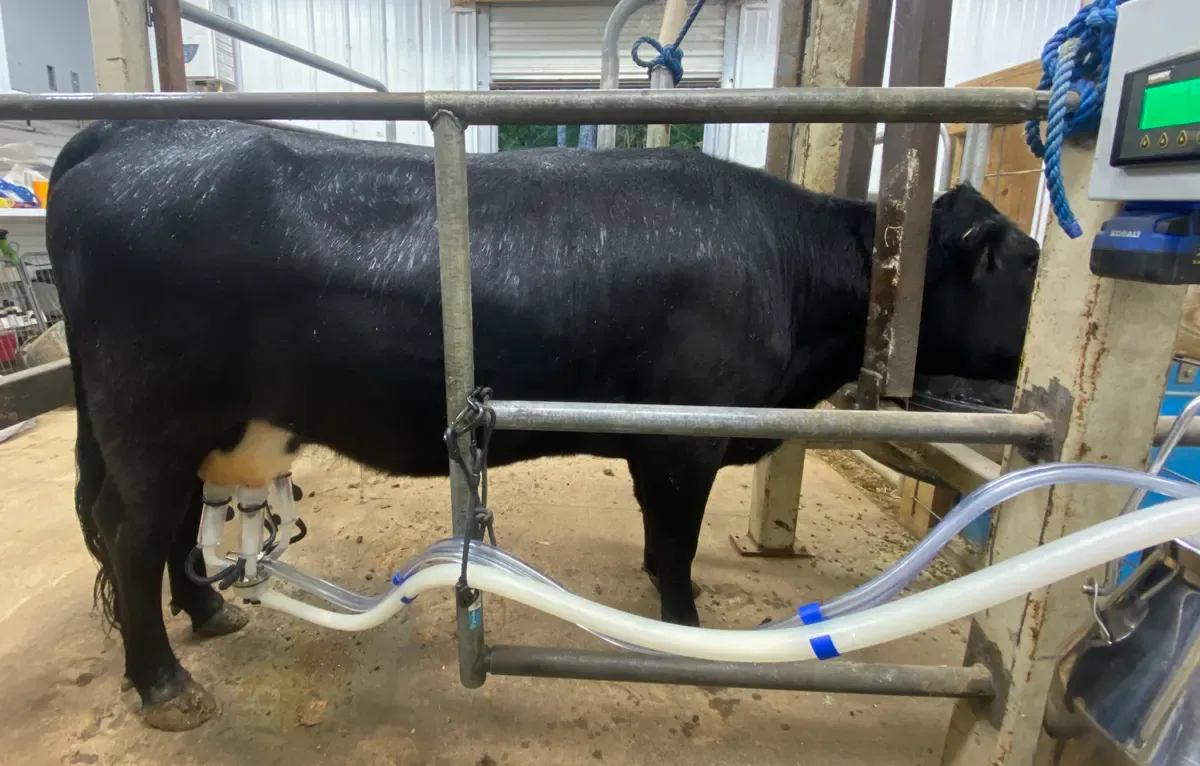
Ask directly:
-
Does she stand calmly for milking?
-
Does she kick?
-
Does she require restraint?
-
Are daughters in the line similarly trainable?
Temperament is heritable. Knowing how closely related cows behave tells you far more than a single sales description.
A family milk cow must be safe, predictable, and steady.
It also takes time for a cow to transfer trust from one handler to another. Milk let-down is influenced by stress. A wary cow — even one with strong milk genetics — may hold up her milk in a new environment until she feels secure.
For this reason, I do not sell cows actively in milk. Moving homes is stressful. Allowing a cow to dry off and calve into her new setting gives her the opportunity to build trust with her new handler from the beginning of lactation.
Milk production is not just genetic. It is relational.
If you’re unfamiliar with why I choose not to sell cows actively in milk, I explain that decision in detail here: Why I Do Not Sell Wet Cows.
Breeder Focus Shapes Outcomes
A herd selected for milk production will produce different Dexter cattle than a herd selected primarily for beef, show, or pets.
When choosing a dairy cow, ask:
-
Does the breeder actively milk cows?
-
Are cows selected for udder quality and lactation length?
-
Are milk records kept?
There is no criticism in asking these questions — only clarity about your own goals.
Not every breeder maintains detailed milking records. In fact, within the Dexter breed, comprehensive multi-lactation data is uncommon. That makes it even more important to ask specific, measurable questions when milk production is your priority.
“Dexter milk cow” is not a guarantee of dairy performance.
Milk production is the result of consistent, intentional selection.
Put It Into Practice
All of these evaluation categories are organized into a printable, field-ready format. This checklist condenses the milk cow selection principles outlined above.
👇👇 Download the FREE Dexter Family Milk Cow Buyer Checklist 👇👇
Download the Dexter Milk Cow Selection Checklist PDF- Use it when visiting breeders.
- Request the records.
- Study the photos.
- Choose genetics intentionally.
The right Dexter cow for milking is not found by accident.
She is selected.
At Any Scale
Whether you are purchasing your first family milk cow or building a small, intentional dairy herd:
• Select for milk — not assumptions
• Ask for records
• Study structure
• Prioritize temperament
Scale changes volume. It does not change standards.
Continue Building Step 1
This step includes four foundational components:
- ✅ How to Choose the Right Dexter Milk Cow
- Disease Testing & Herd Health Monitoring
- Biosecurity for Small Raw Milk Herds
- Working with a Large Animal Veterinarian
Explore each before moving to Step 2.