Are Dexter Calves Born With Teeth?
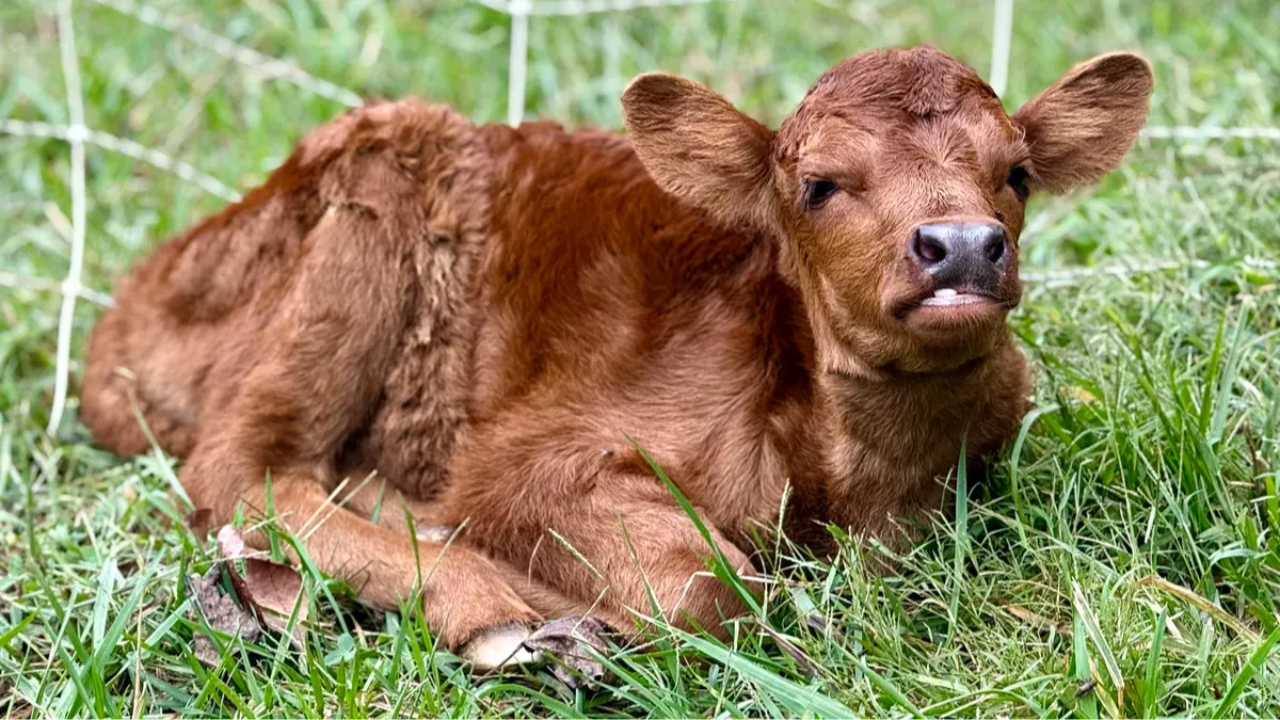
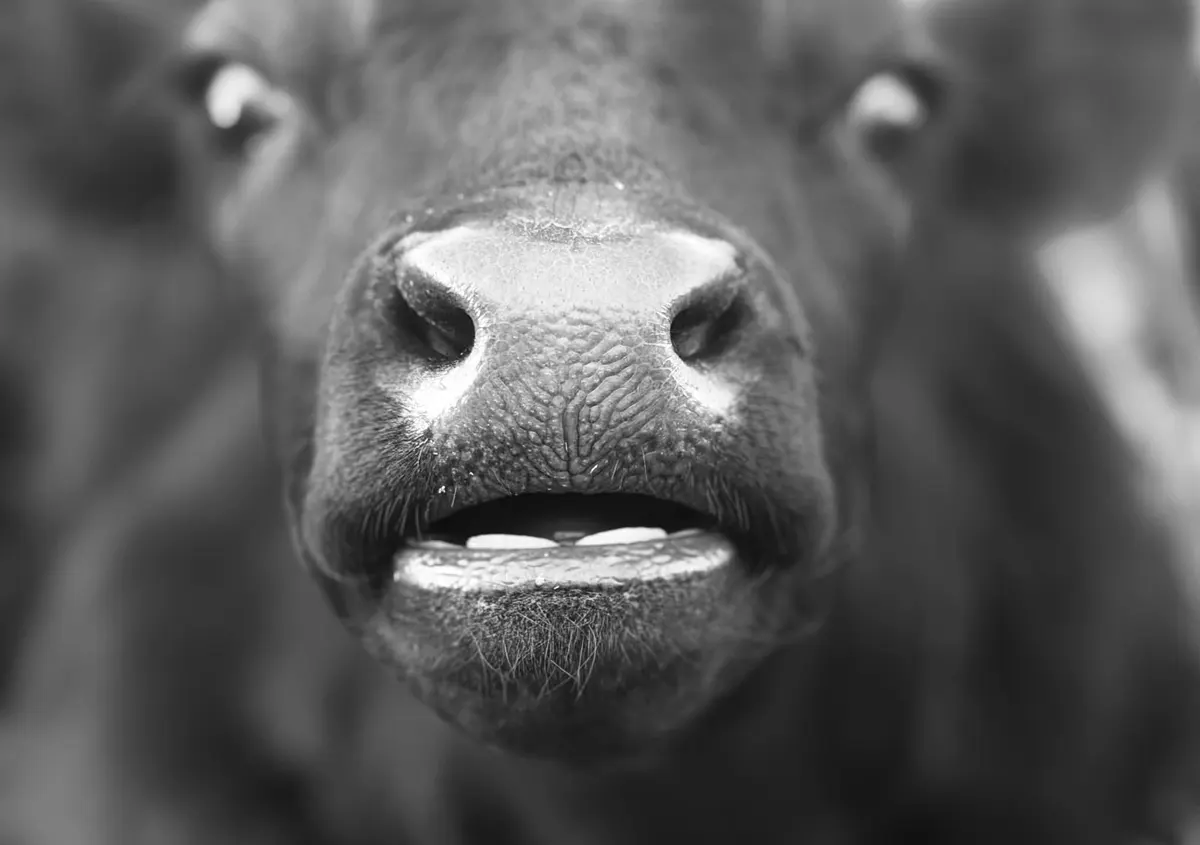
Mountain Heritage Ember at just a few days old, already showing off the little teeth that made this photo memorable.
Yes—a healthy full-term calf is expected to be born with all eight temporary lower front teeth erupted. Incomplete eruption of the incisors is also a recognized clinical sign of prematurity in calves.
That makes those tiny newborn teeth more than a cute detail. Along with gestation length, birth weight, hair coat, hoof softness, strength, and suck reflex, tooth eruption can help veterinarians assess whether a calf is developmentally mature at birth.
There is some variation in general cattle-dentition references, which often describe two or more incisors as visible at birth and all eight appearing during the first weeks of life. But studies that specifically evaluated prematurity support the distinction that matters here: incomplete incisor eruption is associated with premature calves, while healthy term neonatal calves in one study had all incisors erupted.
Calves Do Not Have Upper Front Teeth
Like adult cattle, calves do not have upper incisors. Instead, the front of the upper jaw has a firm dental pad. The lower incisors work against that pad when cattle graze.
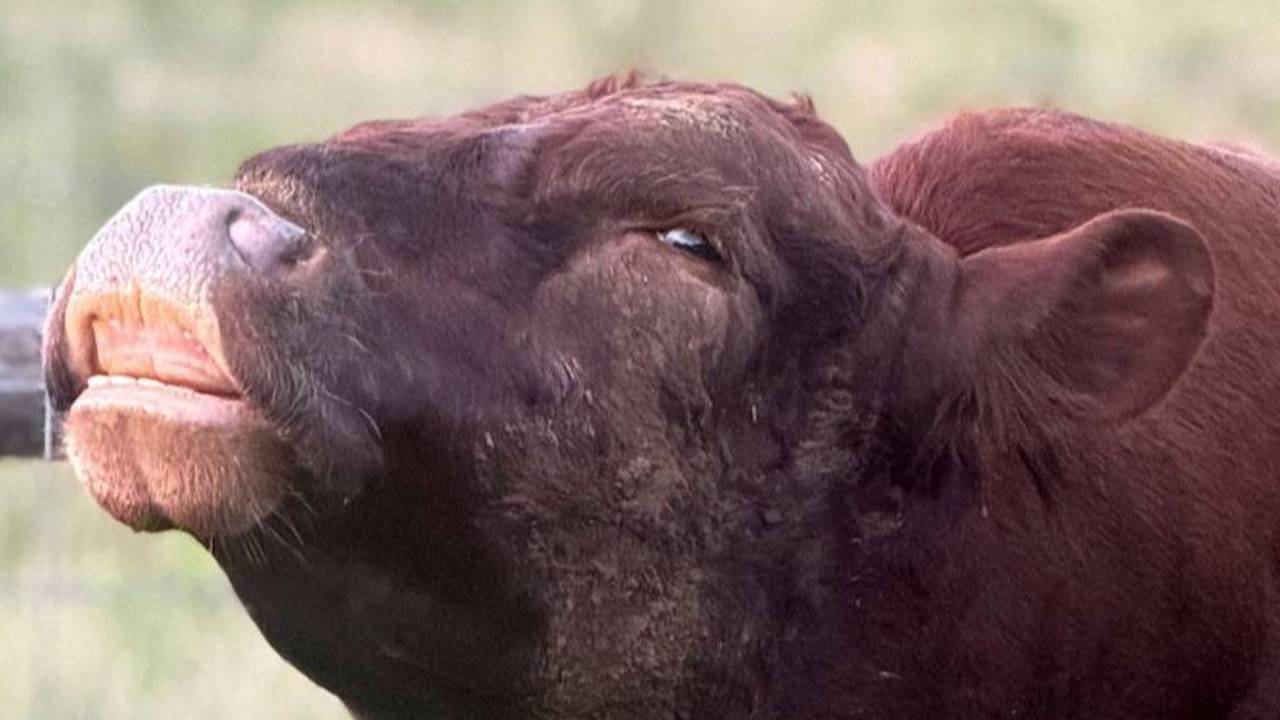
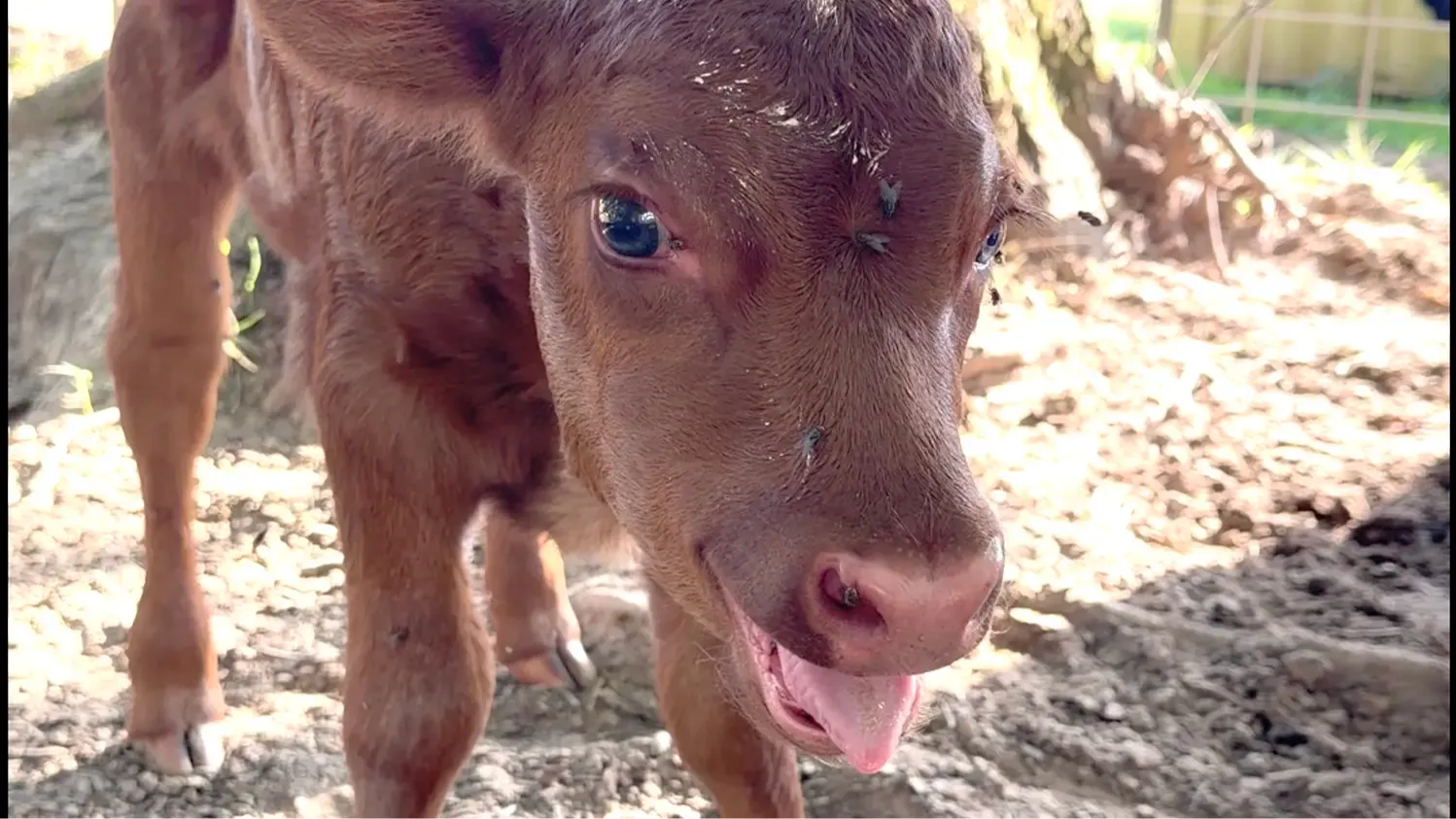
That arrangement can make a newborn calf’s mouth look a little odd in photographs—especially when the calf lifts its lip or sticks its lower jaw forward. I used to casually describe that look as an “underbite,” but that is not the best anatomical description. What you are often seeing is the normal lower-incisor/upper-dental-pad arrangement of a young ruminant, not necessarily a jaw defect.
Baby Teeth vs. Adult Teeth
Cattle first develop 20 temporary teeth, also called deciduous, milk, or baby teeth. Those consist of eight lower front teeth and twelve premolars. There are no temporary molars.
As the animal matures, the temporary teeth are replaced and permanent molars are added, producing a full adult set of 32 permanent teeth.
The permanent central incisors usually begin replacing the temporary teeth at roughly 18 to 24 months. The remaining permanent incisors erupt in a predictable sequence over the next several years, which is why dentition can be used to estimate the age of cattle when birth records are unavailable.
Why Ember Looked Like She Was Smiling
Ember, Sapphire’s red heifer, gave me the perfect close-up of a newborn calf mouth. Her little lower incisors were easy to see, and the dental-pad arrangement above them gave her that goofy baby-calf expression that made the original photo so much fun.
The picture is cute. The anatomy is useful.
And this is exactly why I like keeping real farm photos attached to the explanation: once you know what you are looking at, a silly calf grin becomes a little lesson in how cattle are built.
Read more about how I raise Dexter calves at Mountain Heritage Farm.