Why Do Bulls Curl Their Lips? Understanding the Flehmen Response
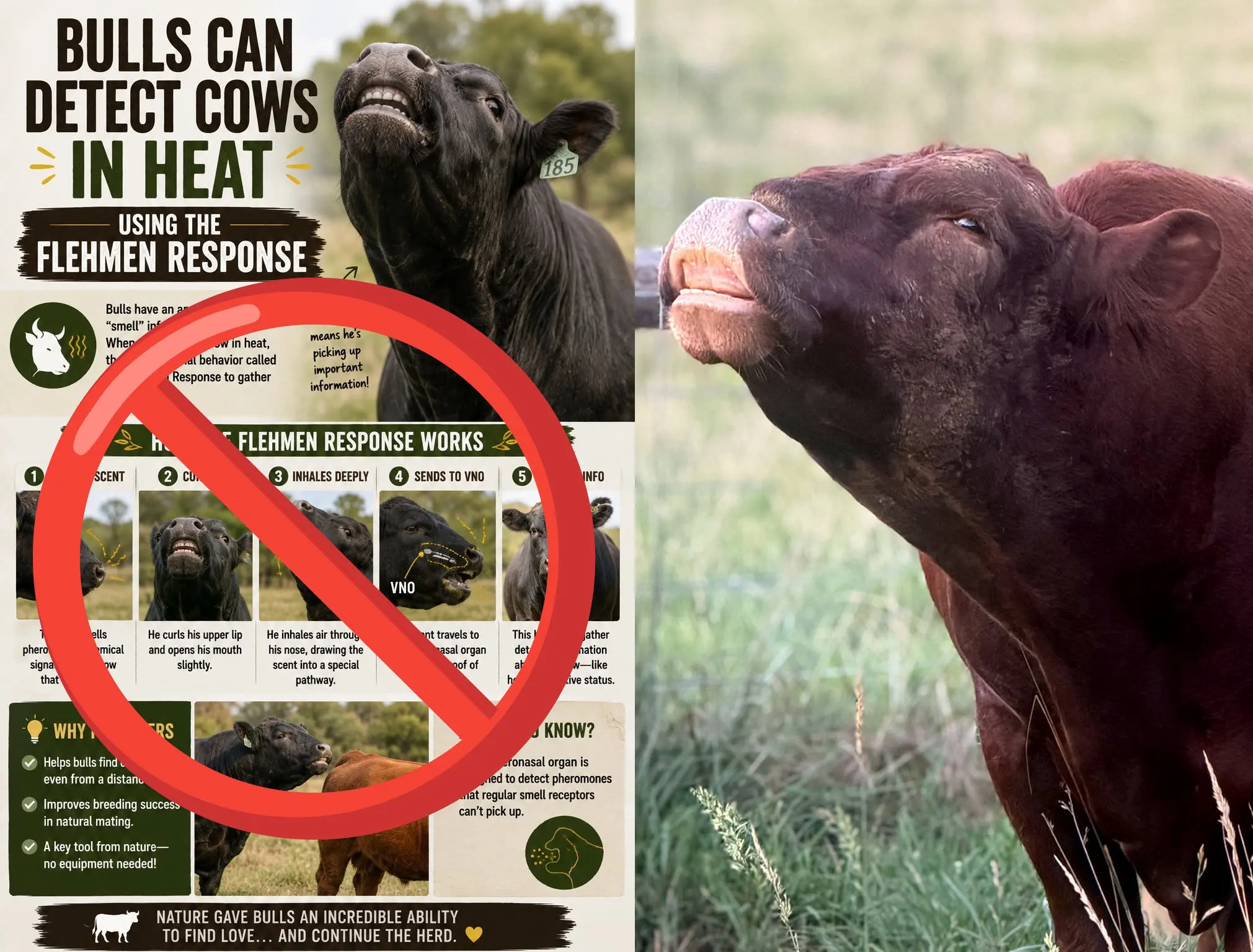
A bad AI-generated cattle infographic gave Marvel the perfect opportunity to demonstrate what the real thing looks like.
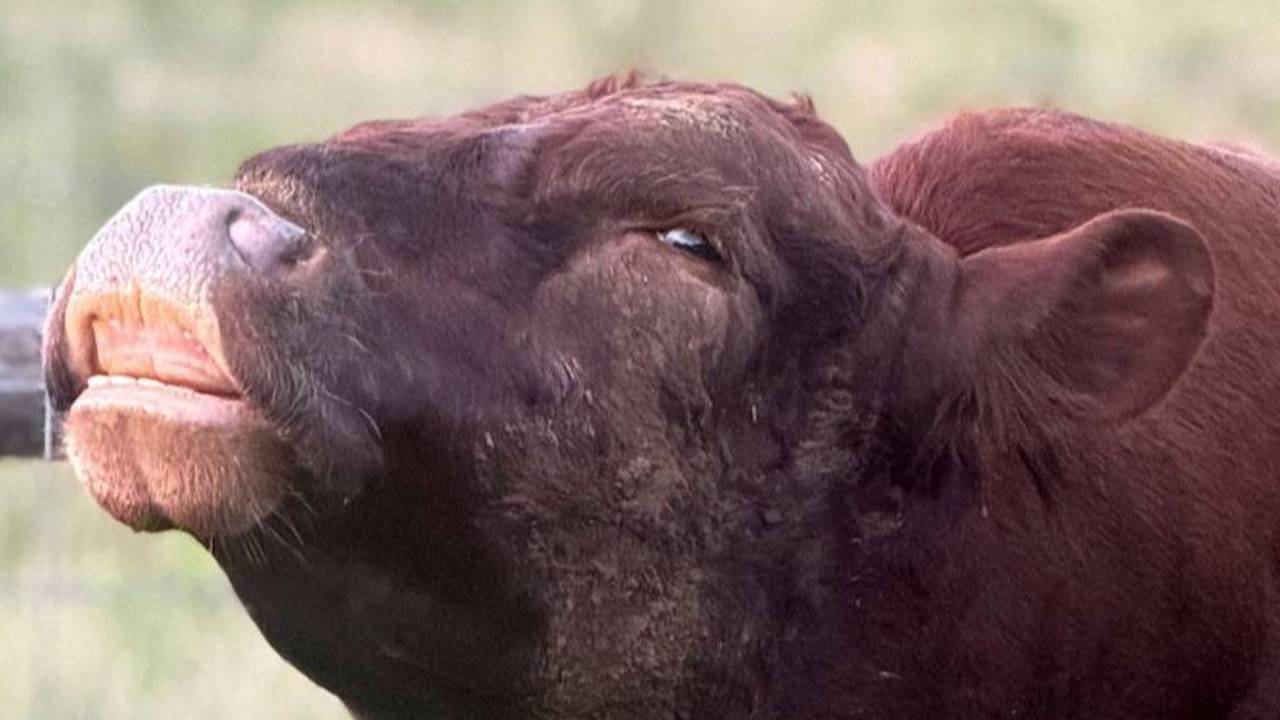
The bull in the graphic had an impressive set of human-looking upper front teeth and a facial expression that looked more like a denture advertisement than normal cattle behavior. Marvel, our Dexter bull, was standing nearby doing exactly what the infographic was trying to show: the flehmen response.
It is one of those cattle behaviors that looks strange if you have never seen it before. A bull raises his head, stretches his neck, curls his upper lip, and seems to freeze for a few seconds with his nose in the air.
He is not snarling. He is not showing his teeth. And he is not making a funny face for no reason.
What Is the Flehmen Response?
Flehmen is a chemosensory behavior seen in cattle and many other mammals. In cattle, it is especially noticeable in bulls investigating reproductive scent cues.
A bull may sniff or lick urine or other secretions from a cow and then raise his head and curl his upper lip. That behavior is associated with the vomeronasal organ, sometimes called Jacobson's organ, an accessory scent-detecting system involved in chemical communication.
Research on cattle has shown that bulls respond more strongly to some reproductive odors than others. In one study, bulls that consistently showed flehmen did so more often and for longer periods when presented with urine from cows in estrus than with urine from cows that were not in estrus.
In practical terms, the bull is gathering information.
What Does a Real Flehmen Response Look Like?
Marvel demonstrates the posture beautifully:
- the neck extends,
- the head rises,
- the upper lip curls back, and
- the animal often holds the position briefly after investigating a scent.
If you spend much time around a breeding bull, you may see the sequence begin with close sniffing of a cow, urine, or the ground where a cow has urinated. Bulls may also lick or manipulate the area with the tongue before lifting the head into the characteristic flehmen posture.
It can look dramatic, but it is normal cattle behavior.
Does Flehmen Mean a Cow Is in Heat?
It can be a useful clue, but I would never use flehmen alone as proof that a cow is in estrus.
Bulls investigate many smells, and individual bulls vary in how readily they display flehmen. Research has found stronger responses to estrous urine and reproductive secretions, but not every bull responds identically every time.
On the farm, I consider it one piece of the larger picture along with the cow's behavior, standing heat, mounting activity, mucus, and the bull's overall interest.
And About Those Upper Teeth...
This was the part of the AI infographic that made me laugh.
Cattle do not have upper front incisors. Instead, they have a firm dental pad at the front of the upper jaw. The lower incisors work against that pad as the tongue gathers forage and the animal tears grass free.
So when a bull curls his upper lip during flehmen, he should not suddenly reveal a neat row of human-looking upper incisors. Those teeth simply are not there.
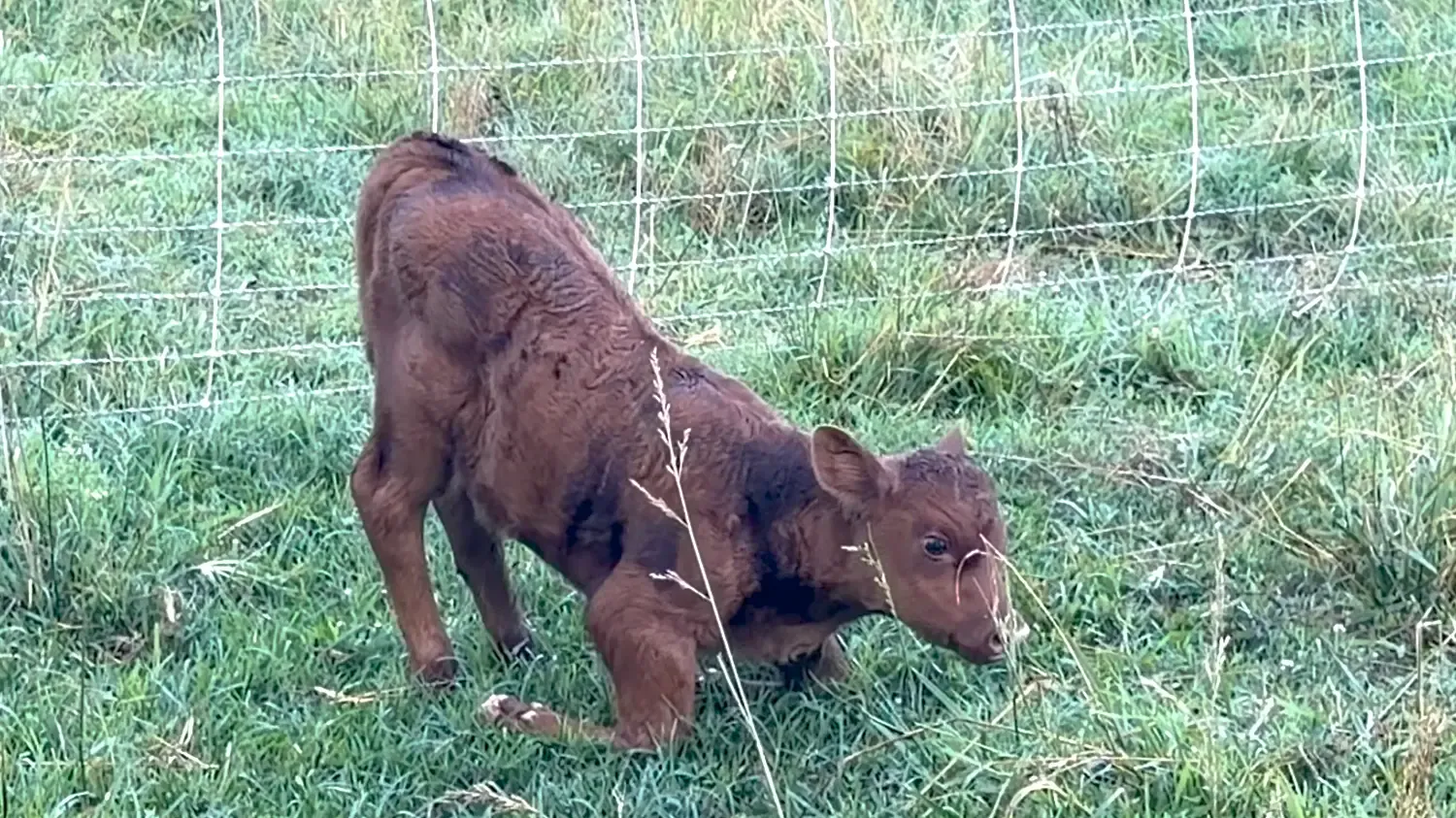
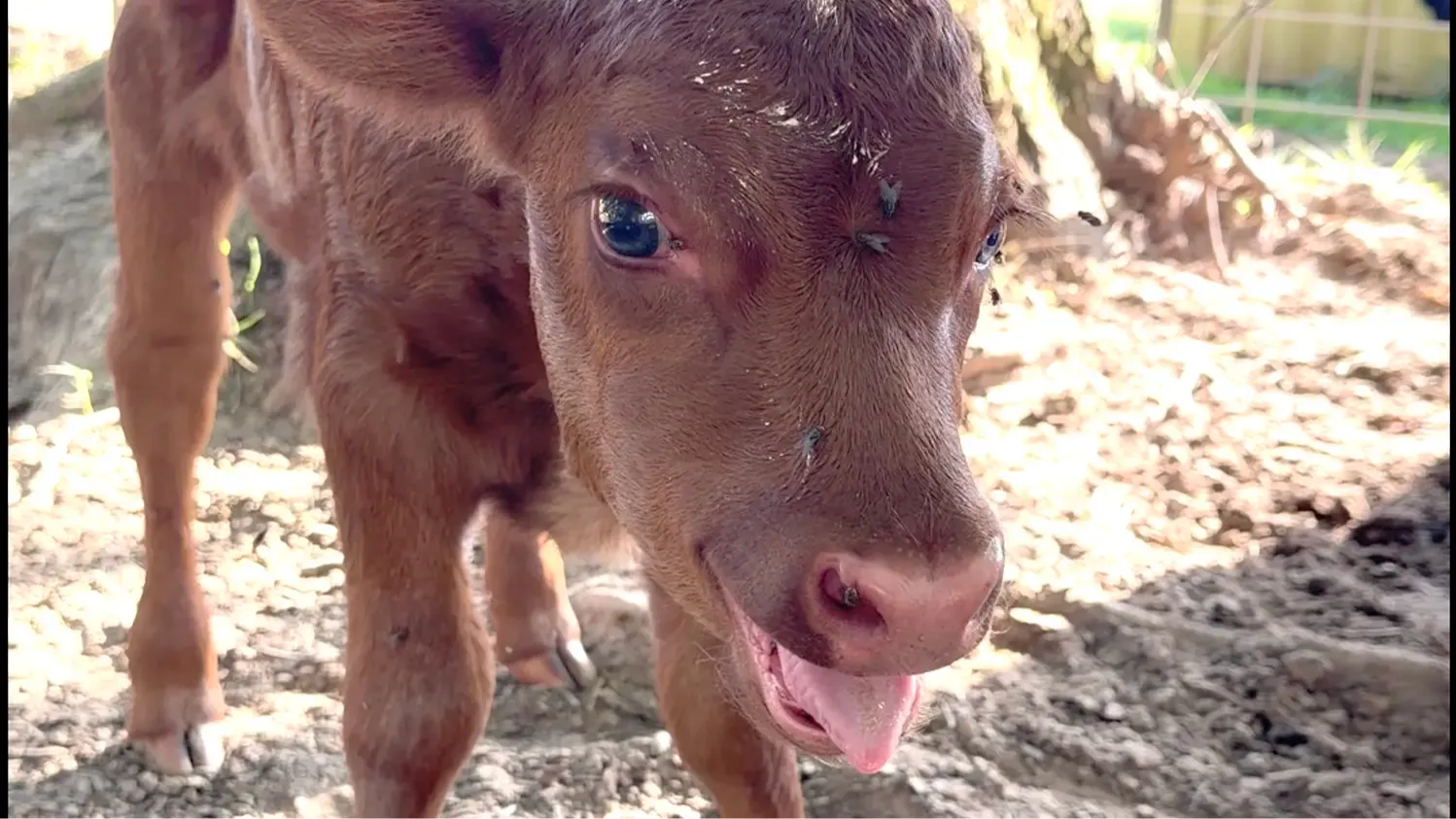
If cattle teeth interest you, I have a separate article about the teeth Dexter calves are born with.
Why Accurate Cattle Images Matter
The original infographic looked polished. At first glance, it looked educational. That is exactly why errors like this matter.
When an image is being used to teach animal anatomy or behavior, a convincing-looking picture is not enough. Someone who knows the species needs to look at what is actually being shown.
That does not mean every illustration has to be perfect down to the last hair. It does mean the animal should be assembled correctly and the behavior being taught should resemble the behavior cattle actually perform.
Marvel did not need an infographic. He simply demonstrated it.
What to Watch for in Your Own Cattle
The next time you see a bull raise his head and curl his lip after investigating a cow or a scent on the ground, watch the entire sequence rather than only the funny face.
Notice what he smelled first. Watch whether he licks or works his tongue. See how long he holds the posture, and pay attention to what the cow is doing at the same time.
Those little observations are one of the best parts of living with cattle. The longer you watch them, the more their seemingly odd behaviors begin to make sense.
For more information about the bulls and breeding program at Mountain Heritage Farm, visit our Dexter bulls page.
Mountain Heritage Farm shares real-world observations from our Dexter herd alongside established cattle science. Farm observations are not a substitute for veterinary advice when an animal's behavior or health is abnormal.