An En Caul Dexter Calf Birth: Membranes Wouldn’t Rupture
Viewer Discretion Advised: This article contains real cattle birth photography and video documenting a medically complicated calf delivery.
Most calf deliveries follow a predictable progression. Labor intensifies, the water bag ruptures, the calf engages into the birth canal, and delivery advances steadily from there.
This birth never followed that pattern.
For over an hour, I knew something was wrong. The cow was in labor, but her contractions remained strangely half-hearted and ineffective. I repeatedly gloved up to check presentation, expecting to find an abnormal presentation or at the very least a ruptured water bag.
Instead, every examination revealed only the intact sac itself. Four separate times I checked her internally, waiting for the membranes to rupture normally and allow the calf to engage properly into the birth canal.
They never did.
At the time, I did not yet understand why labor seemed stalled. Looking back, I believe the unusually tough intact membranes prevented the calf’s feet and head from engaging in the birth canal properly. Normally, pressure from the calf’s feet and head stimulates stronger, more effective contractions.
I could never have guessed what I was about to witness. It was something I had only ever seen in pictures in human medical textbooks…
An "En Caul" Birth
An en caul birth occurs when a calf is delivered still enclosed within the amniotic membranes rather than the sac rupturing during labor. In cattle, portions of the membranes are commonly seen during delivery, but a fully intact sac surrounding the advancing calf is uncommon enough that many cattle owners may never witness it firsthand.
When the Sac Finally Appeared
After two and a half hours of half-hearted pushing, eventually, the intact membrane itself became externally visible.
What immediately caught my attention was how abnormal the sac appeared compared to previous births I had attended. In every calving I had witnessed before, the membranes had either already ruptured or appeared much thinner and more translucent, quickly rupturing once they were visible. This membrane looked thick, nearly opaque, and heavily vascular.
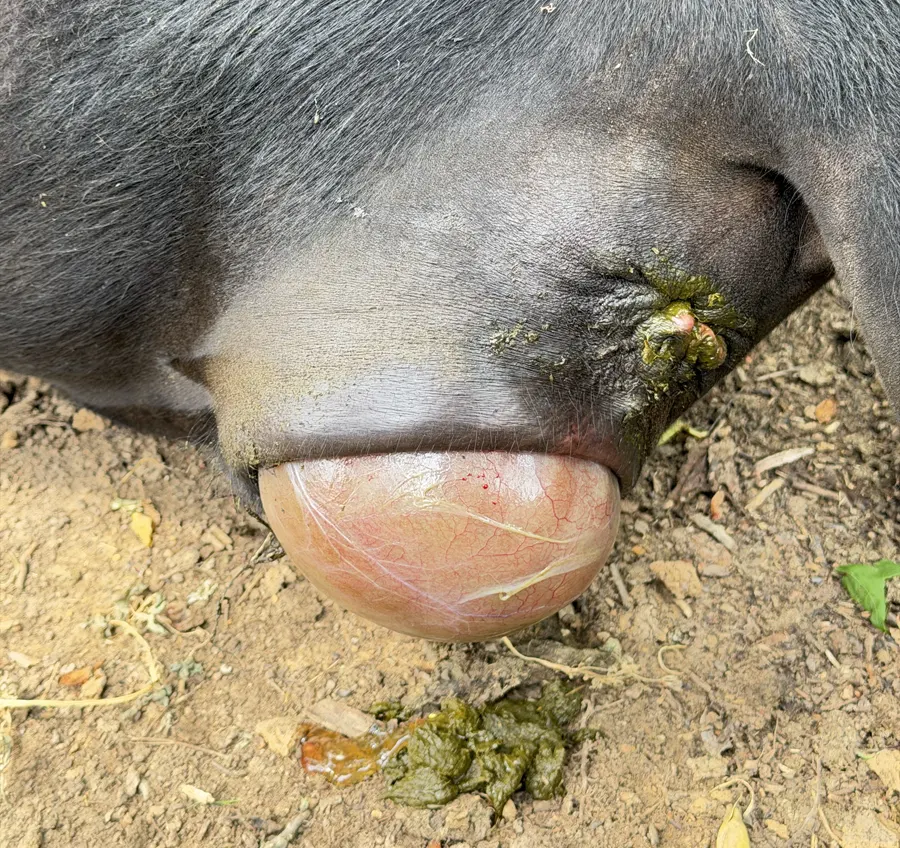
The appearance gave me pause.
My concern in that moment was determining exactly what I was seeing. I knew unusual tissue presentation during calving can indicate serious complications, and I stopped to question whether I was truly looking at intact fetal membranes or something more dangerous.
Rather than assuming, I took a short video, texted it, and called my longtime mentor for another experienced set of eyes and guidance before proceeding further. Here we stand, captured by the barn camera observing, trying to come to a consensus on what we were seeing.

The Delivery Changed Quickly
As labor continued, the calf’s feet eventually began advancing through the vulva — but the membranes still had not ruptured. With every push, we could see feet and even the calf's tongue and nose. The sac itself was so unusually tough — almost like shoe leather — that my husband was actually able to grip and pull the calf’s feet through the intact membranes without the sac tearing open.
At that point, feeling confident that this was, in fact, an en caul birth, I ran for scissors and OB chains, expecting we might need to manually rupture the membranes before continuing delivery. The supplies were only 50 feet away and I ran. I returned just in time to witness the sac spontaneously rupture on its own as the head delivered.
Technically speaking, a fully en caul birth would involve the entire calf being delivered still enclosed within the intact membranes. In this case, the sac ultimately ruptured before complete delivery occurred. However, because the calf initially presented through fully intact membranes in a manner consistent with an en caul presentation, I felt the term was still appropriate when describing the birth. “Unusually tough fetal membranes” may ultimately be the more technically precise description.
A Dry, Difficult Pull
What we knew: we had a live calf in front of us. He was slightly moving.
What we didn’t know: all the amniotic fluid was trapped behind him, his body acting like a cork.
Because the amniotic fluid remained trapped behind the calf, we lost much of the lubrication normally present during delivery. Even with proper presentation, we required OB chains and considerably more force than we expected. He was what we would consider a "hard pull." Despite the large volume of fluid present behind the calf, the actual pull itself was remarkably dry.
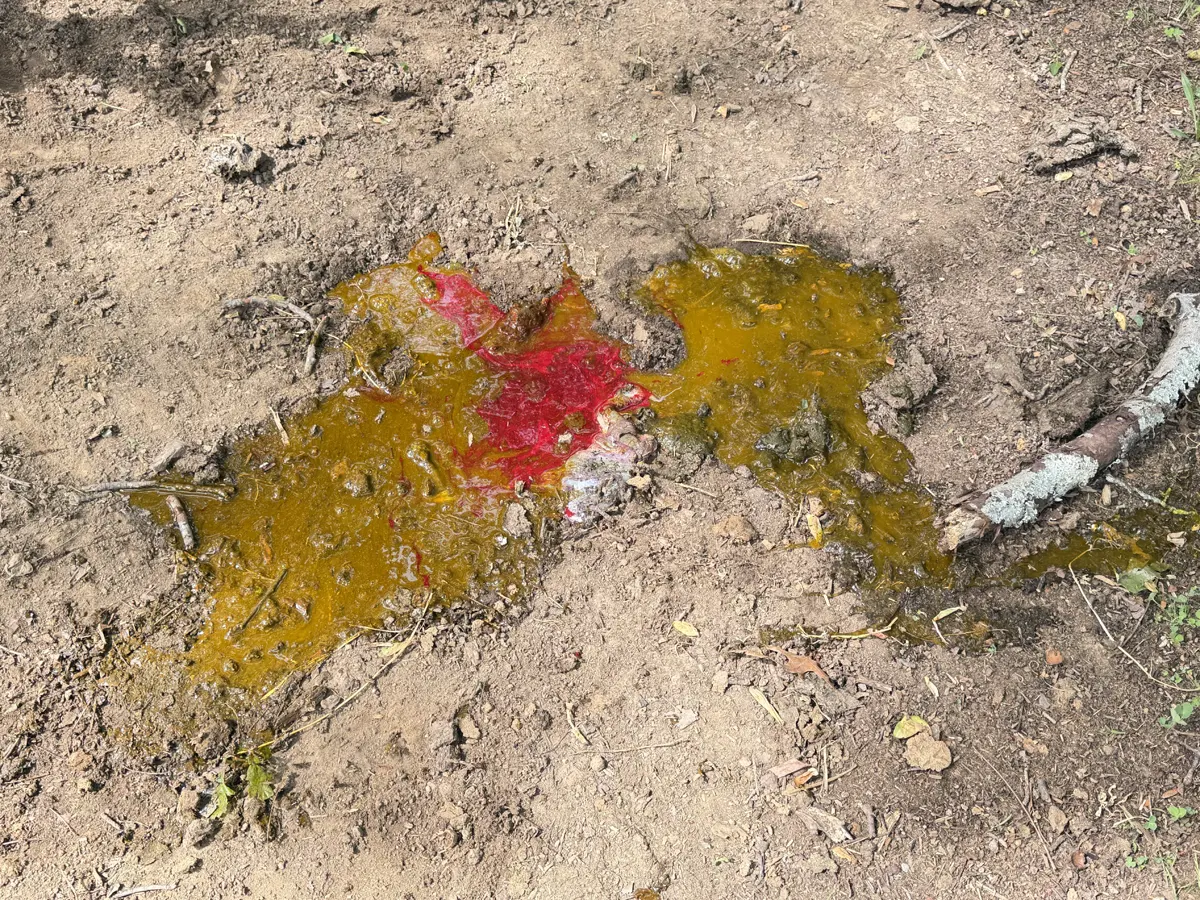
When the calf was finally delivered, he was heavily coated in meconium and clearly distressed. What surprised me most initially was how little fluid accompanied the calf — roughly half a gallon of dark, meconium-stained fluid with a bit of blood from the cow. Combined with the unusually tough membranes, the birth felt far different from a typical assisted pull. The calf did not have the normal degree of lubrication and decompression I would expect during delivery.
This is 100% of what was delivered with him. I only photographed it because it was such an unusually small amount.
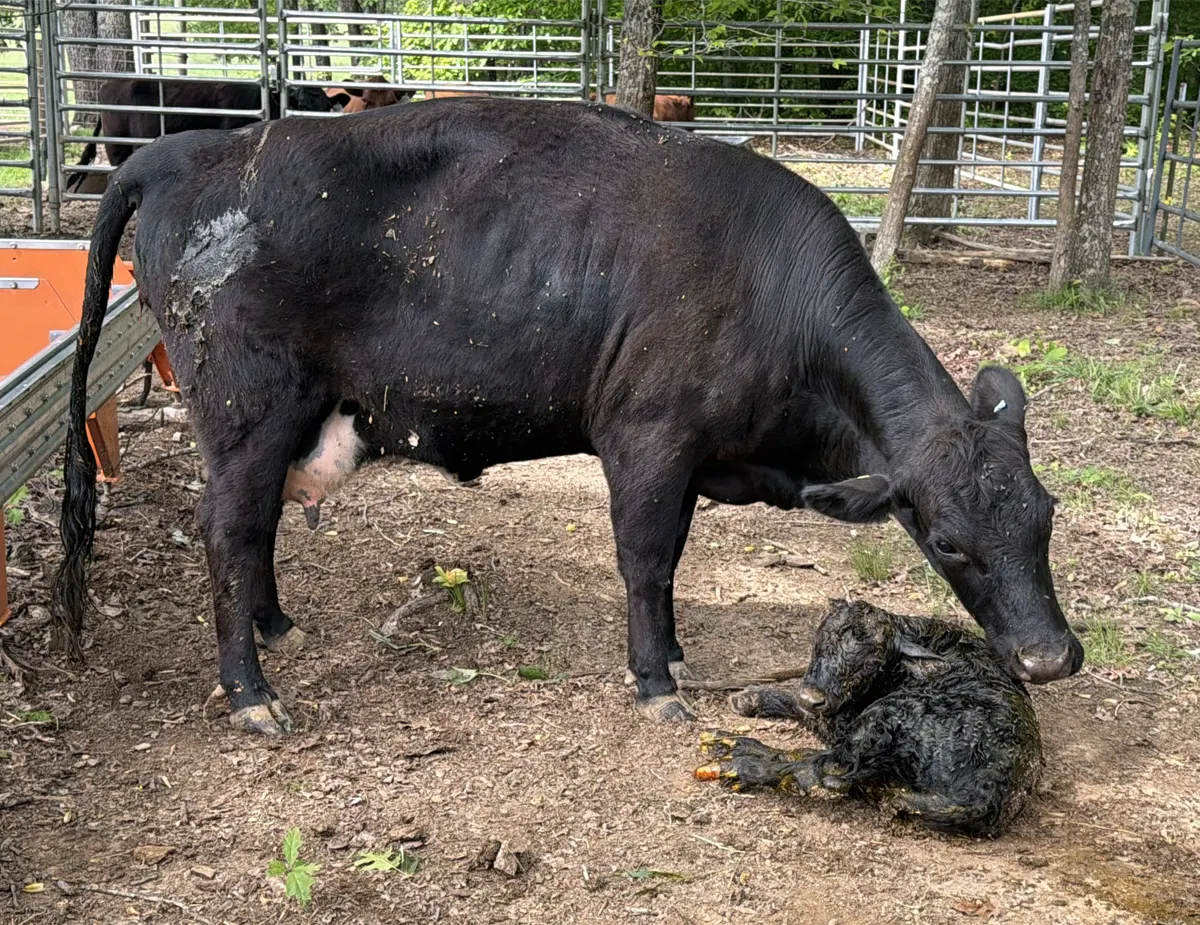
When have you ever seen a calf born without landing in a puddle of fluid? He's right where he was delivered on dry ground.
15 minutes after he was born — splash! All the fluid was expelled in one big gush.
The Calf’s Condition After Delivery
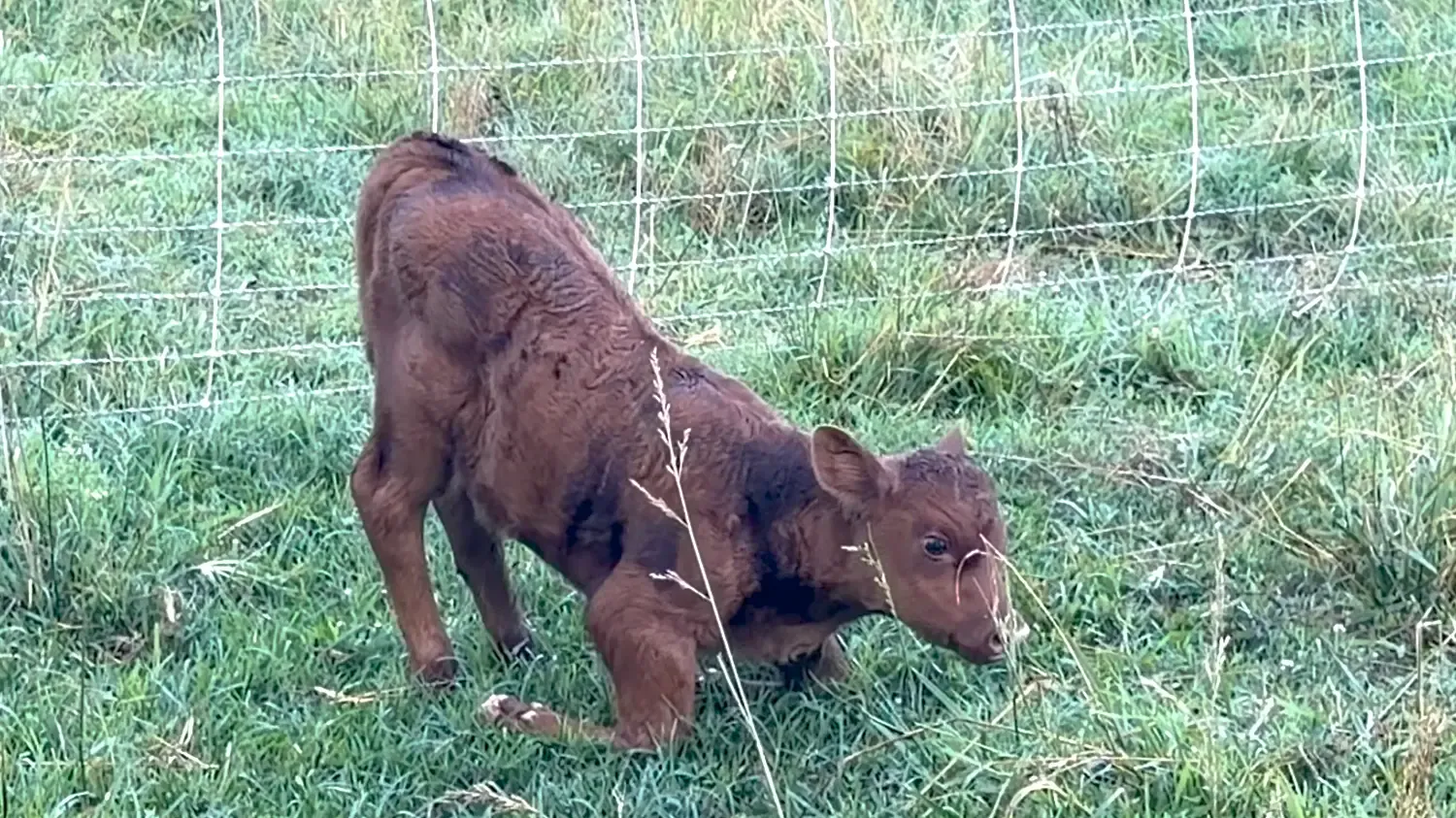
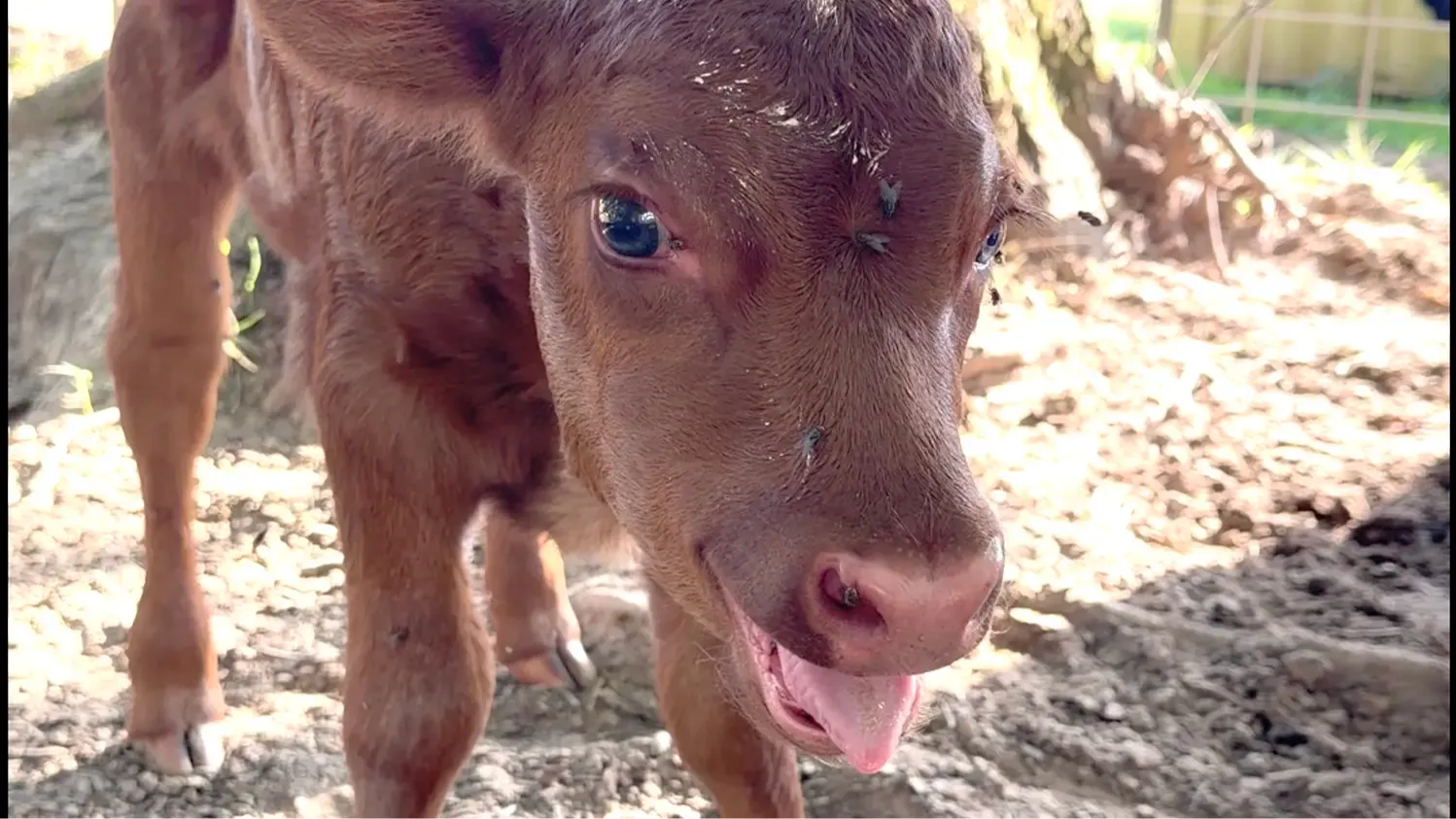
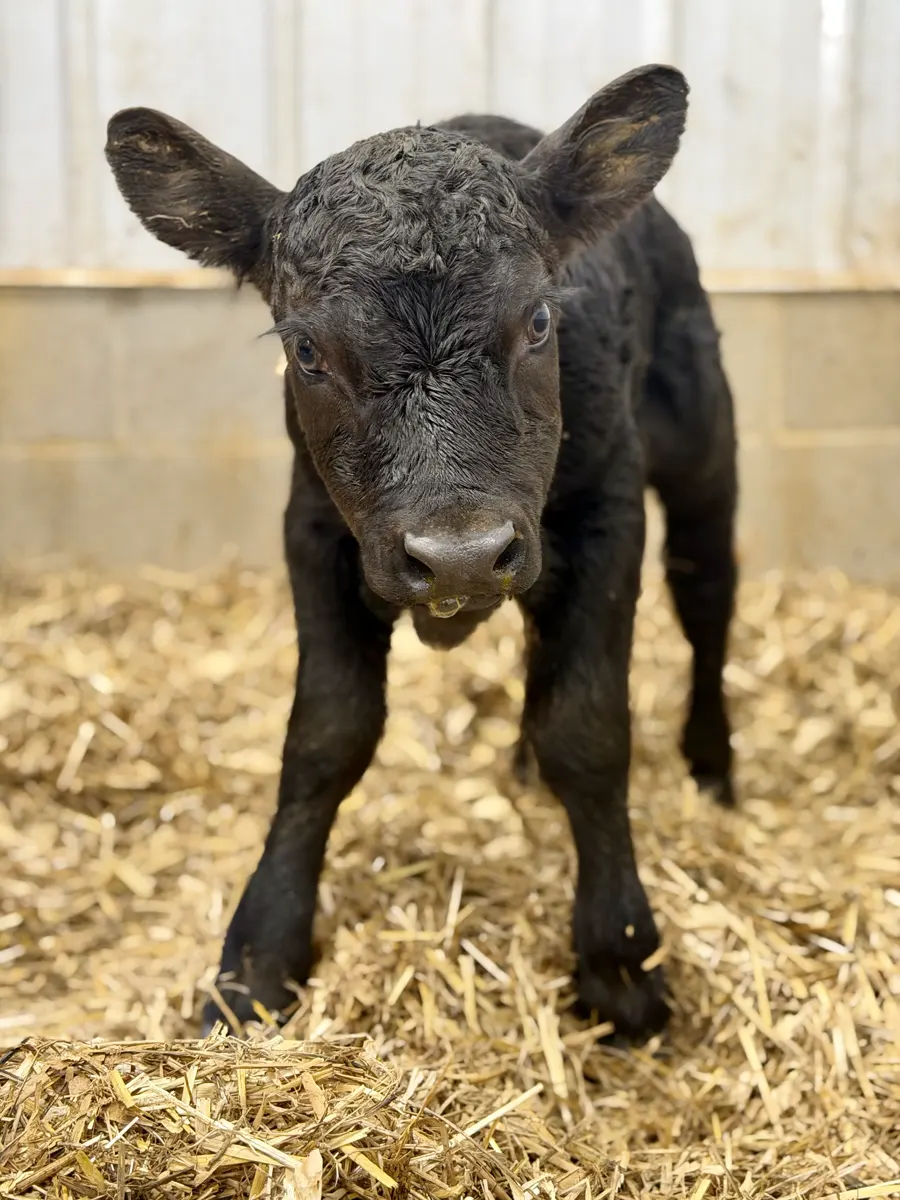
Looking back, I strongly suspect the calf had been under significant stress before delivery was completed. Although he was alive at birth, his behavior was abnormal from the beginning. For three hours, he made no attempt to stand or nurse on his own. We could physically stand him up, and he would remain standing, but mentally it was as though he was not fully present or responsive.
My suspicion is that he was both oxygen-deprived and had likely severely depleted his blood sugar reserves during the prolonged labor. I also suspect the placenta may have begun detaching before delivery was completed, as the membranes were expelled unusually quickly afterward.
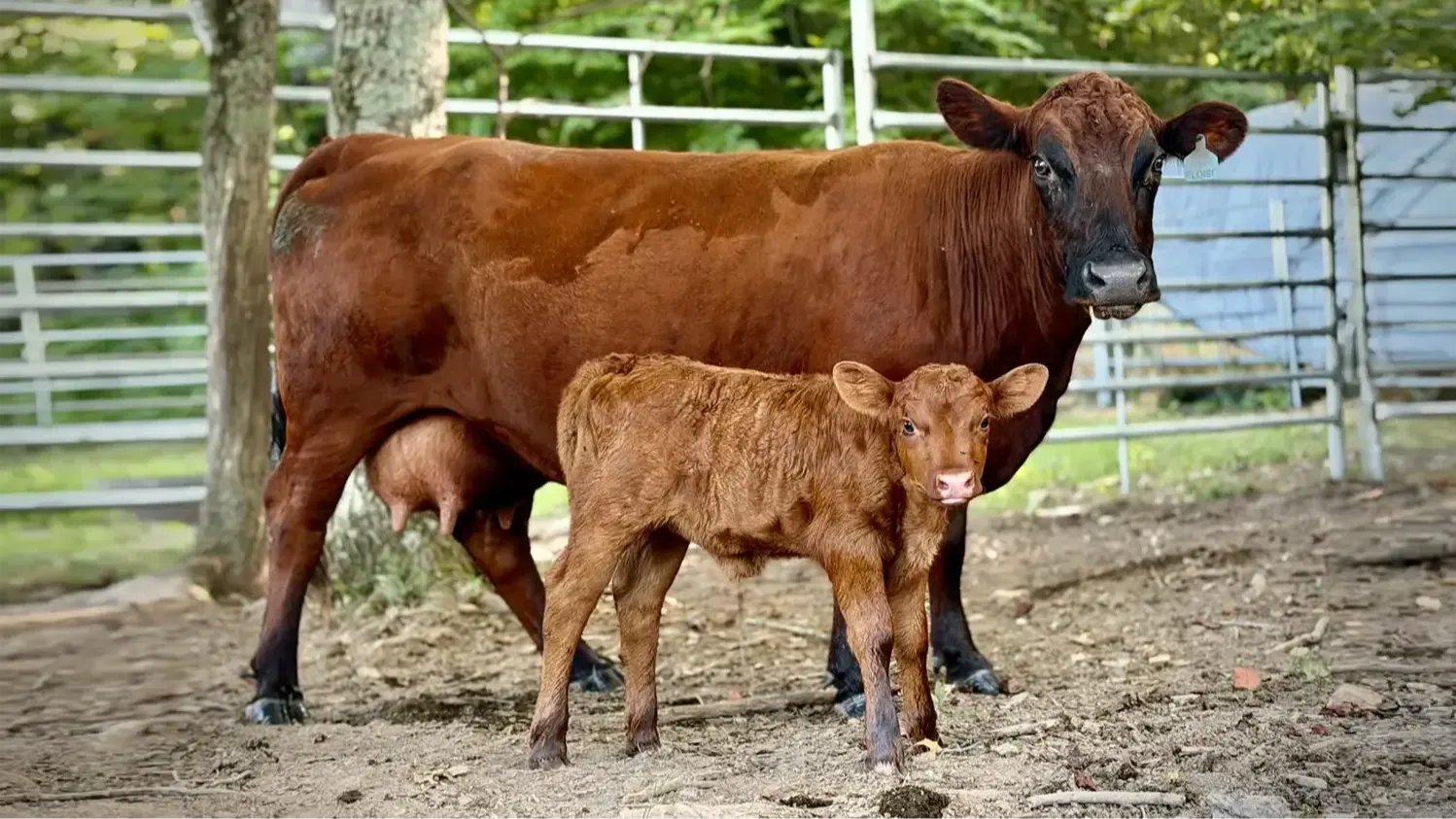
At roughly three hours old, I milked the cow and bottle-fed him colostrum because he still was not attempting to stand or nurse independently. The change afterward was dramatic. Once he received colostrum, it was almost as though his brain finally “came online.” His awareness improved rapidly, and he was then able to nurse normally. He remained with his dam for approximately the next 24 hours.
What I Learned From This Birth
This experience reinforced several important lessons for me:
- Unusual labor patterns deserve attention early.
- Repeated ineffective contractions can indicate the calf is not engaging properly into the birth canal.
- Even experienced cattle owners occasionally encounter births they have never personally seen before.
- Asking for help or confirmation is not weakness — it is good stockmanship.
- Having chains, lubricant, towels, and scissors immediately available matters.
- En caul births can alter the mechanics of delivery in unexpected ways.
Most importantly, it reminded me how quickly a calving can shift from routine to abnormal.
What I Would Keep Nearby For Future En Caul Deliveries
If I encountered another delivery like this, I would want the following within immediate reach:
- Clean OB chains
- Lubricant
- Scissors
- Clean towels
- OB gloves
- A veterinarian or experienced mentor’s phone number
Frequently Asked Questions
Is an en caul calf birth dangerous?
An en caul birth can become dangerous if the membranes interfere with normal labor progression or if the calf experiences oxygen deprivation during prolonged delivery.
How rare is an en caul birth in cattle?
Partial membranes are common during calving, but a fully intact sac surrounding the advancing calf is uncommon enough that many cattle owners never witness one firsthand.
Why was this delivery so dry?
In this case, much of the amniotic fluid remained trapped behind the calf during extraction, reducing the lubrication normally present during delivery.
A Final Thought
Difficult or abnormal deliveries can deteriorate rapidly, especially when calf distress or oxygen deprivation becomes involved. When in doubt, involve an experienced mentor or veterinarian sooner rather than later.
Every birth teaches something.
This one reminded me that even after decades with cattle, there are still moments that make you stop, reassess, and learn.