Dexter Cow Milk Production: Are You Prepared for This Much Milk?
Many people dream of bringing home a family milk cow — fresh milk in the refrigerator, cream on top of the jar, butter on the counter, and cheese aging for the months ahead.
But the dream can feel very different when you are suddenly staring at 14, 21, or even 28 gallons of milk in a single week and wondering what on earth you are supposed to do with it all.
Dexter cattle are often described as small family cows, and they can be a wonderful fit for homesteads and small farms. But “small cow” does not always mean “small amount of milk.” A carefully bred Dexter milk cow can produce far more than many families expect, especially at peak production.
More milk can be a tremendous blessing — but only if your family has a realistic plan for cooling it, storing it, using it, and feeding the calf.
Before choosing a Dexter milk cow, it helps to understand what different levels of production actually look like in real life.
What “Milk Production” Actually Means in Dexters
Dexters are not miniature Holsteins. They are smaller-framed cattle, known for efficiency, rich milk, and usefulness on a homestead scale. That is exactly why many families are drawn to them. A good Dexter milk cow can provide meaningful milk without the size, feed demand, metabolic concerns, and management load of a large commercial dairy breed.
But “production” does not mean the same thing for every Dexter cow. Additionally, every household likely has a different idea of what it should look like.
Some Dexters produce enough milk for light family use. Others produce enough to support serious dairy projects. The goal is not simply to find the cow with the biggest production number. The goal is to understand what production means in real life and what level of production works best with your family.
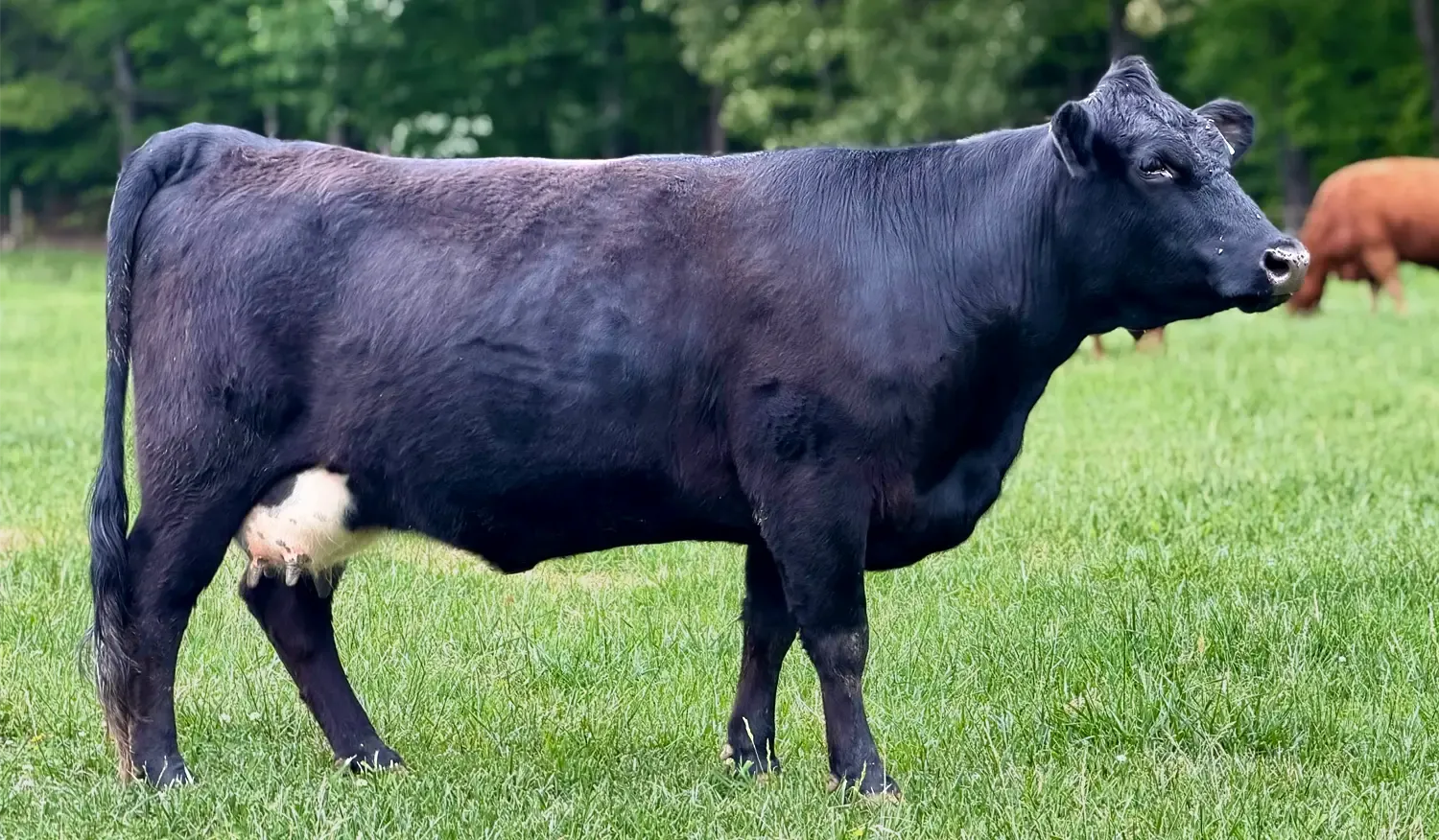
Good Dexter milk production is not judged by volume alone. A useful family milk cow should also maintain body condition, structure, udder function, and practical dual-purpose type.
Understand Milk Production Terminology Before You Purchase Your Family Milk Cow
The Term "Peak Milk Production" Is Not the Same as Daily Average
When people hear that a Dexter cow can produce 3 gallons a day at peak, it is important to understand what that number actually means. A cow does not freshen (i.e. "give birth to her calf and begin her lactation") and immediately give her peak amount of milk every single day for six straight months. Milk production generally follows a curve.
After calving, production builds for the first few weeks. Many cows reach their strongest production around 2–3 weeks after freshening, then hold close to peak for a limited window. I generally see between 30 and 60 days in my own herd. After that, production gradually tapers down as the lactation progresses.
Do Not Judge a Milk Cow Too Early
Another important piece of milk production is maturity. A cow should not be judged too harshly by her first lactation alone.
First-calf heifers are still growing and maturing. Their udders are not fully mature and their production may not show the full picture of what they will become. For that reason, I do not consider a cow fully proven until her third lactation. By then, she has had time to mature physically, settle into her production pattern, and show whether she can hold useful milk over time.
What Defines an Elite Milker?
For a Dexter heifer, I would consider a peak around 2 gallons per day to be elite in her first freshening. For a second freshener, a peak around 3 gallons per day is entering elite territory. In my herd, a third or later freshener would be expected to peak over 3 gallons per day without experiencing metabolic issues commonly found in commercial breeds (things like milk fever and ketosis that require veterinary intervention).
Those numbers assume twice-daily milking and refer to the cow’s total milk production before accounting for any milk reserved for the calf.
In other words, raising a milk cow from heifer to maturity is a game of patience. A heifer does not need to peak like a mature cow to be an excellent prospect. A strong first lactation, good udder structure, useful persistence, and continued improvement into later lactations are often far more meaningful than one dramatic number taken too early.
So when a breeder boasts a number like “3 gallons a day,” the details matter. Many factors can change the interpretation. Ask whether that is:
- third lactation or later
- peak production
- average daily production
- once-a-day milking production
- twice-a-day milking production
- milk after the calf is fed
- milk before the calf is fed
For many family-cow situations, the more useful question is not “What did she peak at?” but: How much milk can I realistically expect to bring into the house after the calf is fed?
That number gives a much more honest picture of what your family will actually need to cool, store, wash jars for, and use.
You can also view my live Dexter lactation records here to see how production changes over time in different cows.
Peak shows what the cow is capable of at her strongest point.
The lactation graph shows whether she holds useful production over time: i.e. "persistence" meaning she doesn't peak and then drop dramatically. Ideally, each cow should show a gradual taper in production over several months.
Total milk collected shows the actual volume produced during the recorded lactation.
Those three pieces together tell a much more honest story about the genetic potential of each individual cow as well as her offspring.
My goal is not to convince those new to Dexters that they will get peak milk from their family milk cow every day for months. They will not. My goal is to show what elite Dexter milk production looks like in real life: a strong peak, useful persistence, and a gradual taper. Understanding these facts helps one choose the best Dexter family milk cow to get the ideal volume of milk for the household.
Don’t Forget to Calculate Feeding the Calf
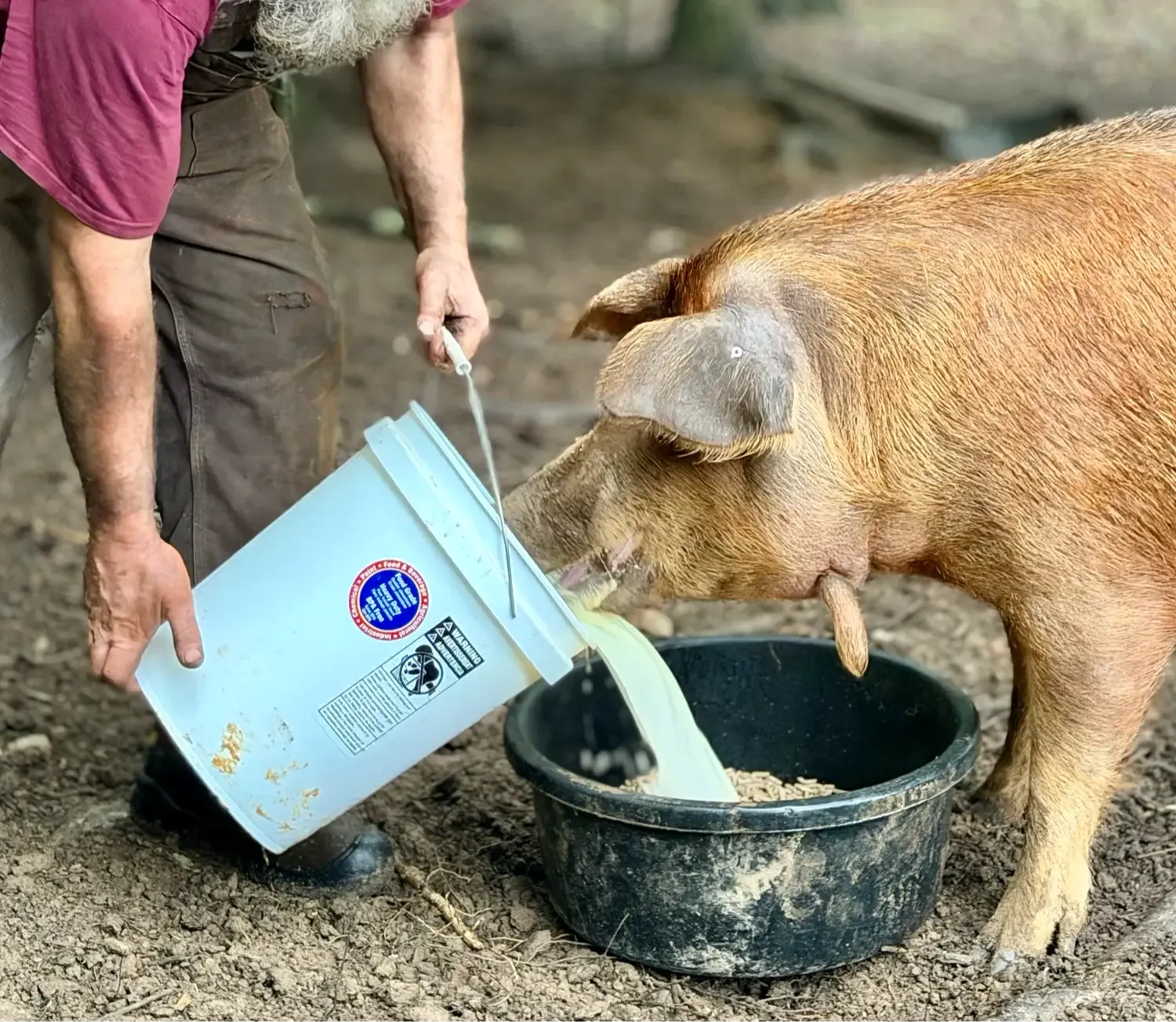
Another piece of the puzzle that people often forget is that the calf must be fed daily. On my farm, when nurse cows aren't available, I bottle feed the calves of all milk cows. Each calf needs roughly 1.5 gallons of milk per day. I take this milk directly from what the cows produce (although one could choose to use milk replacer). This is milk that does not come into your kitchen.
Translation: A cow producing 3 gallons per day may not mean 3 gallons per day for your household if the calf is being fed milk from the cow.
In practical terms:
- 3 gallons/day total production may mean closer to 1.5 gallons/day available for the family if the calf is taking the other half.
- 2 gallons/day total production may leave much less for household use if the calf is still getting a full portion.
- If you pull more milk for the house, you may need to factor in the cost and labor of milk replacer.
These are not small details. They change the "milk for the kitchen" math completely.
A family planning for a milk cow should decide ahead of time:
- Will the calf stay on the cow? (i.e. "calf sharing," which I do not recommend: See HERE.)
- Will we separate part-time? (again, "calf sharing")
- Will we keep a nurse cow?
- Will we bottle-feed the calf?
- How much milk from the cow are we willing to feed the calf?
- Are we prepared to buy milk replacer if we want more milk for the house?
I feed bottle calves for approximately four months. This means, by the time there's a noticeable taper in the cow's production, it is time for the calf to wean. Once the calf is weaned, the milk that was previously reserved for the calf can come into the kitchen instead.
A cow’s production number is only useful when you know whether it includes the calf’s feedings, how long the calf will need a portion of the milk, and if the calf is drinking replacer or mother's milk.
Classifying Dexter Milk Production Levels Before and After Milk Reserved for the Calf
The number that matters most is not just what a cow can produce at peak. It is how much milk your household can realistically use after the calf is fed.
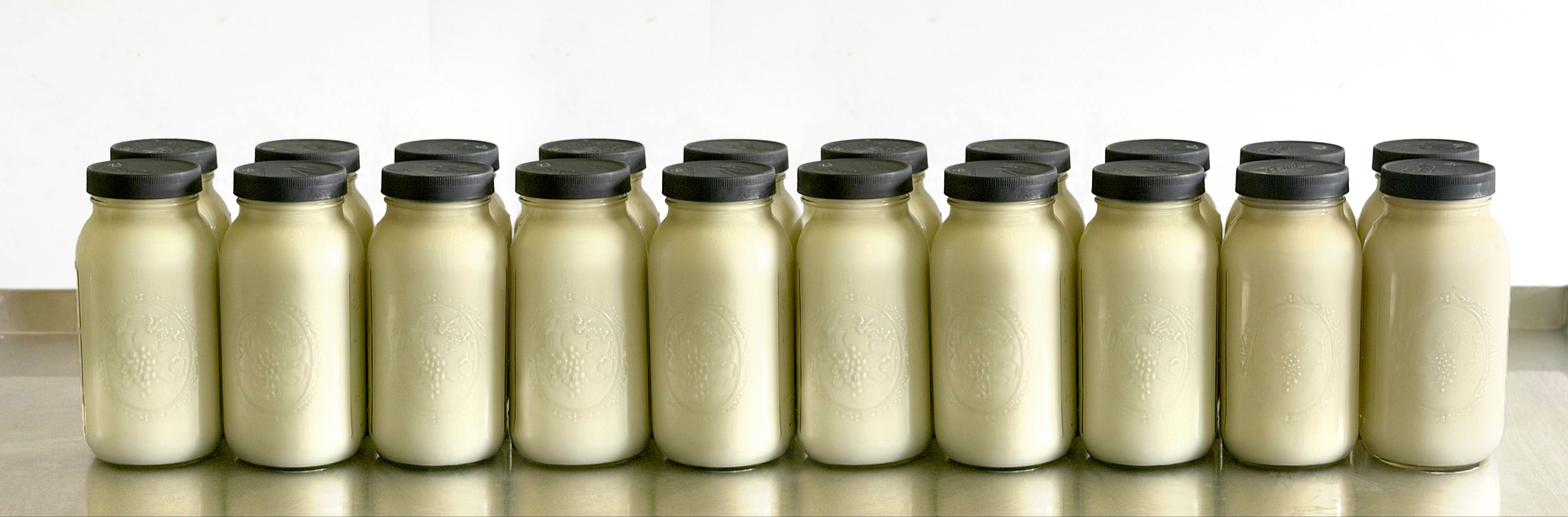
One full week of milk from a low-producing cow, shown in 20 half-gallon jars. At this level, a calf’s daily milk needs may consume nearly all of the cow’s production.
🔻 Low / Beef-Cow-Level Dexter Milk Production
Approximate production:
~1.5 gallons/day at peak
~10.5 gallons/week
*before accounting for milk reserved for the calf.
For a Dexter, this is very low milk production. In practical terms, it is closer to beef-cow-level production than true family milk-cow production.
That does not make her a bad cow. It simply means she is not producing enough milk to both raise a calf well and meaningfully supply the household at the same time.
A growing calf may need around 1.5 gallons of milk per day. If the cow is producing roughly that amount total, the calf’s needs may consume her entire daily production.
In that situation, you should expect to use milk replacer or another calf-feeding strategy if you also plan to take milk for the house.
Reality Check
One and a half gallons per day may sound useful until you account for the calf. Before the calf is fed, that equals about ten and a half gallons per week. After the calf’s needs are considered, there may be no meaningful household milk left.
Plainly said: a low-producing Dexter may still be a perfectly good cow, but she is not a true family milk cow while raising a calf unless you have another calf-feeding plan.
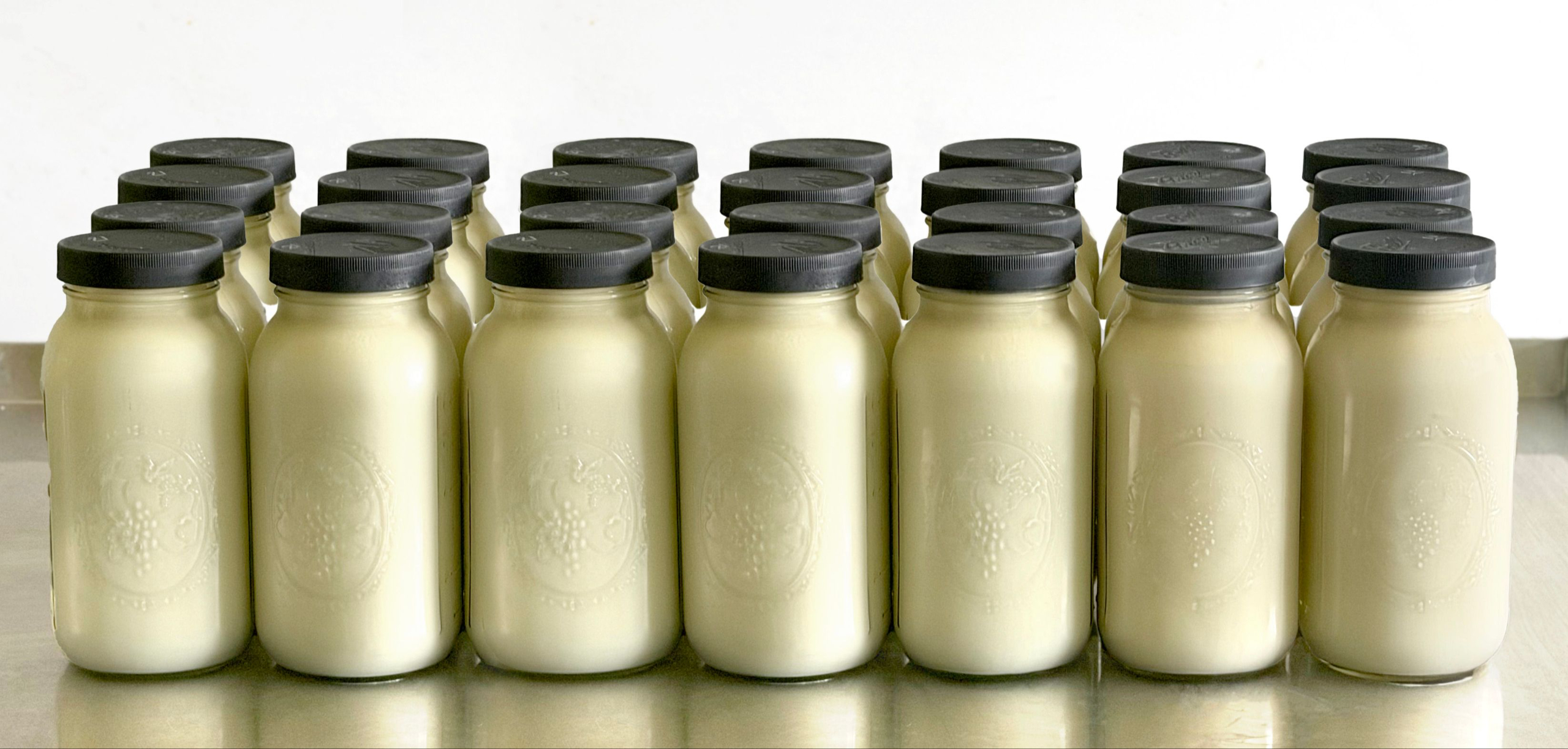
One full week of average Dexter milk production, shown in 28 half-gallon jars. This amount can be very useful, but once milk is reserved for the calf, the household share may be much smaller than the total volume suggests.
⭐️ Average Dexter Milk Production
Approximate production:
~2 gallons/day at peak
~14 gallons/week
*before accounting for milk reserved for the calf.
This is where many good Dexter milk cows land. It is respectable production for the right household, however, this is also where expectations matter most.
If a cow produces about 2 gallons per day and roughly 1.5 gallons are reserved for the calf, the household may only receive about:
~0.5 gallon/day
~3.5 gallons/week
That is still a good quantity of milk. It can support drinking milk, coffee cream, some yogurt, cooking, and light household use. However, it is not heavy dairy abundance. It will not usually support regular butter, cottage cheese, ice cream, cream-heavy use, and cheesemaking unless the calf’s milk needs are handled another way.
Reality Check
A two-gallon-a-day Dexter can be an excellent cow. But if the calf is being fed from that production, the family should not expect two full gallons per day in the refrigerator. This is one reason some families become disappointed. They hear “two gallons a day” and picture all of it coming into the kitchen. In real life, the calf’s milk must be counted first.
Plainly said: average Dexter milk production can be a very good fit, but it requires honest expectations about how much milk remains after the calf is fed.
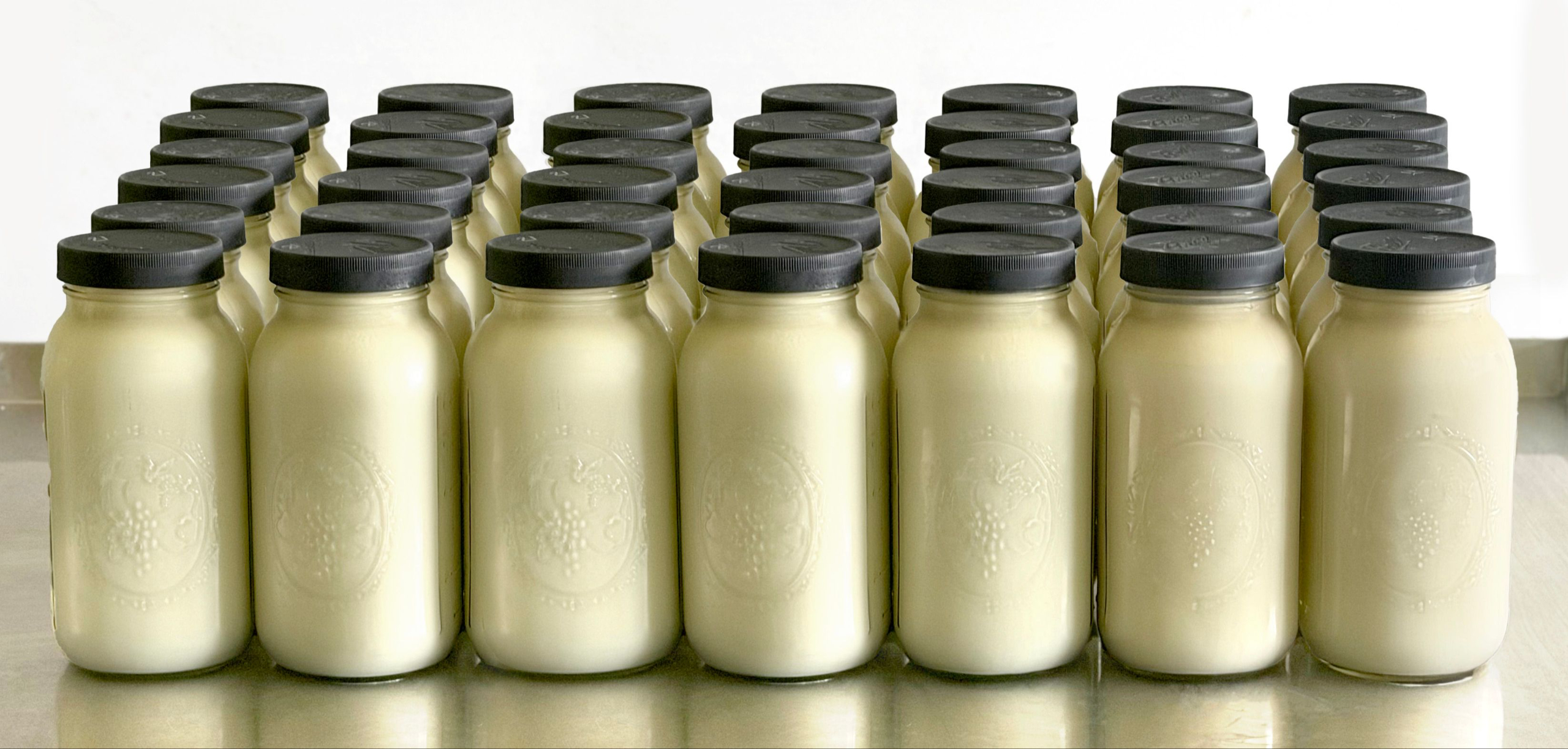
One full week of elite Dexter milk production, shown in 42 half-gallon jars. Even after milk is reserved for the calf, this level can provide serious household dairy volume — but it also requires cooling space, jar management, and a plan for using the milk well.
⭐️⭐️⭐️ Elite Dexter Milk Production
Approximate production:
3+ gallons/day at peak
21+ gallons/week
*before accounting for milk reserved for the calf.
This is the category that gets attention — and for good reason. A truly elite Dexter is not simply “a little better” than an average family milk cow. She may produce enough milk to move the household into a different level of dairy management altogether.
But even elite production has to be understood honestly.
If a cow produces about 3 gallons per day and roughly 1.5 gallons are reserved for the calf, the household may receive about:
~1.5 gallons/day
~10.5 gallons/week
For many families, that is abundant. It can support drinking milk, yogurt, cottage cheese, butter, ice cream, cooking, baking, and cheesemaking.
However, with abundance comes responsibility. Elite production requires refrigerator space, fast cooling, jar management, cream management, equipment, time, and faithful daily routines.
High Production Requires Infrastructure
The very trait that sounds impressive on paper can become burdensome without the right systems in place.
At this level, milk is not just something you drink. It becomes part of the rhythm of the household. Cooling, washing, processing, refrigerating, skimming, separating, culturing, and cheesemaking can quickly become regular work.
A truly elite Dexter can produce more milk than many families realistically know how to handle — even after milk is reserved for the calf.
That does not make her a bad cow. It makes her a serious cow. In the right home, with the right systems, she can be extraordinary. In the wrong home, she can create fatigue, waste, frustration, and guilt over perceived waste.
Elite Milkers May Need Early Lactation Management
An elite Dexter milker is not usually the best choice for a hands-off home.
Even if a family does not plan to milk through the entire lactation, they should expect to remove some milk from the udder while the cow’s body adjusts after calving. Another option would be to graft additional calves to the cow (i.e. -- train the cow to become a nurse cow). However, not all cows are genetically wired to nurse calves that are not their own.
High-producing cows do not always down-regulate immediately, even when their calves are nursing. That can leave the udder overly full, uneven, and under pressure. Removing some milk during that stage -- even if you do not plan to milk her throughout the full lactation -- can help protect udder structure, support long-term udder health, and give the cow relief while her production settles into a level that better matches the calf’s needs.
For example, Tilly, in her third lactation, has routinely come to the barn with more than 15 pounds of milk in her udder twice daily. That is a significant amount of weight and pressure for a cow to carry. I cannot imagine the relief she must feel when that milk is taken out.
Heavy production requires attention, even if the long-term plan is not to milk through the entire lactation.
This is one reason elite milkers need to go to homes that are prepared to manage them well. More milk can be a tremendous blessing, but it also creates responsibility for the cow’s comfort, udder health, and long-term usefulness.
Plainly said: elite Dexter milk production is a blessing when the family is prepared for the lifestyle that comes with it.
What “MHF Verified Dual-Purpose” Means in My Herd
In my herd, cows that demonstrate elite milk production while still maintaining practical Dexter structure and no metabolic issues may receive my MHF Verified Dual-Purpose designation on their individual cow pages.
This is not a casual label. At Mountain Heritage Farm, “dual-purpose” should mean more than a vague claim. It should describe a Dexter that brings both practical milk value and useful beef-type structure.
For the milk side of that designation, I am looking for cows that can reach the elite production range — in my herd, this is expected to be 3+ gallons per day at peak in their third lactation and beyond — while still showing the udder function, temperament, body condition, structure, metabolic soundness, and calf quality needed for long-term usefulness.
I plan to write more about the full meaning of this designation in a separate article. For this page, the important point is simple: when I describe a Dexter as elite, I am not judging by one pretty number alone. I am looking at the cow’s production, her lactation curve, her structure, and whether she remains practical to manage as a real family milk cow.
What the Family Actually Gets After Milk Is Reserved for the Calf
These numbers assume approximately 1.5 gallons of milk per day is reserved for the calf. The household share is what may be left for the kitchen before any other management choices are made. If a calf is actually nursing freely or sharing the udder, the amount taken can be higher and far less predictable.
| Cow’s Total Daily Production | Milk Reserved for Calf | Approx. Household Milk | What That Means |
|---|---|---|---|
| 1.5 gallons/day | 1.5 gallons/day | 0 gallons/day | Milk replacer or another calf-feeding plan is needed if the family wants milk too. |
| 2 gallons/day | 1.5 gallons/day | 0.5 gallon/day | Useful for light household milk, but not heavy dairy abundance. |
| 3 gallons/day | 1.5 gallons/day | 1.5 gallons/day | A strong family milk amount, but still requires daily systems. |
| 4 gallons/day | 1.5 gallons/day | 2.5 gallons/day | Serious dairy volume for cheesemaking, butter, cream, and larger household use. |
Total production is not the same as household milk. During the calf-feeding months, plan for milk reserved for the calf. After weaning, more of the cow’s production may be available to the household until the natural late-lactation taper.
Milk Volume Changes Your Infrastructure
Milk volume does not just change what you drink -- it changes how your household runs.
As production increases, your systems have to increase with it. More milk means more refrigerator space, faster cooling, more jars, more washing, more equipment, and more decisions about how the milk will be used.
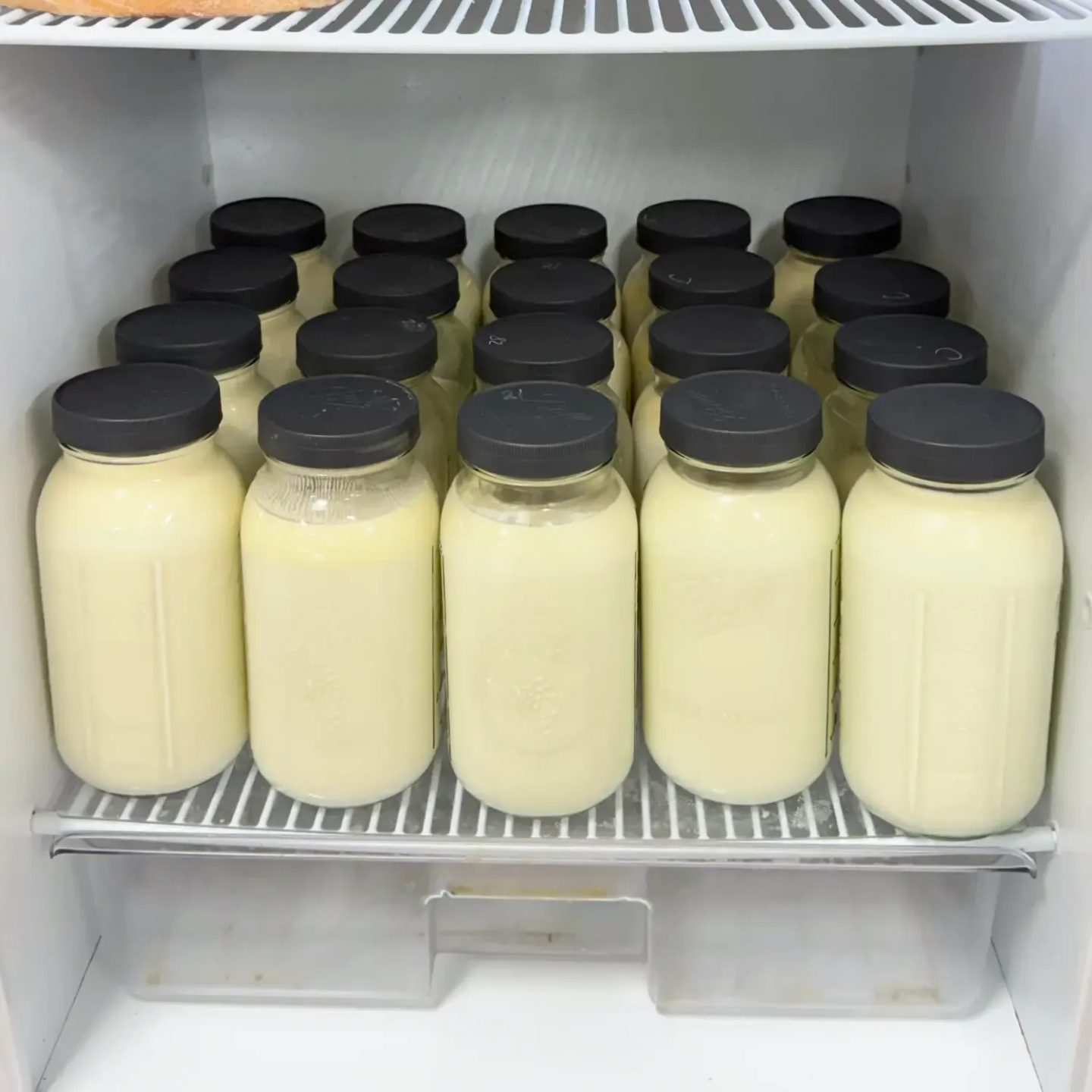
Refrigerator Space
Fresh milk takes up space quickly. At lower production, you may be able to fit milk into your normal household refrigerator. But once production climbs, milk begins competing with groceries, leftovers, produce, condiments, and everything else your family needs to store.
Many families eventually need dedicated refrigerator space simply because the milk volume leaves them no choice.
Cooling Milk Quickly
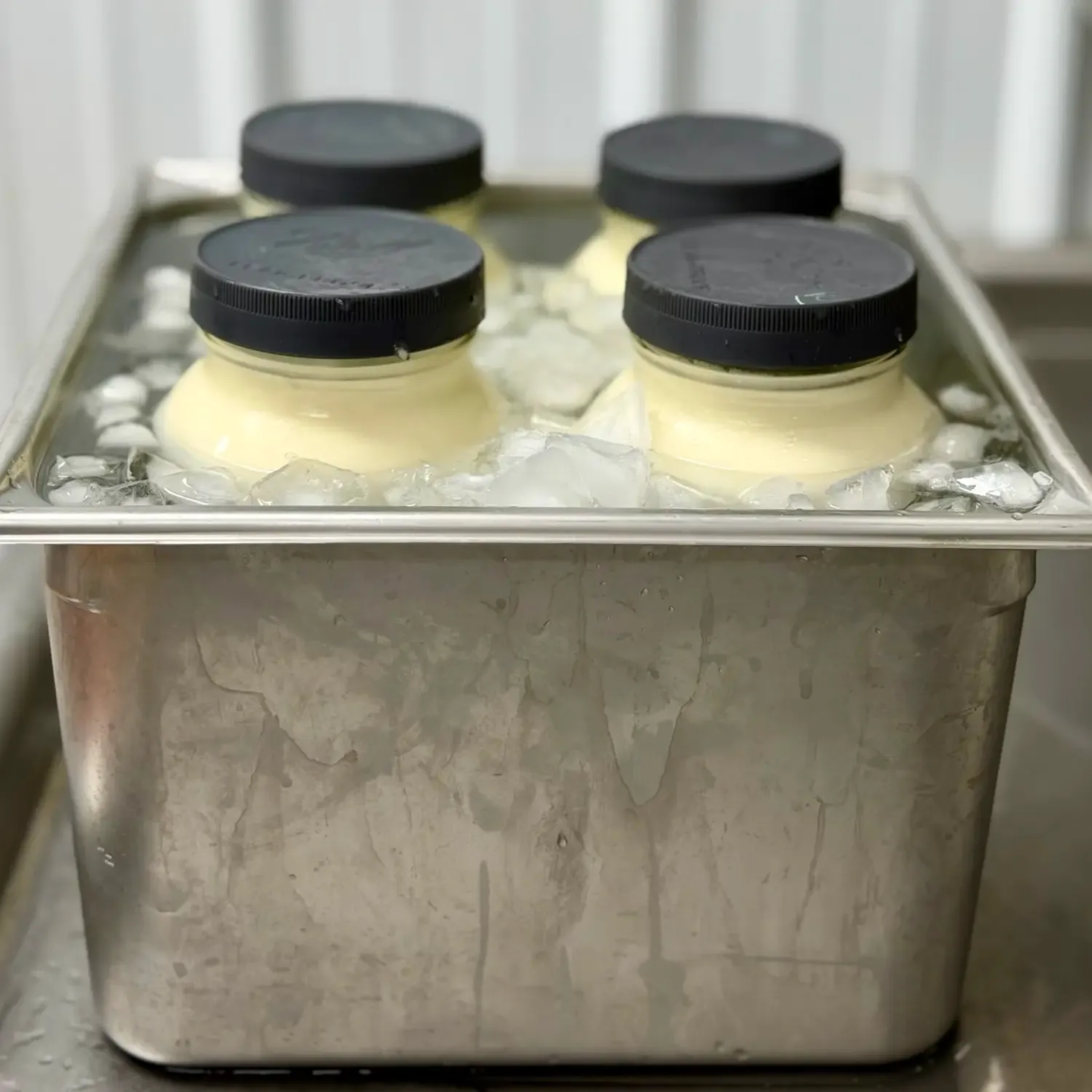
The more milk you bring in, the more important fast cooling becomes. A jar or two can be handled fairly easily. Several gallons require a plan.
Larger volumes hold heat longer and need intentional cooling routines, such as ice baths, staged jar cooling, freezer packs, or other systems that help bring the milk temperature down quickly and safely.
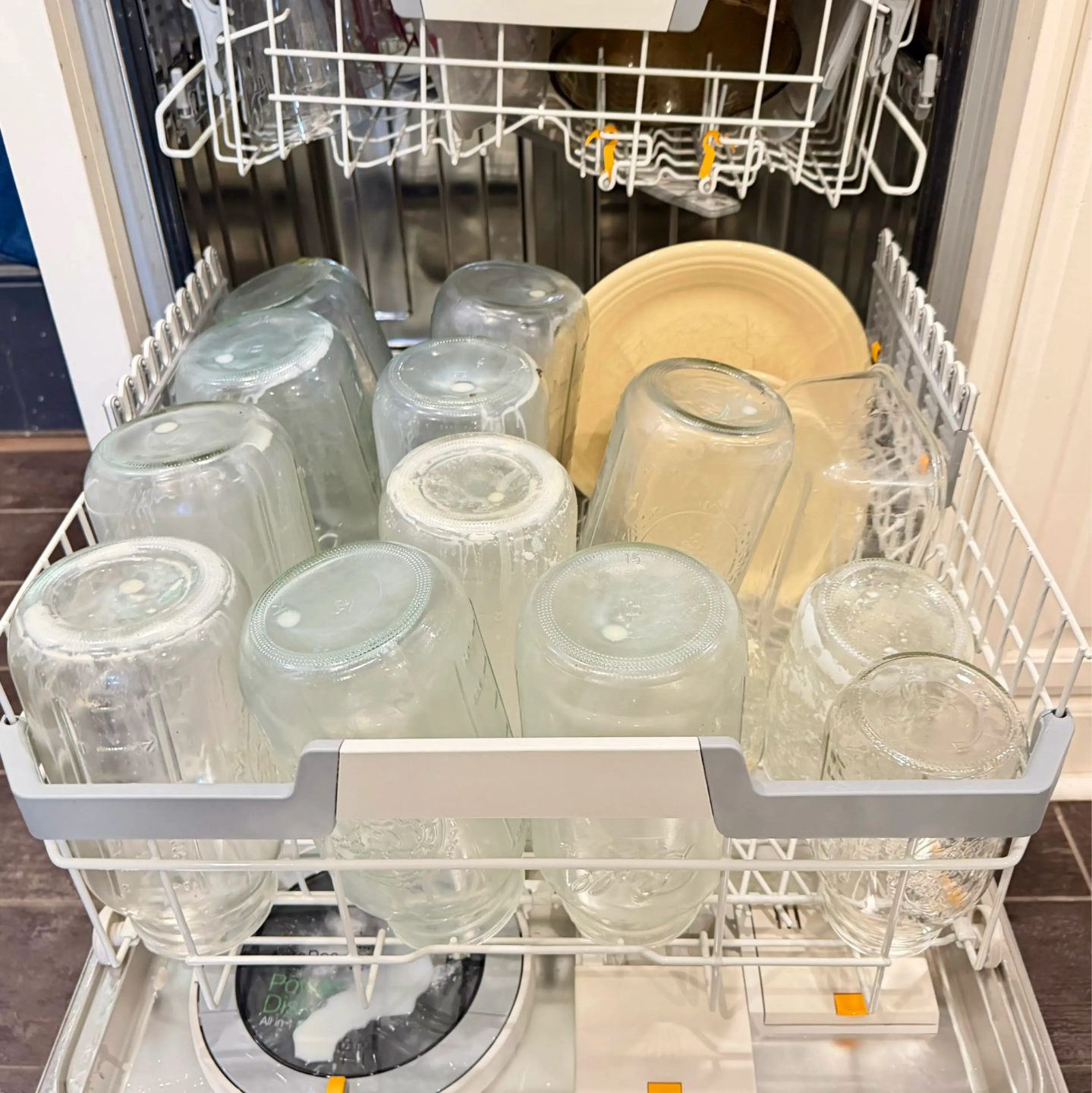
Jar Washing Never Ends
This is one of the least glamorous parts of owning a good milk cow.
More milk means more jars, lids, strainers, funnels, storage containers, and dishes. The washing is repetitive, daily, and unavoidable.
A family may love the milk and still get tired of the constant cleanup. That does not mean they are failing. It means dairy volume creates real work.

Cream Separators & Cheese Presses
Higher production often pushes a family into equipment they did not expect to need.
Once milk volume is high enough, the natural question becomes, “How do we use this efficiently?” That may lead to cream separators, and cheese presses, aging space, butter-making tools, larger storage vessels, and dedicated cooling systems.
Those tools can make high production much more manageable, but they also add cost, storage needs, and more steps to the daily routine.
The Pressure Not to Waste Milk
Abundant milk is valuable, and that can create emotional pressure.
It can sound like: “I need to use this today.” “I should not let this go to waste.” “We are out of refrigerator space again.” “I know this milk is a blessing, but I am tired.”
That pressure is real. A high-producing cow can feel like a gift in the right season and a constant assignment in the wrong one.
A family that understands the infrastructure ahead of time is far better prepared than one that assumes more milk is always easier or better.

Bigger Production Is Not Automatically Better
This is one of the most important truths in choosing a milk cow: the best cow is not necessarily the cow producing the most milk. The best cow is the one whose production fits your real household, your calf-feeding plan, your storage space, your time, and your daily systems.
If you are still deciding what kind of cow fits your family, read my guide on choosing the right Dexter milk cow.
A lower-producing cow may be enough for a household that only wants drinking milk, coffee cream, and light kitchen use. A stronger producer may be needed for a family that regularly makes yogurt, butter, cottage cheese, and ice cream. A truly elite producer may be the right fit for serious cheesemaking, herdshares, or a household prepared to process large amounts of milk every week.
So the question is not simply, “What is the biggest producer I can get?”
The better question is: What production level fits the life I actually live?
When expectations are honest from the beginning, families are less likely to feel disappointed by a perfectly useful cow — or overwhelmed by an exceptional one.
Why Honest Milk Production Expectations Matter
Honest expectations protect both people and cows.
They protect families from disappointment when a perfectly good cow does not perform like an elite milker. They also protect families from overwhelm when an elite cow produces more milk than they are ready to manage.
A good match is not just about peak production. It is about the cow’s lactation curve, the calf-feeding plan, the household’s real milk needs, and the systems in place to handle the milk well.
That kind of honesty helps place the right cows in the right homes.
In the end, the right milk cow is not simply the one producing the most milk. It is the cow whose production fits your family, your farm, your storage space, your time, and your daily rhythm.
That is better stewardship — for the family and for the cow.
Frequently Asked Questions About Dexter Cow Milk Production
How much milk does a Dexter cow produce?
What makes a Dexter an elite milker?
Do I have to milk an elite Dexter cow?
Is 3 gallons a day normal for a Dexter?
How much milk will my family actually get?
Does peak production mean the cow gives that amount for months?
How much milk does a calf need?
Is more milk always better?
Want More Dexter Milk Guidance?
If you are trying to understand whether a Dexter milk cow is the right fit for your household, start with real production expectations, honest lactation records, and practical family-cow milk expectations.
These resources will help you keep learning:
- See real Dexter milk production data
- View my live Dexter lactation records
- Learn how to choose the right Dexter milk cow
- Understand how feeding supports milk production
- Start the Raw Milk Roadmap
The goal is simple: choose a cow whose milk production fits your real life, not just the biggest number on paper.